Quick Solution Summary
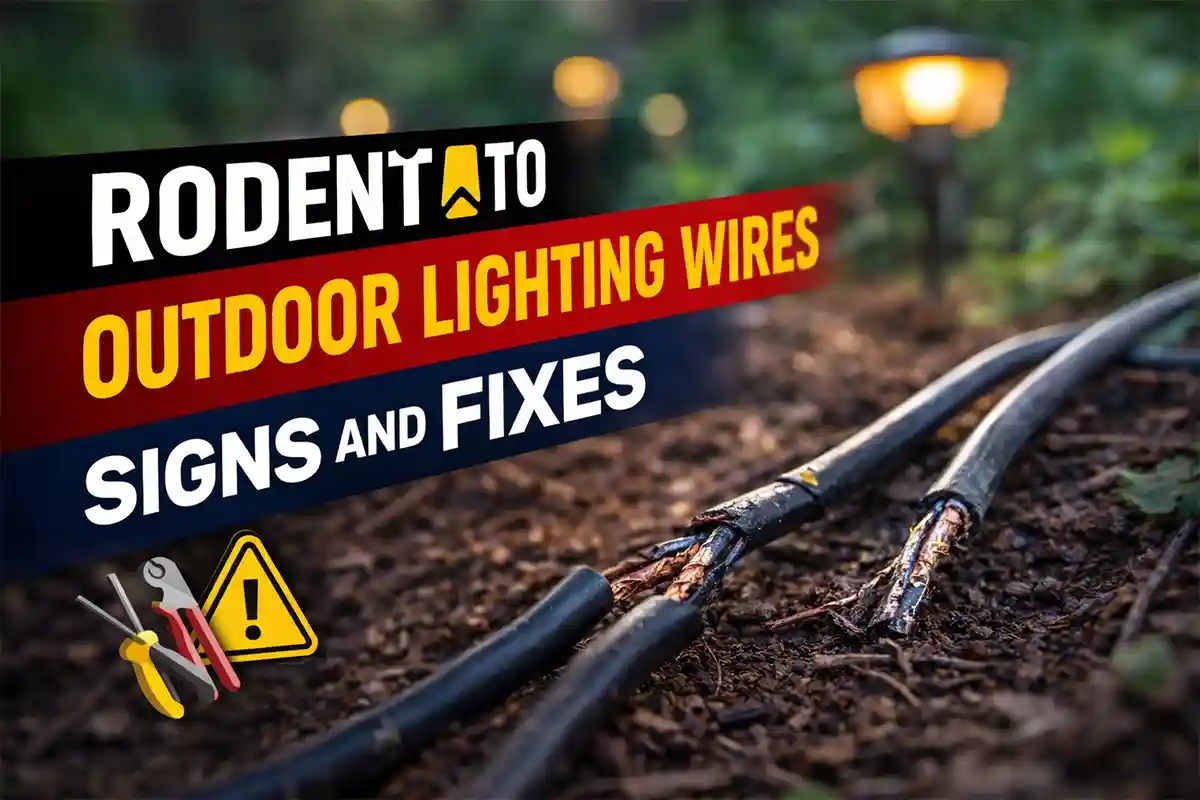
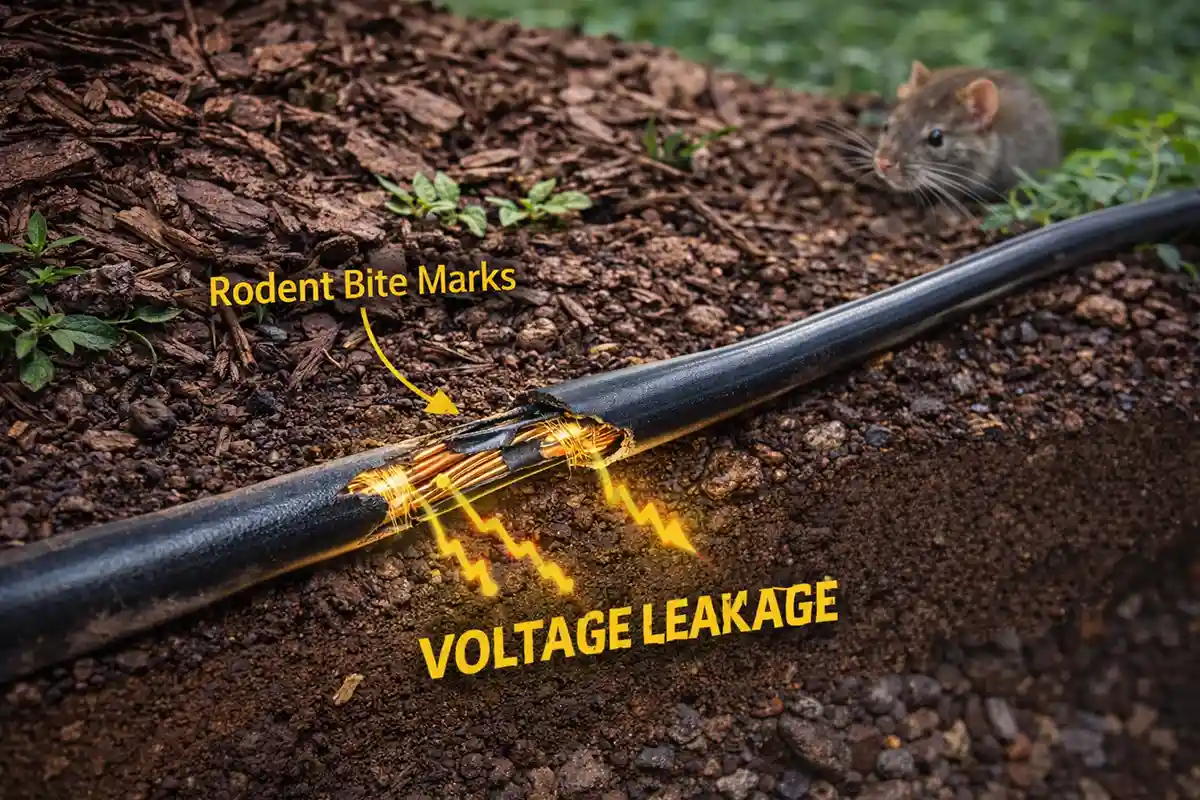
Rodents such as mice, rats, and squirrels frequently chew through outdoor lighting wires because cable insulation contains materials that attract gnawing behavior. In landscape lighting systems, this damage typically occurs underground, inside mulch beds, or near transformer connections. Once insulation is compromised, electrical current can leak or fail to reach downstream fixtures.
The result is often partial lighting failure. One section of the yard may go dark, lights may flicker intermittently, or the final fixtures on the line may lose power entirely. In low-voltage systems (usually 12–15 volts), even small insulation damage can cause a 20–40% voltage drop along the cable.
Fixing the issue involves locating the damaged section, replacing or splicing the wire with waterproof connectors, and protecting vulnerable areas with conduit or rodent-resistant cable. In many cases, homeowners discover the problem after troubleshooting symptoms such as uneven lighting zones or sections that suddenly stop working.
Understanding how rodents damage wiring—and how to identify early warning signs—helps prevent larger electrical failures later.
Why Rodents Target Outdoor Electrical Wires
Rodents constantly gnaw to keep their teeth from overgrowing. Electrical cable insulation provides an ideal chewing surface because it is slightly soft yet durable.
Several factors make outdoor lighting wiring especially vulnerable:
-
shallow burial depth (often only 3–6 inches)
-
mulch beds that provide shelter
-
warmth from transformers
-
plastic insulation containing plant-based compounds
Many landscape cables are made from thermoplastic insulation such as PVC or polyethylene. Some rodents appear attracted to the mild odor of these materials.
This behavior is common across the United States but can vary by region. For example:
-
Midwestern states often experience damage from field mice during fall nesting season
-
California coastal regions commonly see squirrel chewing near exposed wiring
-
Arizona desert environments may experience pack rat damage in rock landscapes
When the outer insulation layer is compromised, moisture intrusion becomes far more likely, which can accelerate corrosion in electrical connections.
Sudden lighting failure can be frustrating, but this breakdown of why exterior lights stop working makes troubleshooting easier.
Common Signs of Rodent Damage in Landscape Lighting
Rodent damage rarely appears as a dramatic failure at first. Instead, the system typically shows gradual electrical symptoms.
Quick Diagnostic Checklist
• One side of the yard loses lighting suddenly
• Lights flicker when multiple fixtures turn on
• The last fixture in a run becomes noticeably dim
• Breakers or GFCI outlets occasionally trip
• Sections of wire show small tooth-like grooves
• Lighting problems worsen during fall or winter
If lighting failure appears isolated to a single branch of the system, it may resemble the same behavior described in Outdoor Lights Not Working on One Side of the Yard, where a single damaged cable interrupts power to downstream fixtures.
In many cases, homeowners initially suspect bulb failure before discovering the real cause underground.
How Rodent Damage Affects Electrical Performance
Once insulation is compromised, several electrical issues may occur simultaneously.
| Damage Type | Electrical Effect | Visible Symptom | Fix Difficulty |
|---|---|---|---|
| Partial insulation chew | Voltage leakage | Dim lights | Moderate |
| Complete wire sever | Circuit interruption | Entire section off | Easy |
| Multiple chew points | Voltage drop | End fixtures weak | Moderate |
| Exposed copper corrosion | Resistance increase | Flickering lights | Moderate |
| Moisture entering cable | Intermittent failure | Random outages | Hard |
In low-voltage landscape systems, a single compromised section may reduce available voltage from 12V down to 9–10V at the end of the run. That reduction is often enough to cause unstable brightness levels.
This effect sometimes resembles symptoms explained in Outdoor Lights Losing Power at the End of the Line, especially when the damaged cable increases electrical resistance.
Where Rodent Damage Most Commonly Occurs
Rodents rarely chew randomly. Damage typically appears in predictable locations within the lighting system.
1. Mulch Beds
Mulch provides insulation and cover, making it a common nesting area. Lighting wires installed under mulch often experience the highest chewing activity.
2. Near Transformers
Transformers produce mild warmth when operating, especially during evening hours. Rodents may build nests nearby and chew surrounding wires.
3. Shallow Underground Runs
Landscape lighting cable is often buried only a few inches deep. If the soil shifts or erodes, rodents can easily reach the cable.
Damage in these underground sections may resemble the problems described in Underground Lighting Cables Damaged: Causes, Signs, and How to Fix Them, especially when multiple fixtures stop working at once.
4. Entry Points into Fixtures
Cable entry points where wires pass into fixtures or junction boxes provide easy access points for chewing.
Over time, repeated chewing may expose copper conductors completely.
Step-by-Step Method to Find the Damaged Wire
Rodent damage is often hidden underground, so locating it requires a systematic approach.
1. Identify the Failed Section
Turn the system on at night and observe which lights fail first.
If lights operate normally near the transformer but fail further along the cable, the damage likely exists between those fixtures.
2. Inspect Visible Wiring
Check:
-
transformer output wires
-
junction boxes
-
fixture connectors
Look for small curved chew marks spaced roughly 2–4 mm apart.
3. Gently Expose the Cable Path
Using a small garden trowel, uncover sections of cable along the lighting run.
Rodent chew marks usually appear as:
-
shallow grooves
-
cracked insulation
-
exposed copper strands
4. Test Voltage at Multiple Fixtures
A multimeter can reveal voltage loss along the line.
Typical readings:
| Distance from Transformer | Normal Voltage |
|---|---|
| Transformer output | 12–15V |
| Mid-line fixture | 11–13V |
| End fixture | 10.5–12V |
If readings drop sharply below 10V, cable damage or excessive resistance is likely.
How to Repair Rodent-Damaged Landscape Lighting Wires
Once the damaged section is identified, repairs are usually straightforward.
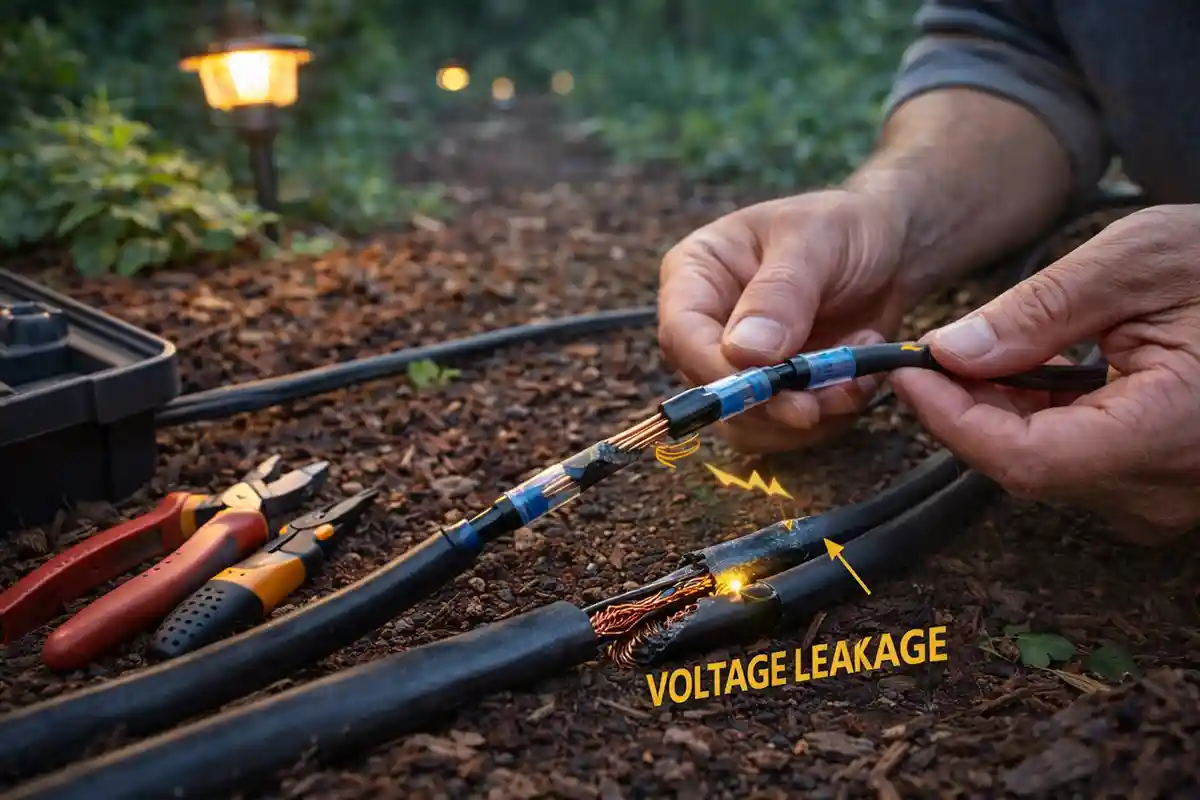
Basic Repair Steps
-
Turn off the transformer power.
-
Cut out the damaged wire section.
-
Strip approximately ½ inch of insulation from each side.
-
Connect the wires using waterproof gel-filled connectors.
-
Seal the repair using heat-shrink tubing or silicone-filled wire nuts.
Most landscape repairs take 10–20 minutes per damaged section.
However, if chewing occurs at multiple locations along the cable, replacing the entire run is often more reliable.
In systems experiencing unstable brightness, the symptoms may also resemble those discussed in Flickering Outdoor Lights: Common Causes, where fluctuating voltage creates intermittent lighting behavior.
Preventing Rodent Damage in Outdoor Lighting Systems
Preventive measures can significantly reduce future wiring damage.
Protective Strategies
1. Install Conduit in High-Risk Areas
Running cable inside PVC conduit near transformers or entry points protects the insulation.
2. Bury Cables Deeper
Depths of 6–8 inches reduce exposure to rodents.
3. Use Rodent-Resistant Cable
Some landscape wiring uses thicker insulation that resists chewing.
4. Reduce Nesting Areas
Removing dense mulch piles or debris near transformers discourages rodents from settling nearby.
If rodent damage repeatedly causes intermittent failures, the behavior may mimic the issues described in Outdoor Lights Working Intermittently, since electrical continuity can fluctuate as damaged wires shift in the soil.
Environmental Factors That Increase Risk
Certain conditions make rodent damage more likely.
| Environmental Factor | Impact on Wiring | Risk Level | Prevention |
|---|---|---|---|
| Dense mulch beds | Shelter for rodents | High | Reduce mulch depth |
| Nearby food sources | Attract rodents | High | Secure trash and pet food |
| Shallow cable installation | Easy access | Medium | Bury deeper |
| Warm transformer areas | Nesting spot | Medium | Install protective cover |
| Seasonal nesting periods | Increased chewing | Medium | Inspect wiring in fall |
Rodent activity often increases during colder months when animals search for warm nesting locations.
According to research from the USDA National Wildlife Research Center, rodents frequently chew electrical insulation while building nests, causing millions of dollars in infrastructure damage each year.
Questions Homeowners Often Ask
Can rodents completely disable a landscape lighting system?
Yes. If rodents chew through the main cable supplying the lighting branch, power cannot reach any fixtures beyond that point.
How long does rodent wire damage take to appear?
Damage may occur within days once rodents begin nesting nearby. However, electrical symptoms often develop slowly as insulation deteriorates.
Are solar lights affected by rodents too?
Less often, but rodents may chew the small wiring connecting the solar panel to the battery compartment.
Should damaged wires always be replaced?
If multiple chew marks exist along the cable, replacing the entire wire run is typically safer than patching multiple sections.
Key Takeaways
Rodent damage is one of the most overlooked causes of outdoor lighting failure. Small chew marks on cable insulation can interrupt voltage flow, cause flickering lights, or shut down entire sections of a landscape lighting system.
Because outdoor wiring is often buried shallowly in mulch or soil, rodents can easily access the cables—especially during colder months when nesting activity increases.
Routine inspection of cable paths, proper burial depth, and protective conduit installation are the most effective ways to prevent future damage and keep outdoor lighting systems operating reliably.