Landscape Lighting Replacement Kits for an Unreliable, Aging System
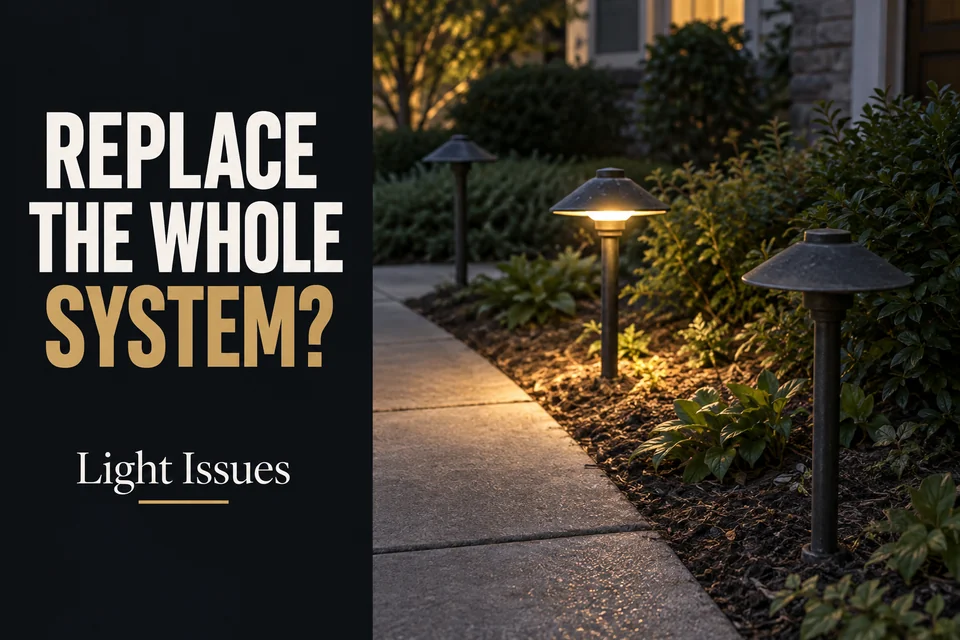
Mismatched aging landscape lights leaving dark sections along a residential front walkway.

Replacing another landscape light becomes frustrating when a different fixture fails a few weeks later. Each purchase means checking another bulb type, connection, or replacement stake—and the yard still has uneven lighting. A complete replacement kit becomes worth considering when several fixtures have separate failures and keeping them working requires repeated purchases. It gives you … Read more
Motion Sensor Head Will Not Stay in Position

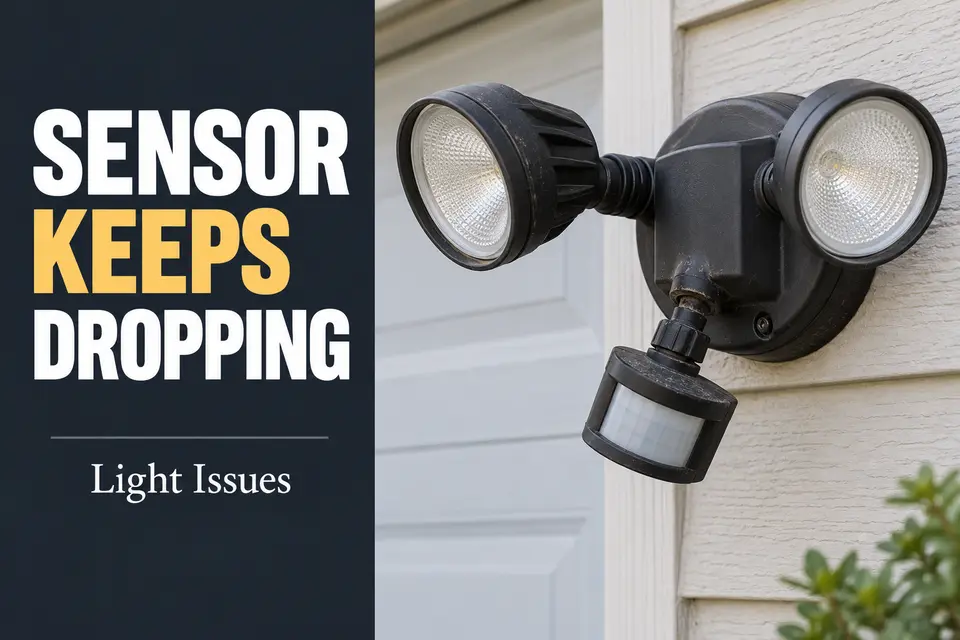
Outdoor motion-sensor head sagging downward at its adjustable aiming joint.

A motion-sensor head that can be aimed correctly but later points at the ground has a holding-force problem before it has a detection problem. If gravity, wind, or normal vibration changes the head’s physical angle, the detection zone moves with it. Sensitivity adjustments cannot stabilize a joint that no longer holds. Start by photographing the … Read more

Outdoor Light Glass Cover Will Not Come Off for a Bulb Change

Outdoor wall light with an intact glass cover seated in a weathered metal retaining collar.

A stuck outdoor light cover presents two different possibilities: its retaining hardware is still engaged, or the cover is adhering after that hardware has released. Identify what holds the glass before choosing how to move it. Resistance alone cannot tell you whether it should unscrew, swing open, or lift out. Before handling it, isolate the … Read more

Why Outdoor LED Lights Turn Yellow or Change Color

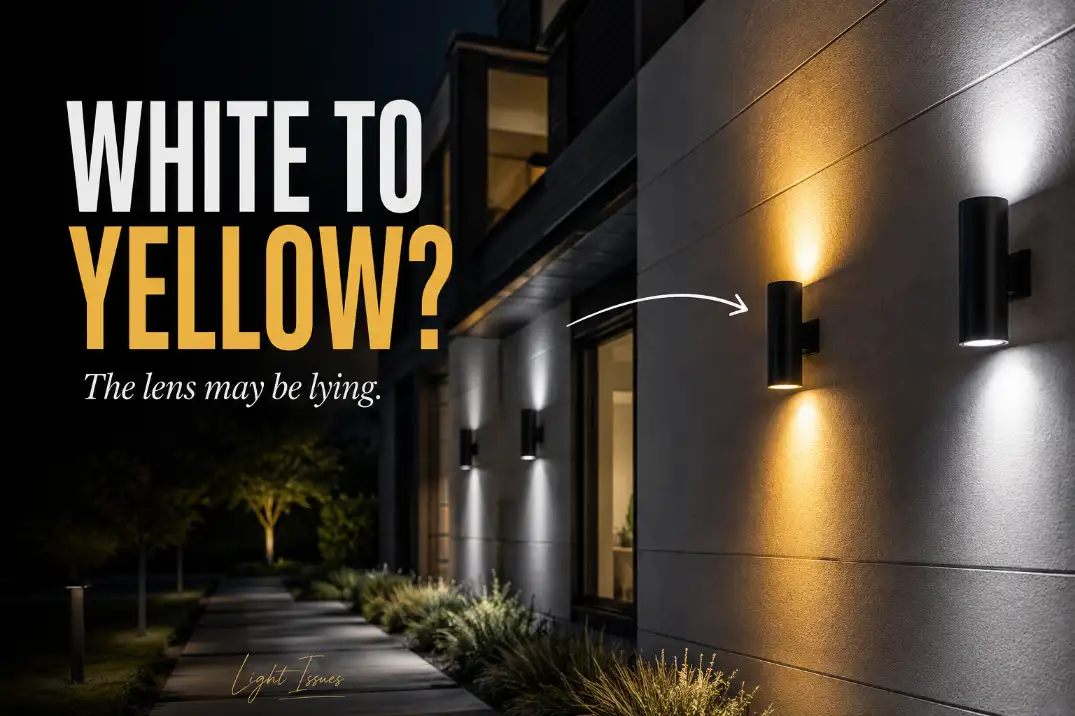
Outdoor LED wall light turning yellow while nearby matching lights stay white, showing possible lens aging or LED color shift.

Outdoor LED lights usually turn yellow for one of four reasons: they were the wrong color temperature from day one, the lens has yellowed, the LED package has shifted color, or moisture and heat have started damaging the fixture. The fastest test is to compare the light after it has been on for 15 minutes, … Read more

Outdoor LED Lights Dim Over Time: Causes and Fixes

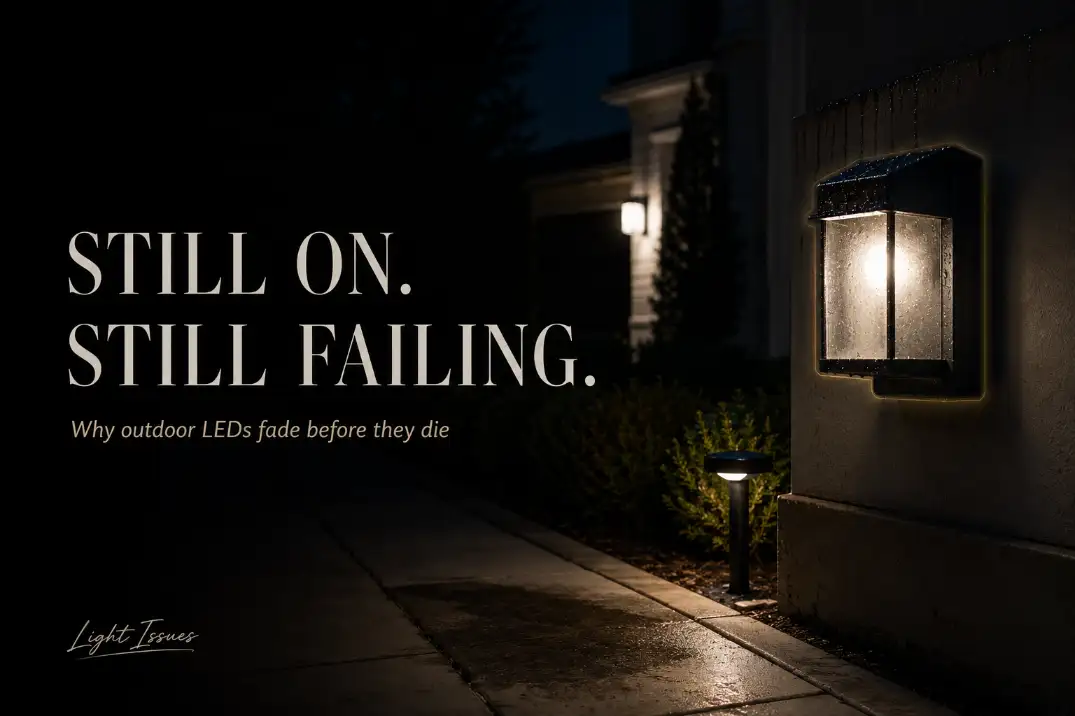
Premium cover image showing a dim outdoor LED light that is still on but failing, with cloudy lens and weak walkway illumination.

Outdoor LED lights dim over time for different reasons depending on the system. A hardwired porch light or floodlight usually fades because of LED driver wear, heat, moisture, a cloudy lens, or a control issue. Low-voltage landscape lights often dim because voltage drops before power reaches the last fixtures. Solar LED lights dim for a … Read more

Why Outdoor LED Lights Burn Out Fast

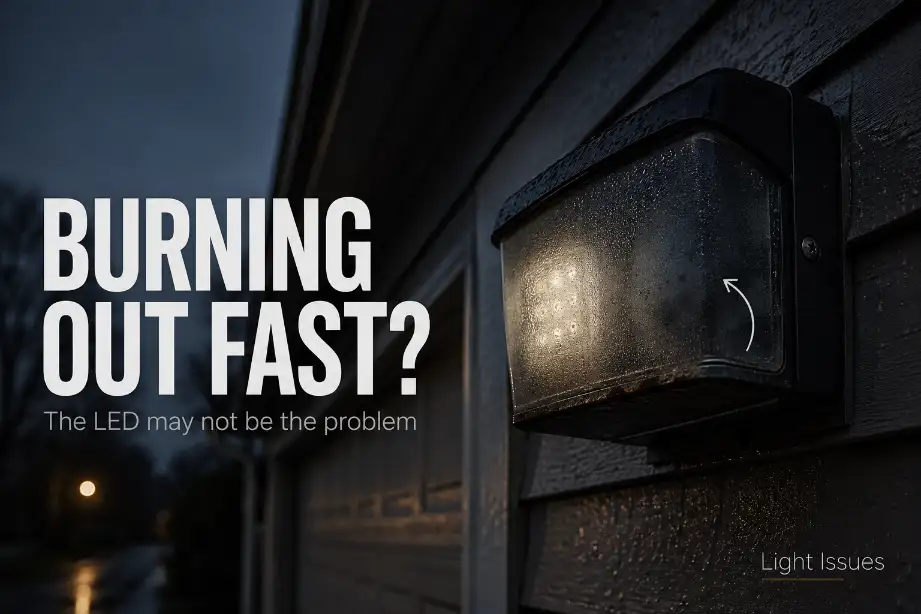
Premium cover image of an outdoor LED light with fogged lens and dim LEDs showing that fast burnout may be caused by driver, heat, or moisture problems.

Outdoor LED lights usually burn out fast because the electronics around the LED fail first: the bulb driver, integrated fixture driver, wet splice, weak connection, or control circuit. Before replacing anything, identify what kind of outdoor LED is failing. A screw-in LED bulb inside a sealed porch lantern has different risks than an integrated motion … Read more

Why Outdoor Lights Stop Working Over Time

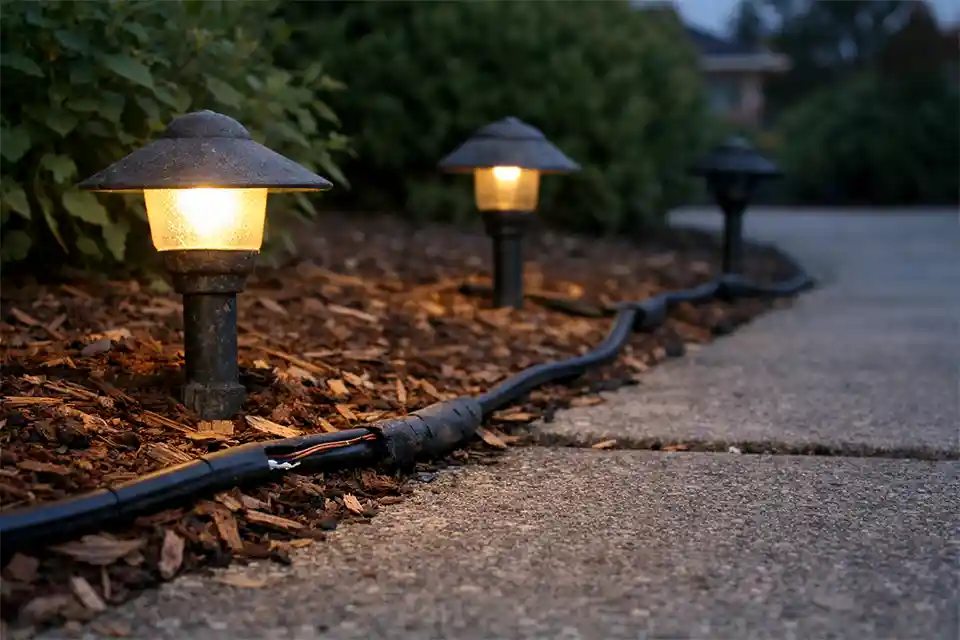
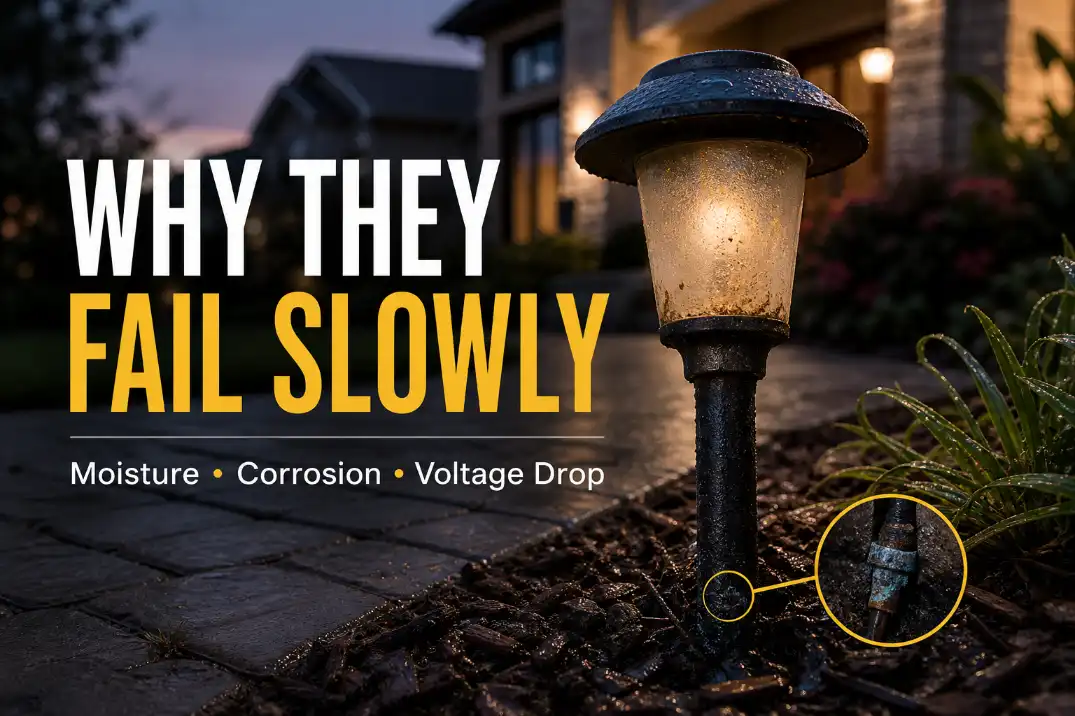
Aging outdoor path light with dim output, damp mulch, and highlighted corrosion showing why outdoor lights fail slowly

Outdoor lights usually stop working over time because the system gets weaker in layers. Moisture reaches a splice, a connector corrodes, a fixture seal hardens, a cable gets nicked, a transformer starts running near its limit, or a photocell stops reading light correctly. The fastest useful diagnosis is pattern-based: one dead fixture points to a … Read more