Are Solar Outdoor Lights Worth Fixing or Replacing?
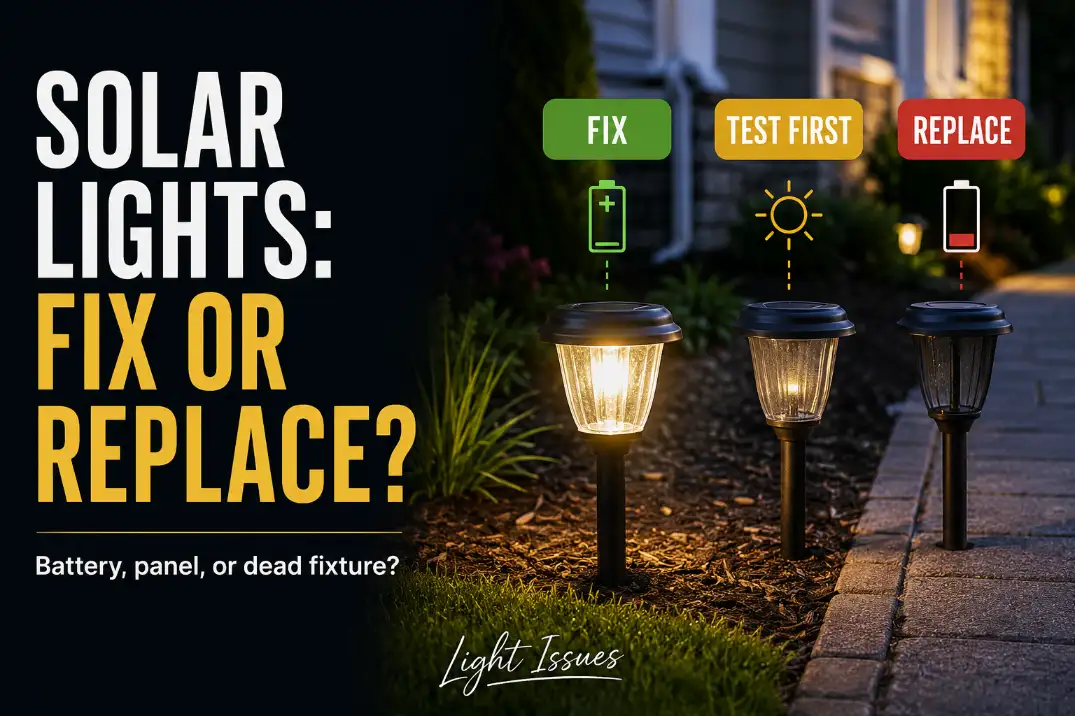
Solar outdoor path lights showing working, dim, and dead fixtures with fix or replace decision labels.

Solar outdoor lights are worth fixing when one replaceable part has failed: a weak rechargeable battery, dirty panel, poor sun exposure, or stuck sensor. They are usually worth replacing when the same fixture still fails after 1–2 clear charging days, the panel is cloudy or cracked, water has reached the battery bay, or more than … Read more
Why Solar Path Lights Look Dim and Uneven

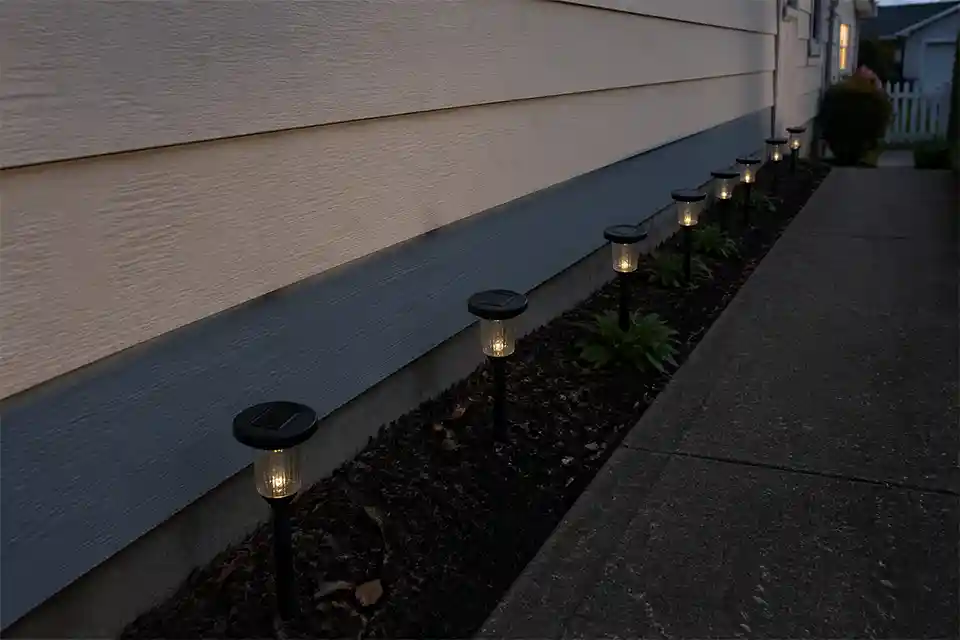
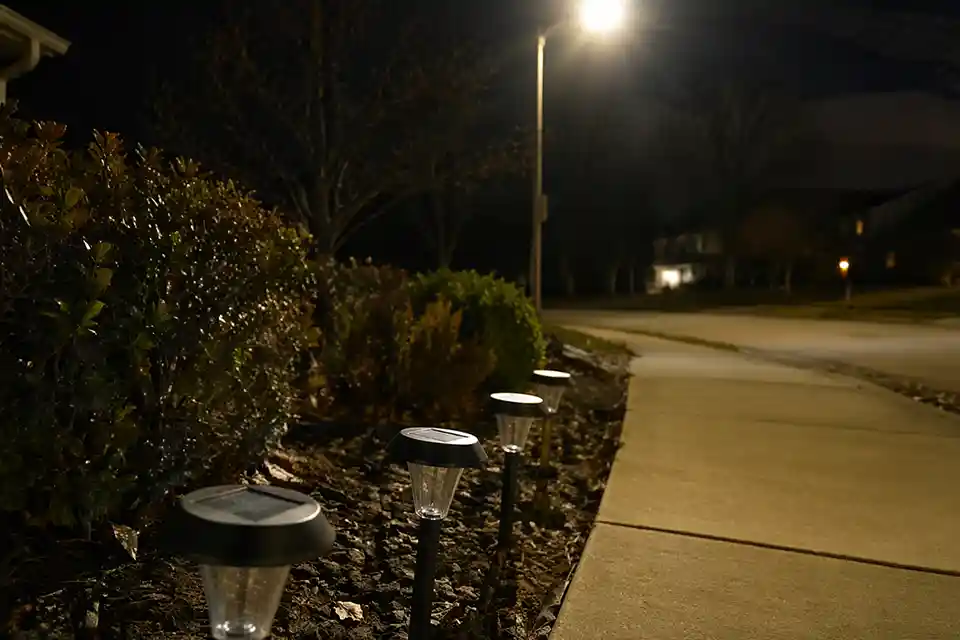
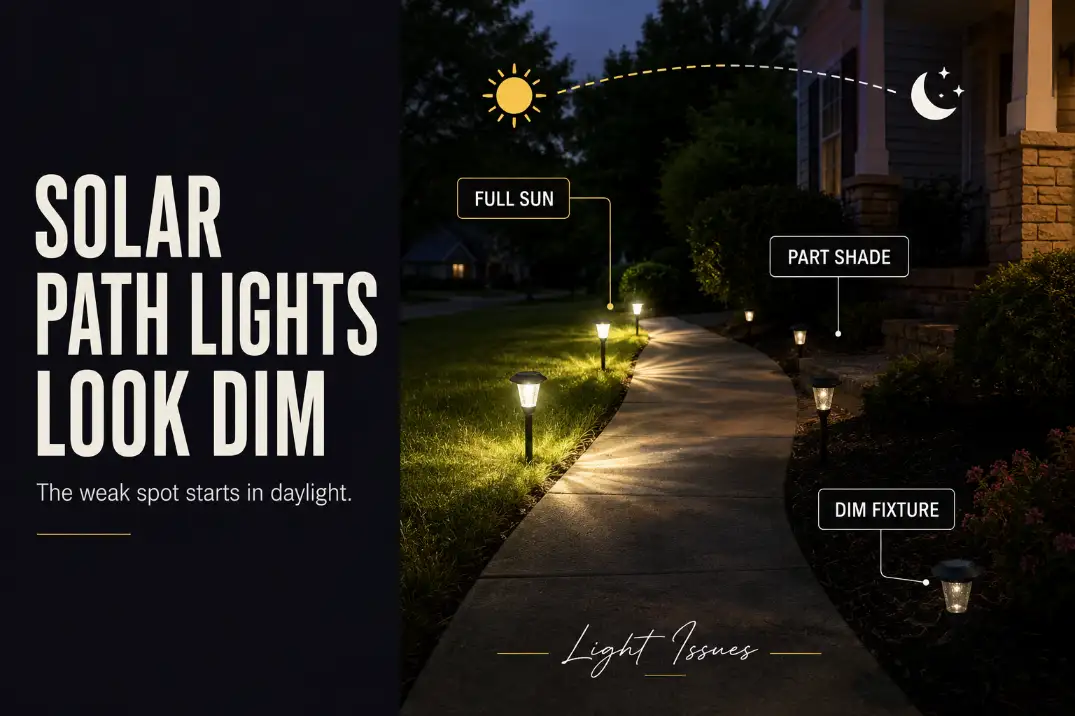
Solar path lights along a walkway looking dim and uneven because some fixtures receive full sun while others sit in partial shade.

Solar path lights usually look dim and uneven because the row is not charging evenly. The dim part is an energy problem: dirty panels, weak batteries, poor sun exposure, or low-output fixtures. The uneven part is a consistency problem: one light may get 6–8 hours of direct sun while the next gets only 2–3 hours … Read more

Solar Garden Lights Failing Near Overgrown Bushes

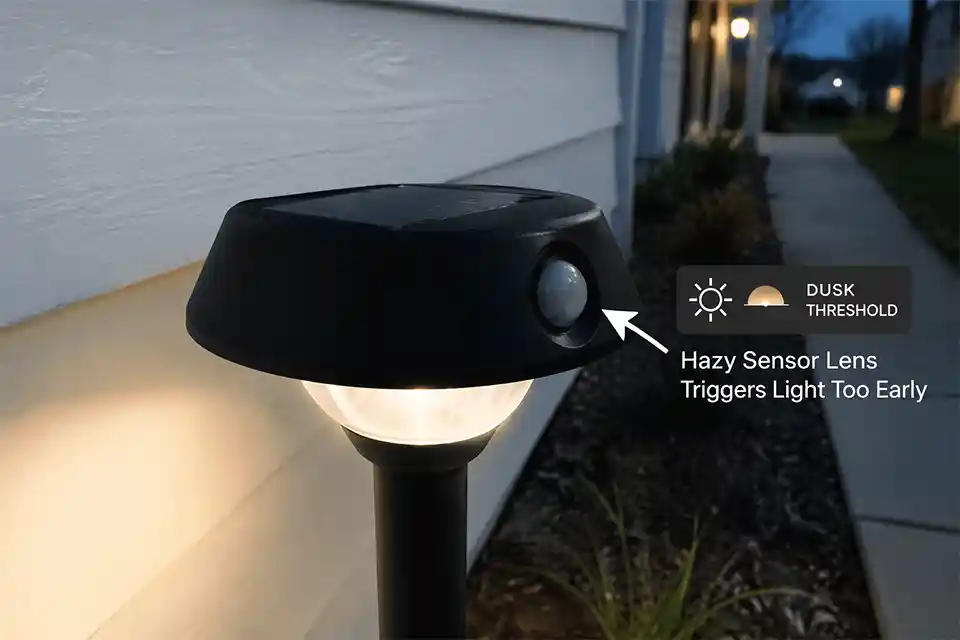
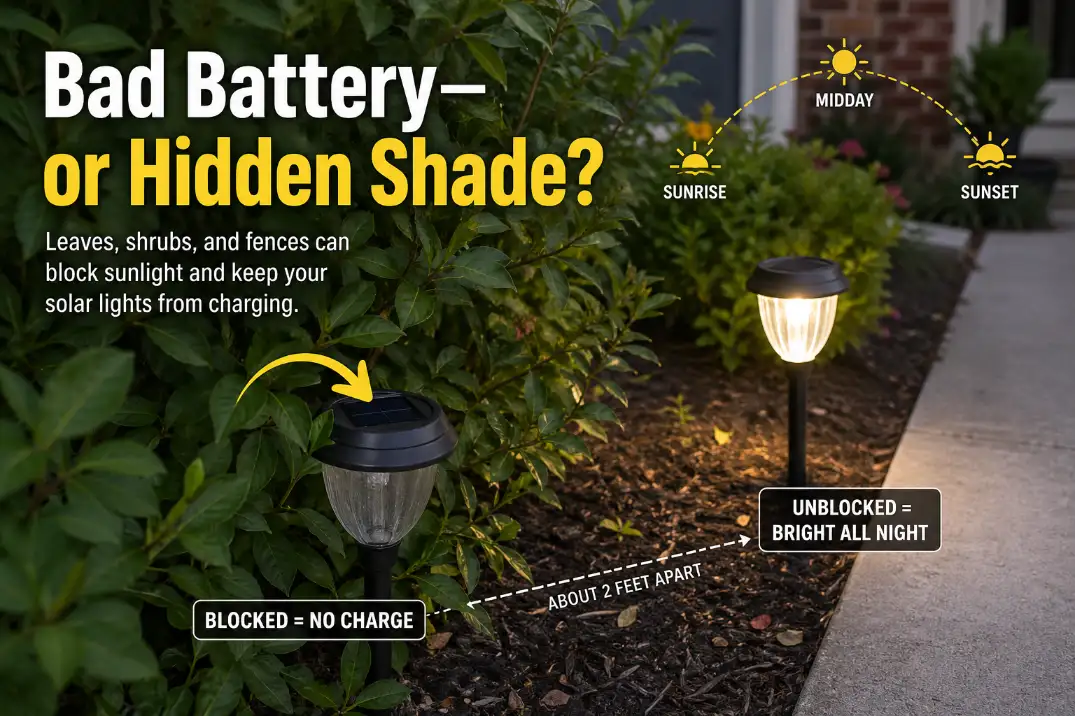
Solar garden light failing near overgrown bushes with overlay showing hidden shade blocking the solar panel.

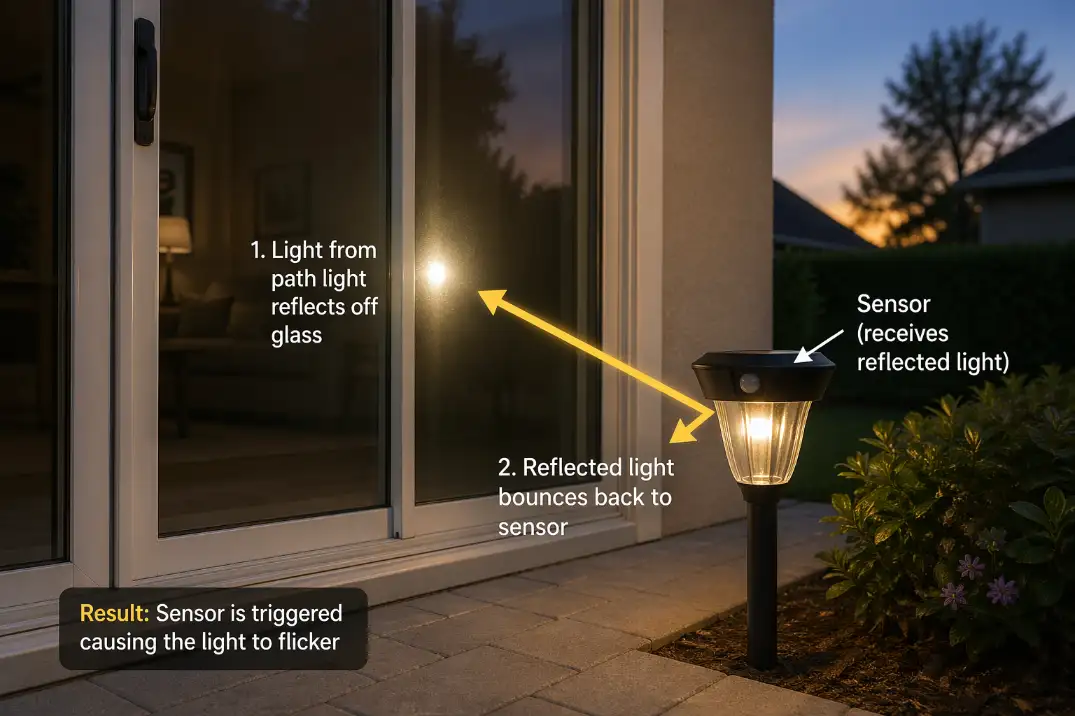
Solar garden lights usually fail near overgrown bushes because the charging cycle breaks before the light itself does. If only the lights beside shrubs are dim, shut off after 30–90 minutes, or stop turning on while open-area lights still run 6–8 hours, the first suspect is blocked sunlight, not a bad bulb. Check the panel … Read more

Solar Garden Lights Fading on North-Facing Walls

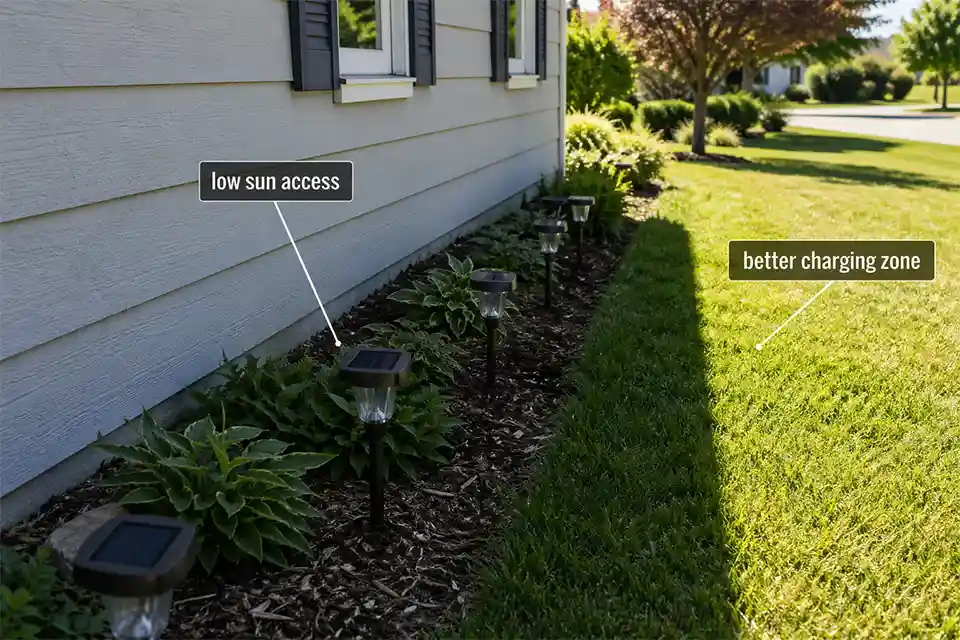
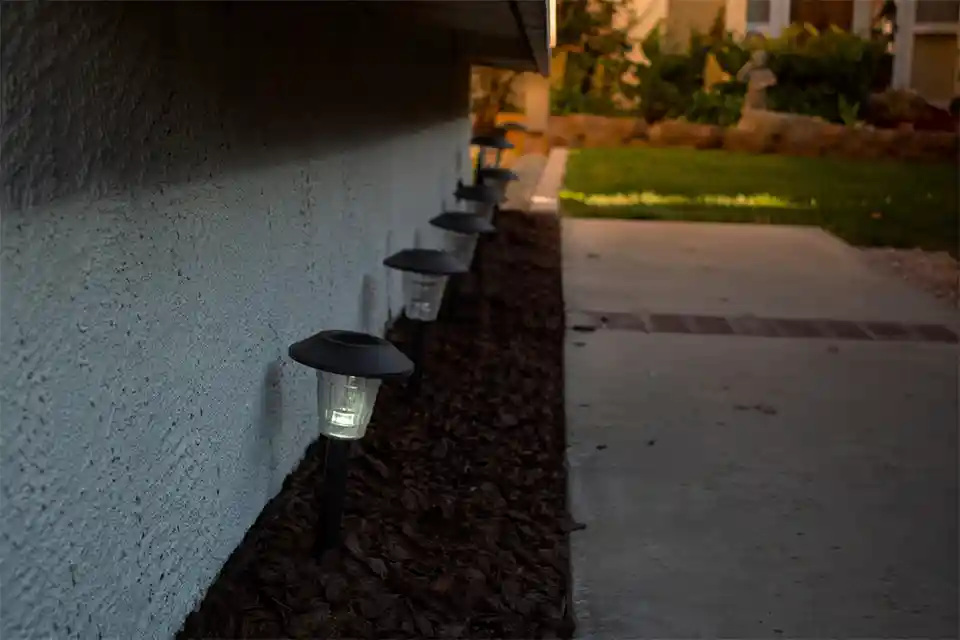
Solar garden lights fading along a shaded north-facing wall with overlay showing poor charging zone and sunnier placement area

If solar garden lights fade early along a north-facing wall, the usual problem is not sudden product failure. It is chronic undercharging. These installations often miss the most productive charging window, especially from about 9 a.m. to 3 p.m., and they also tend to lose open-sky exposure when lights sit tight against a wall, under … Read more