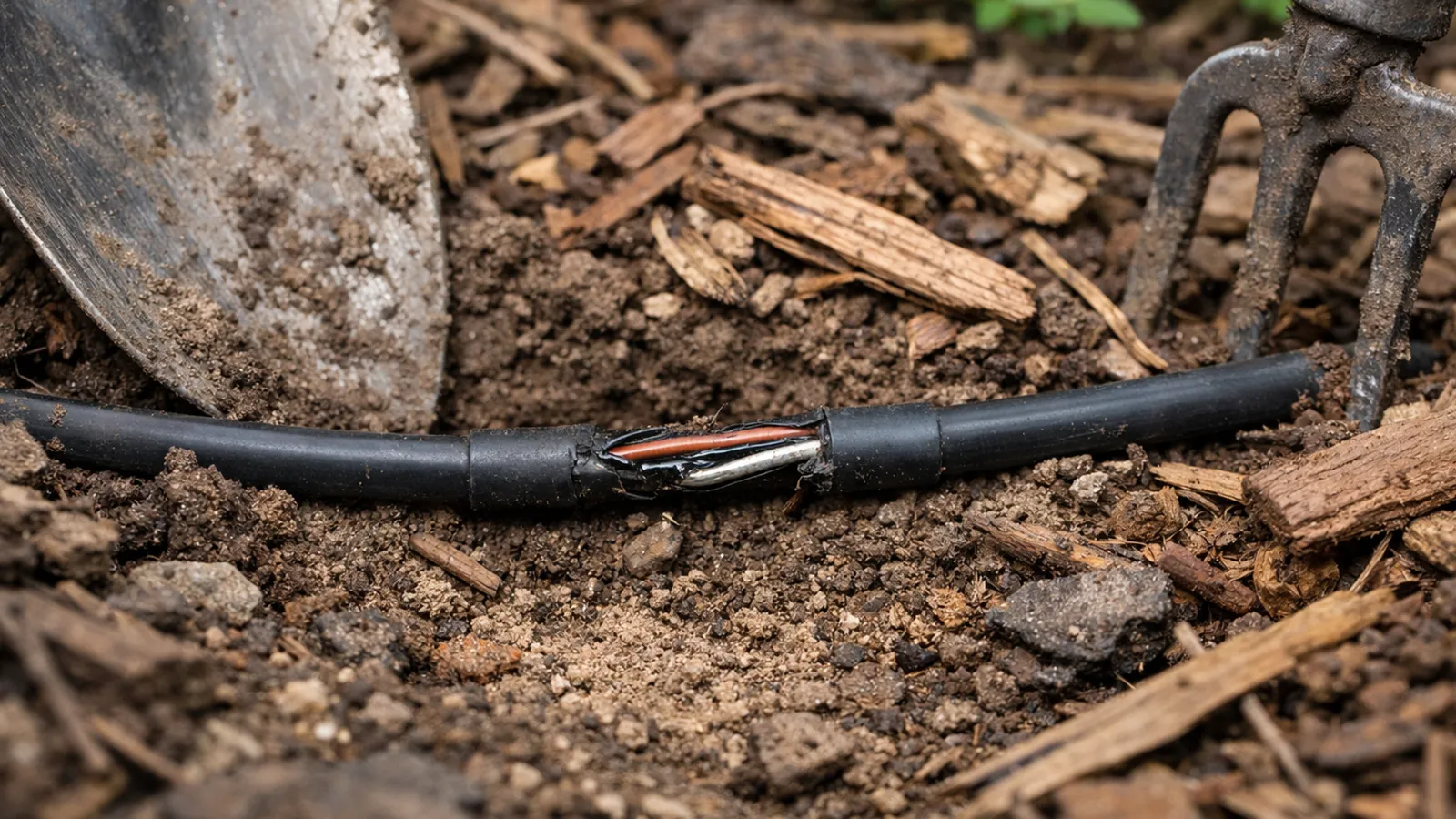
❌ Many lighting failures start at ground level, where daily yard activity slowly takes its toll. Digging, edging, planting, and even raking can nick or compress cables that were once safely buried. These small injuries often go unnoticed at the time.
Soil movement and erosion can expose wires, leaving them vulnerable to sunlight and physical damage. Landscaping changes can also redirect water toward fixtures or junction points that were previously dry. In yards with pets, repeated foot traffic along the same paths can loosen fixtures or strain wiring just below the surface. These factors often overlap, creating trouble spots that fail earlier than the rest of the system.
Ground-level damage usually develops through:
-
Accidental contact with tools during routine maintenance.
-
Soil settling that pulls on buried cables.
-
Mulch buildup that traps moisture at fixture bases.
-
Repeated traffic that shifts fixtures out of alignment.
Component Wear in Bulbs, Drivers, and Sensors
💡 A light that turns on but behaves oddly often points to internal component wear. Even though LEDs last longer than traditional bulbs, the electronics that support them do not last forever. Drivers, sensors, and control parts are sensitive to heat and voltage changes.
Outdoor fixtures amplify these stresses because airflow is limited and temperatures fluctuate widely. Motion sensors may stop detecting movement reliably, while photocells can misread daylight and fail to trigger lights on time. Replacing a bulb in these cases does not solve the problem, because the issue sits deeper inside the fixture. Over time, worn components make the system feel unreliable even though it still has power.
Component-related issues commonly appear as:
-
Lights that turn on and off at the wrong times.
-
Fixtures that respond inconsistently to motion.
-
LEDs that flicker despite new bulbs.
-
Problems that persist after simple replacements.
Installation Shortcuts That Reveal Themselves Over Time
⚠️ Some lighting problems trace back to choices made during installation that only become obvious years later. A system may work well at first, giving the impression that everything was done correctly. As environmental stress builds, those early shortcuts reduce the system’s ability to cope.
Cables buried too shallow, transformers sized too close to their limits, or connectors not fully sealed all age faster under real-world conditions. Without proper strain relief, wires end up carrying mechanical stress they were never meant to handle. Over time, these weaknesses make the system less forgiving, so small issues trigger larger failures. Addressing these root causes often stops the cycle of repeated repairs rather than just treating symptoms.
Aging Transformers and Power Supply Stress
💡 Problems often start when some lights still work while others seem weaker or inconsistent, especially after the system has been running for years. This uneven behavior usually points back to the transformer, which quietly handles voltage conversion every night. As it heats up and cools down over thousands of cycles, internal parts slowly lose stability.
Capacitors and solder points inside the transformer weaken over time, even if the unit still powers on. The result is power that looks fine at first glance but is no longer evenly distributed. Lights closer to the transformer may appear normal, while those farther away struggle or shut off entirely. When the transformer has always operated near its maximum load, this decline happens faster and feels sudden, even though it developed gradually.
Transformer-related stress is often noticed through:
-
Sections of lights dimming at different levels.
-
Flickering that appears without visible wiring damage.
-
Failures that affect multiple fixtures at once.
-
Temporary improvement after resets that does not last.
Voltage Drop Across Expanding Lighting Systems
⚠️ Many outdoor lighting systems start small and grow over time as new fixtures are added. At first, everything works as expected, but subtle changes appear as the system stretches beyond its original design. Lights at the far end may lose brightness or behave inconsistently.
Each added fixture increases the electrical load and lengthens the path electricity must travel. When the same wiring is asked to carry more demand, voltage slowly drops along the line. LEDs are especially sensitive to this change and may flicker or shut off when voltage dips below their operating range. Because this happens gradually, it often feels random rather than directly connected to system expansion.
Voltage drop typically shows itself as:
-
Dimming lights farther from the power source.
-
Inconsistent brightness between similar fixtures.
-
Flickering that worsens as more lights are added.
-
New fixtures affecting older ones unexpectedly.
Seal Degradation in Gaskets and O-Rings
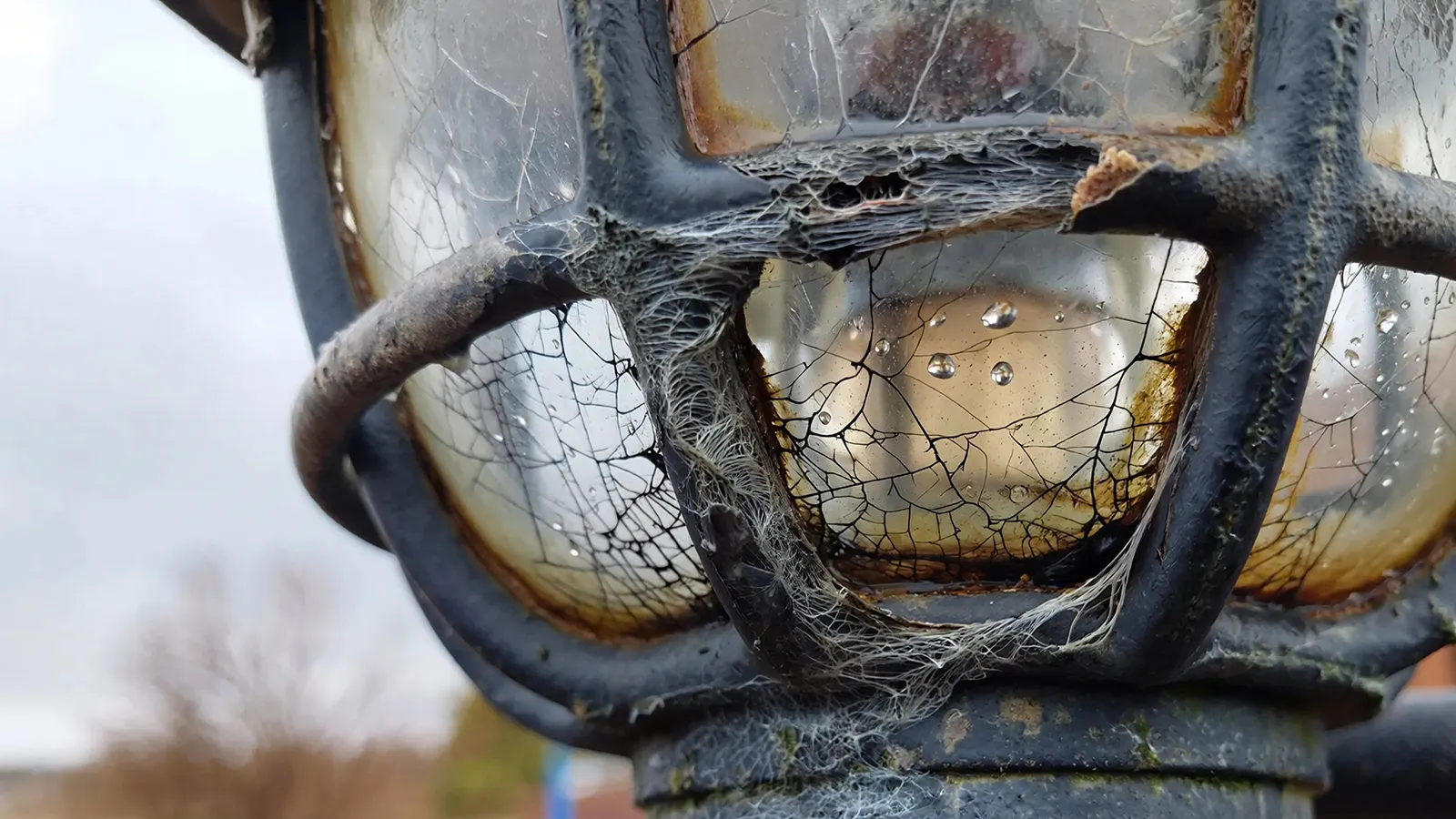
✔️ Moisture problems often begin long before water is visibly present. Rubber gaskets and O-rings that once fit snugly around lenses and housings slowly stiffen with heat, cold, and sun exposure. As they lose flexibility, they stop sealing evenly.
Small gaps allow humid air to move in and out of the fixture as temperatures change. Condensation forms inside and settles on electrical contacts, even if rain never enters directly. This internal moisture quietly accelerates corrosion until performance drops or the fixture fails outright. Seal wear is easy to overlook, but it plays a major role in long-term reliability.
Worn seals usually lead to:
-
Fogging or condensation inside lenses.
-
Corrosion found during bulb replacement.
-
Failures that worsen after temperature swings.
-
Damage that appears without obvious leaks.
Soil Chemistry and Its Effect on Underground Wiring
⚠️ Some lighting issues show up only in specific parts of the yard, even when installation looks consistent. This uneven failure often traces back to what surrounds the wiring underground. Soil holds moisture, salts, and organic material differently depending on location.
Clay-heavy or fertilized soils retain moisture longer, keeping cable jackets wet for extended periods. Over time, insulation stiffens or cracks, exposing conductors directly to the ground. This exposure increases resistance and allows small amounts of current to leak away unnoticed. The system keeps running, but efficiency drops and failure accelerates in those areas.
Soil-related wiring stress is commonly linked to:
-
Faster failures in garden beds or landscaped zones.
-
Problems clustered in one section of the yard.
-
Damage that progresses without visible surface clues.
-
Inconsistent performance tied to seasonal moisture.
Wildlife, Pets, and Unintended Electrical Stress
🐾 Damage caused by animals often goes unnoticed until lights start acting strangely. Rodents may chew on insulation, while pets loosen fixtures through digging or repeated contact. These interactions usually create partial damage rather than complete breaks.
Small openings in insulation allow moisture to reach conductors, compounding other environmental stress. Fixtures that shift slightly can strain internal wiring, leading to intermittent operation. Because the damage is localized and irregular, it can be difficult to connect symptoms to the cause without close inspection.
Animal-related stress typically results in:
-
Intermittent failures with no clear pattern.
-
Problems that return after temporary fixes.
-
Damage concentrated near ground level.
-
Wiring issues without visible surface breaks.
Environmental Debris and Fixture Ventilation Issues
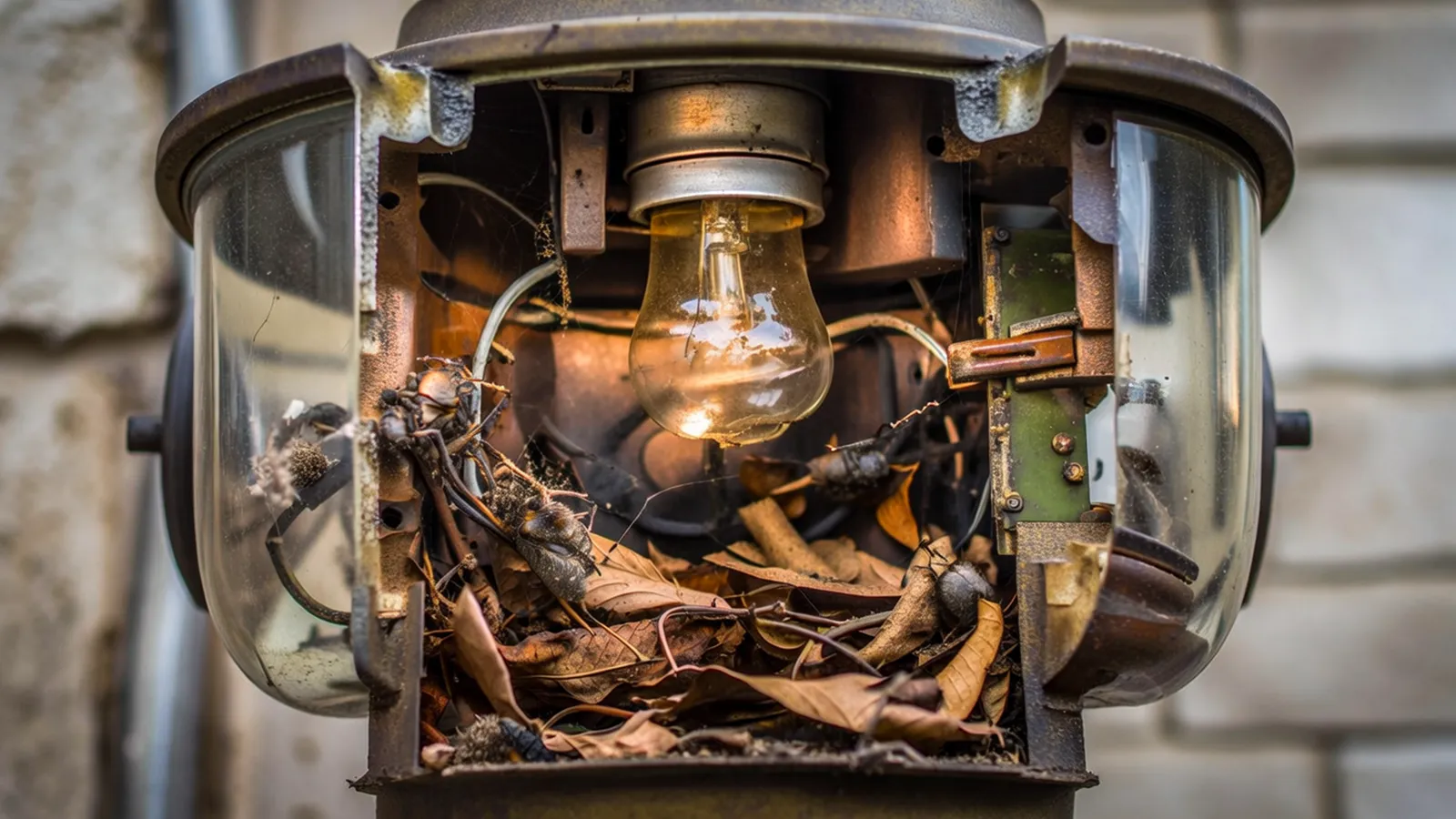
❌ Overheating often develops quietly when fixtures cannot release heat properly. Leaves, dirt, and insects slowly collect inside housings or around vents, especially in landscaped or wooded areas. Airflow drops without any obvious external damage.
As heat builds up, electronic components degrade faster than designed. LED drivers and sensors are especially vulnerable to prolonged high temperatures. This thermal stress amplifies existing issues caused by moisture or voltage instability. By the time overheating is noticed, internal damage is often already done.
Ventilation-related problems usually appear as:
-
Fixtures failing sooner than expected.
-
Lights shutting off after running for a while.
-
Inconsistent behavior during warm evenings.
-
Damage discovered only after disassembly.
Lack of Routine Inspection and Preventive Maintenance
✔️ Most outdoor lighting problems feel sudden only because nothing looked wrong the last time anyone paid attention. Fixtures are often left alone until a light goes completely dark, even though smaller signs usually show up much earlier. Slight dimming, uneven brightness, or a light that reacts differently after rain are easy to ignore at first.
These small changes are early signals that connections are loosening or materials are beginning to break down. When they go unnoticed, minor wear turns into broader system stress. Over time, several small weaknesses stack on top of each other and lead to failure that feels abrupt. Regular visual awareness slows this chain reaction by catching issues while they are still isolated.
Missed early warning signs often include:
-
Subtle flickering that comes and goes.
-
Gradual brightness loss that feels easy to dismiss.
-
Fixtures reacting differently after weather changes.
-
Corrosion or discoloration visible only up close.
Seasonal Stress From Freeze-Thaw and Heat Cycles
⚠️ Many failures seem to appear after winter or during the hottest part of summer, which is rarely a coincidence. Seasonal temperature swings force outdoor materials to expand and contract repeatedly. This movement slowly weakens seals, fittings, and internal connections.
In cold regions, moisture trapped inside fixtures freezes and expands, widening tiny cracks. In warm climates, prolonged heat accelerates aging of plastics, insulation, and electronic components. These stresses repeat year after year, even when the lights appear to work normally. Over time, components lose their tolerance for movement and temperature extremes.
Seasonal stress typically shows up as:
-
Failures clustered after extreme weather.
-
Cracks or loosened parts with no impact damage.
-
Wiring issues that worsen during temperature shifts.
-
Fixtures aging faster than expected for their usage.
Chemical Exposure From Cleaning and Yard Treatments
❌ Outdoor lights often sit directly in the path of lawn care and seasonal treatments. Fertilizers, weed control products, de-icing salts, and cleaning solutions can reach fixtures through runoff or overspray. These chemicals are not designed to interact with electrical materials.
Repeated exposure weakens metal surfaces and breaks down protective coatings. Seals degrade faster, making moisture intrusion more likely over time. Because this damage builds slowly, the connection between yard care and lighting failure is easy to miss. The result is accelerated corrosion that appears without obvious mechanical damage.
Chemical-related wear is often linked to:
-
Corrosion concentrated near the ground.
-
Seal failure without visible cracking.
-
Faster aging in treated lawn or garden areas.
-
Damage appearing seasonally after applications.
Fixture Design Limitations and Aging Standards
💡 Some lighting systems struggle simply because they were built to older expectations. Earlier fixture designs often lack the sealing, drainage, or heat management found in newer models. They may still function, but with less margin for environmental stress.
As materials age, these design limits become harder to compensate for. Heat builds up more easily, moisture lingers longer, and internal parts face greater strain. This does not mean the fixtures were poorly made, only that standards have evolved. Persistent issues often disappear when newer designs replace older ones.
Design-related limitations commonly involve:
-
Poor ventilation compared to modern fixtures.
-
Limited moisture drainage inside housings.
-
Less durable sealing materials.
-
Lower tolerance for voltage and heat variation.
Cumulative System Imbalance Over Years of Use
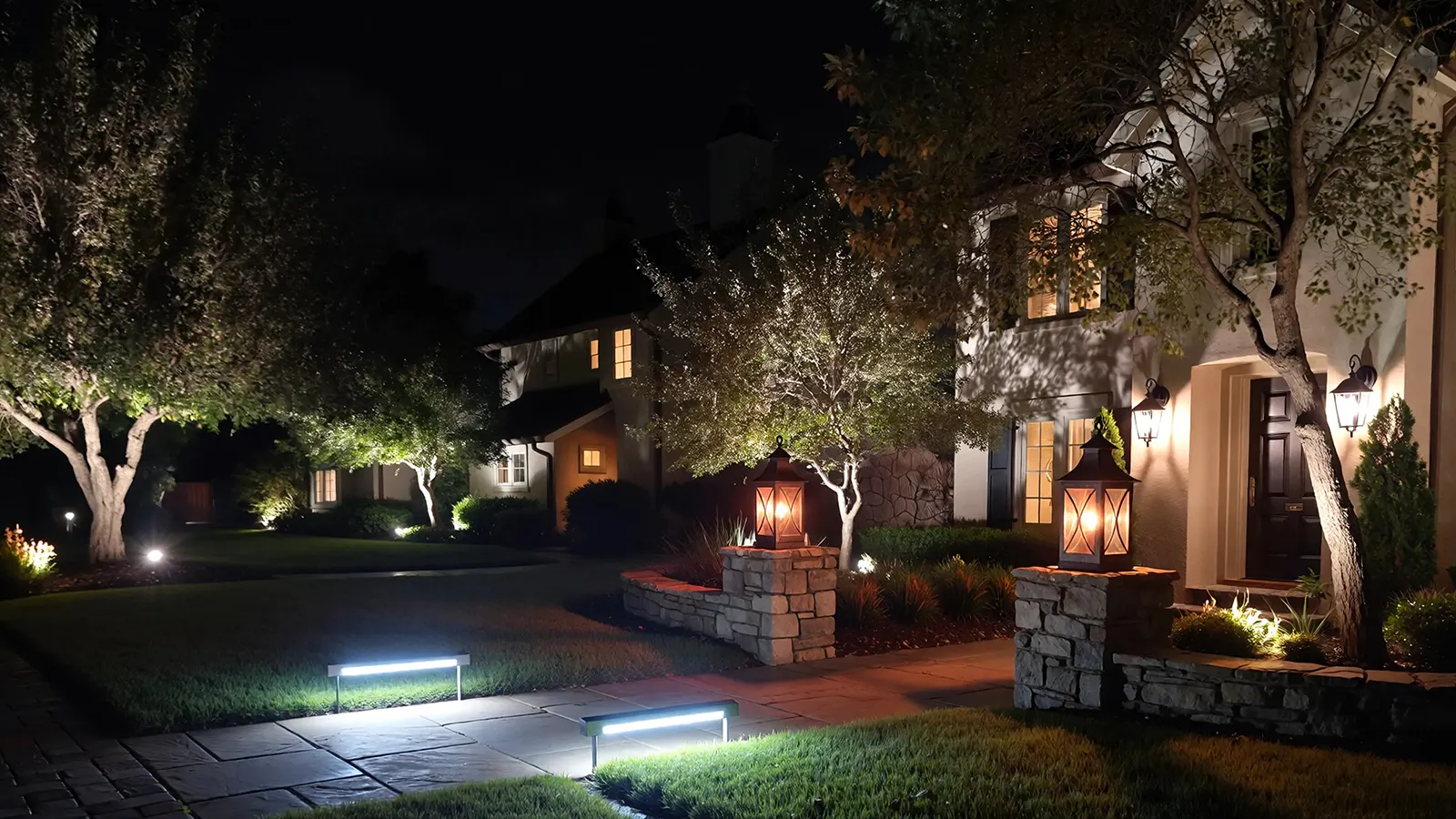
⚠️ Over the years, outdoor lighting systems rarely remain uniform. New fixtures get added, old ones remain in place, and parts age at different rates. What starts as a small upgrade slowly creates uneven electrical demand across the system.
Stronger components compensate for weaker ones until they no longer can. This imbalance leads to flickering, inconsistent brightness, and repeated part replacements that never fully solve the issue. The system continues running, but under constant strain. Without addressing the whole picture, problems keep resurfacing.
System imbalance often looks like:
-
New lights behaving better than older ones.
-
Flickering that moves between fixtures.
-
Frequent replacements in the same areas.
-
Performance that never feels fully stable.
Why Failures Rarely Have a Single Cause
✔️ A light often seems to fail out of nowhere because the visible problem appears in a single spot. In reality, several small issues have usually been building quietly in the background. When they finally surface, the failure feels sudden even though it was developing over time.
What makes these problems hard to trace is that they rarely follow a single path. Different weaknesses overlap and reinforce each other, slowly reducing the system’s ability to cope with normal conditions. The final failure is often just the point where that accumulated stress becomes impossible to ignore.
This layered progression commonly unfolds as:
-
A small loss of sealing allows moisture inside.
-
Moisture lingers and begins affecting internal components.
-
Corrosion forms on electrical contacts.
-
Electrical resistance increases and disrupts current flow.
-
Voltage instability causes the light to shut down completely.
Because only the last step is visible, earlier stages are easy to miss. That is why focusing on one obvious symptom often leads to repeated breakdowns rather than a lasting fix.
contextual label: https://www.energy.gov