Why Coastal Outdoor Lights Take On Water in Salt Air

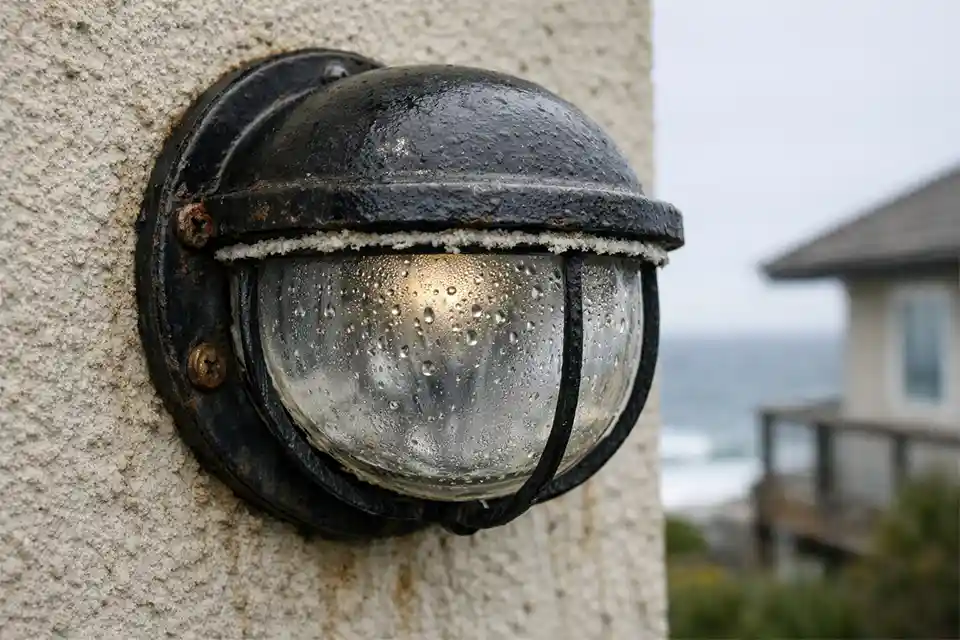
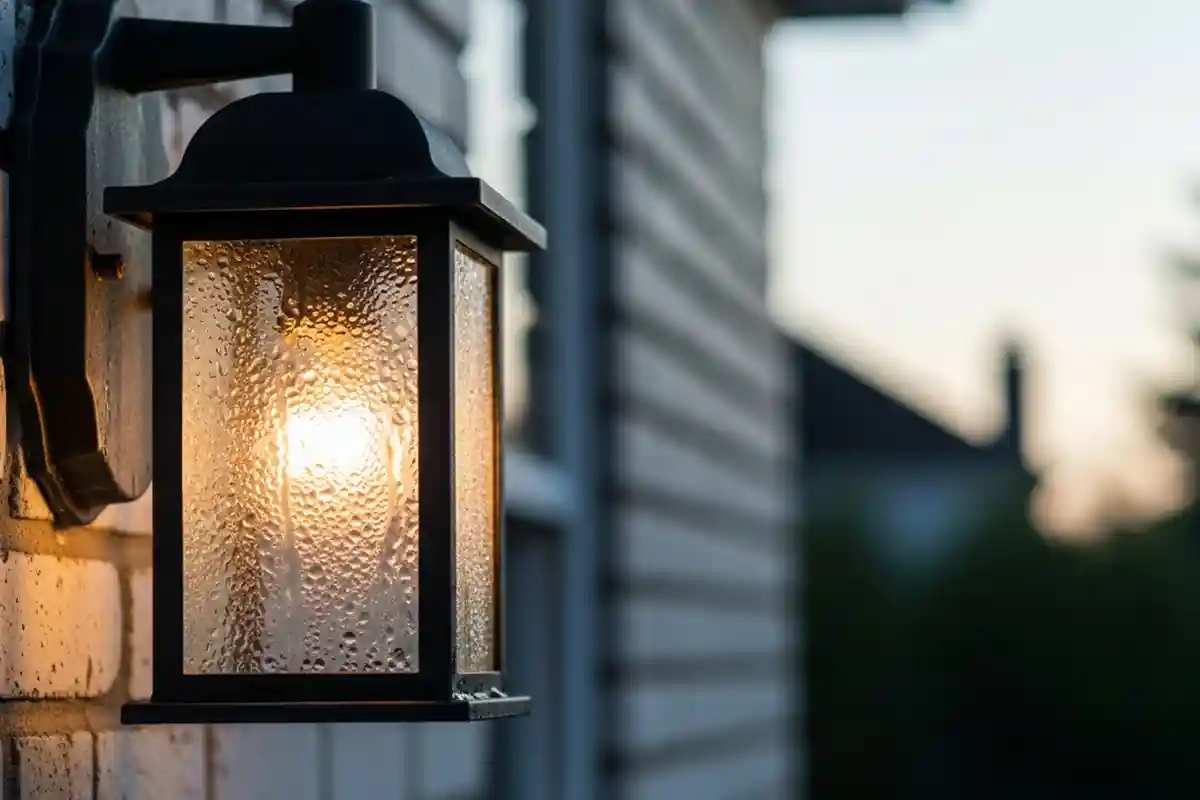
Coastal outdoor wall light with water droplets inside the lens and salt corrosion around the gasket and screws.

Salt air usually is not the first fault. The usual pattern is smaller and more damaging: wind-driven moisture gets past a tired gasket, rear cable entry, or socket cavity, then airborne salt leaves a conductive residue that keeps the inside of the fixture damp longer than it should stay damp. Start with three checks that … Read more

Why Sprinkler Spray Damages Outdoor Lights

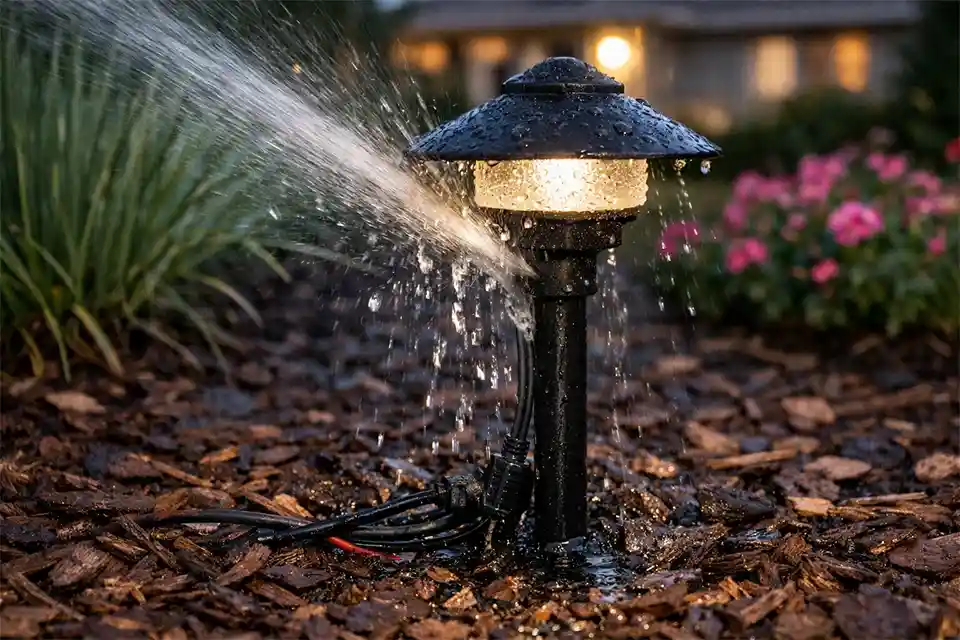
Outdoor path light being sprayed directly by a lawn sprinkler with visible moisture on the fixture and wet ground around the base wiring

If an outdoor light starts flickering, dimming, or dropping out near a sprinkler zone, the most likely issue is not “outdoor wear” in the general sense. It is repeated spray hitting the same weak point over and over: the lens seal, the stem opening, the socket area, or the splice below grade. That pattern matters … Read more

Water Intrusion in Outdoor Lights on Fence Posts

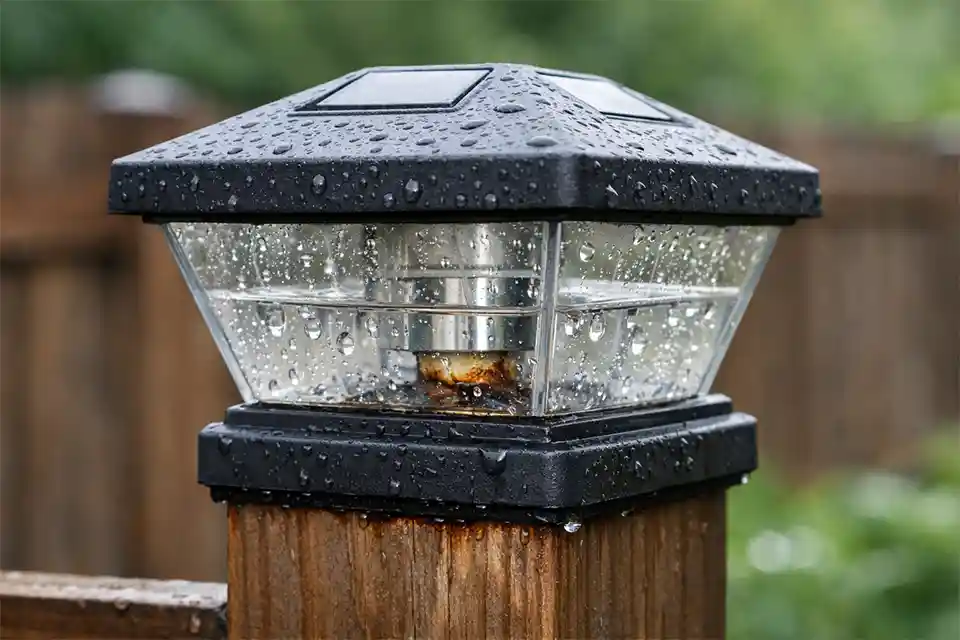
Outdoor fence post light with visible water droplets inside the housing and moisture around the base seam

Water inside a fence post light is usually a leak-path problem, not a weather problem. The most likely causes are a failed base gasket, water tracking up through the wire entry, or a housing that no longer seals tightly after sun, rain, and seasonal movement. The first checks that matter are simple: whether droplets stay … Read more

Moisture Damage in Outdoor Lights on Deck Posts

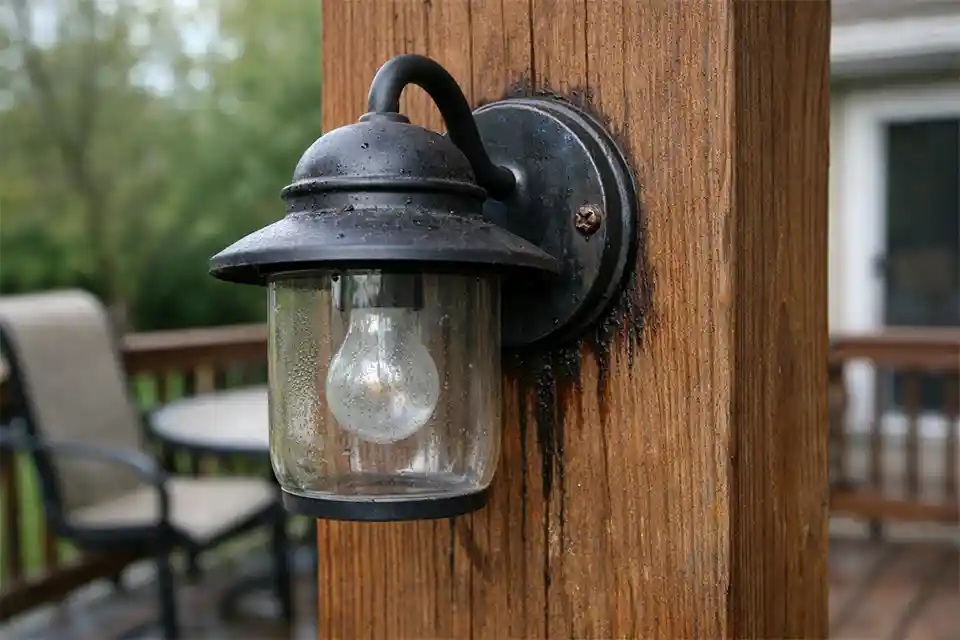
Moisture damage in an outdoor light mounted on a wooden deck post with staining and corrosion

If an outdoor light on a wooden deck post starts flickering, tripping a GFCI, or dying after rain, the usual problem is moisture getting in from the back of the fixture, not a failed bulb. The first checks that actually change the diagnosis are simple: see whether the trouble starts within 12 to 48 hours … Read more

Why Landscape Lights Fill With Water in Garden Beds

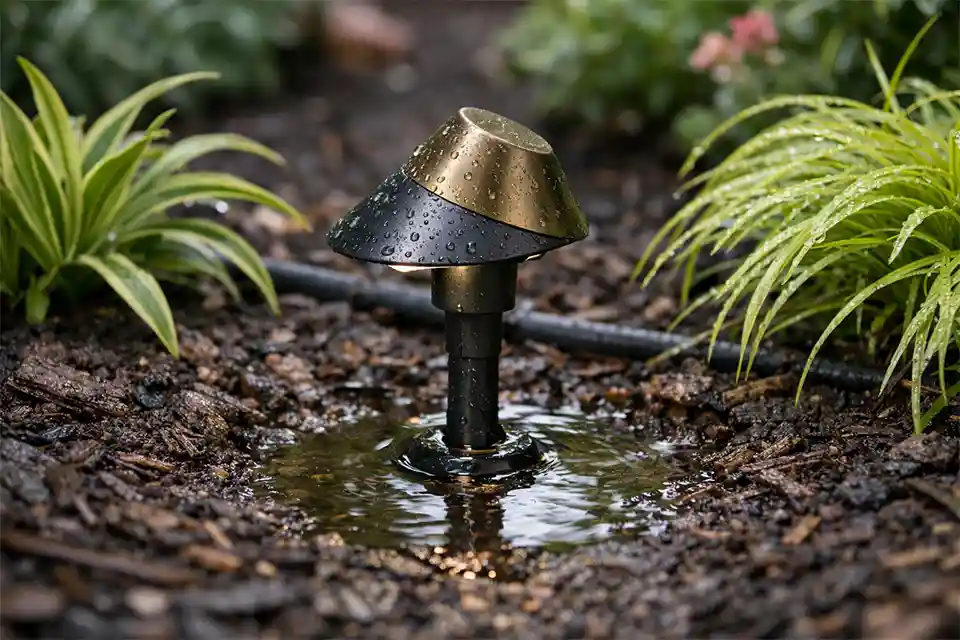
Water pooling around a low-voltage landscape lighting fixture installed in a garden bed.

Quick Solution Summary Water accumulation around landscape lighting installed in garden beds usually happens because the fixture sits too low, the soil drains poorly, or irrigation repeatedly saturates the same small area. In most systems, the real problem is not the rain itself. It is standing moisture that remains at the base of the fixture … Read more

Why Water Gets In Through Cable Entry Points

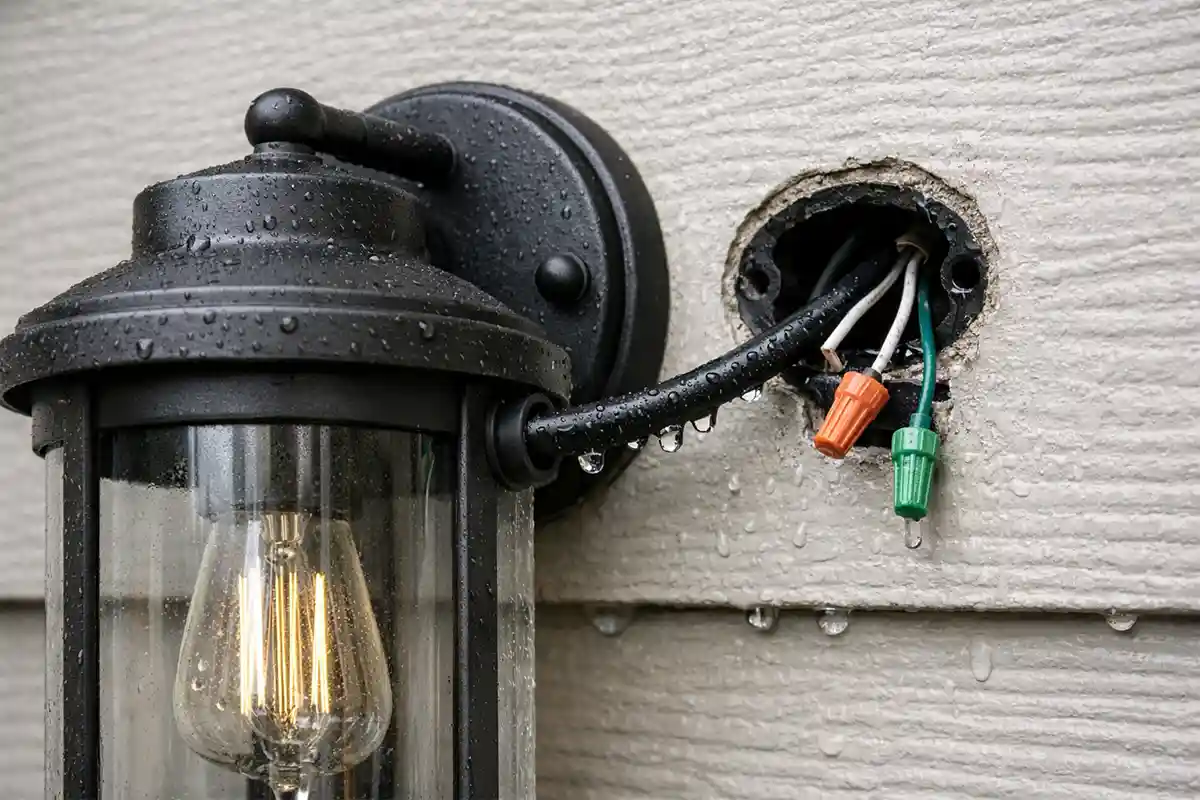
Close-up of an outdoor light fixture cable entry point where water can travel along wiring into the housing.

Most outdoor wall lights sit about 5 to 7 feet above the ground, usually centered beside a door and a few inches below a window line. The wiring comes straight through the wall behind the fixture, passing through a small round hole often less than half an inch wide. That hidden opening, not the glass … Read more

Why Your Outdoor Light Works Fine—Until It Rains

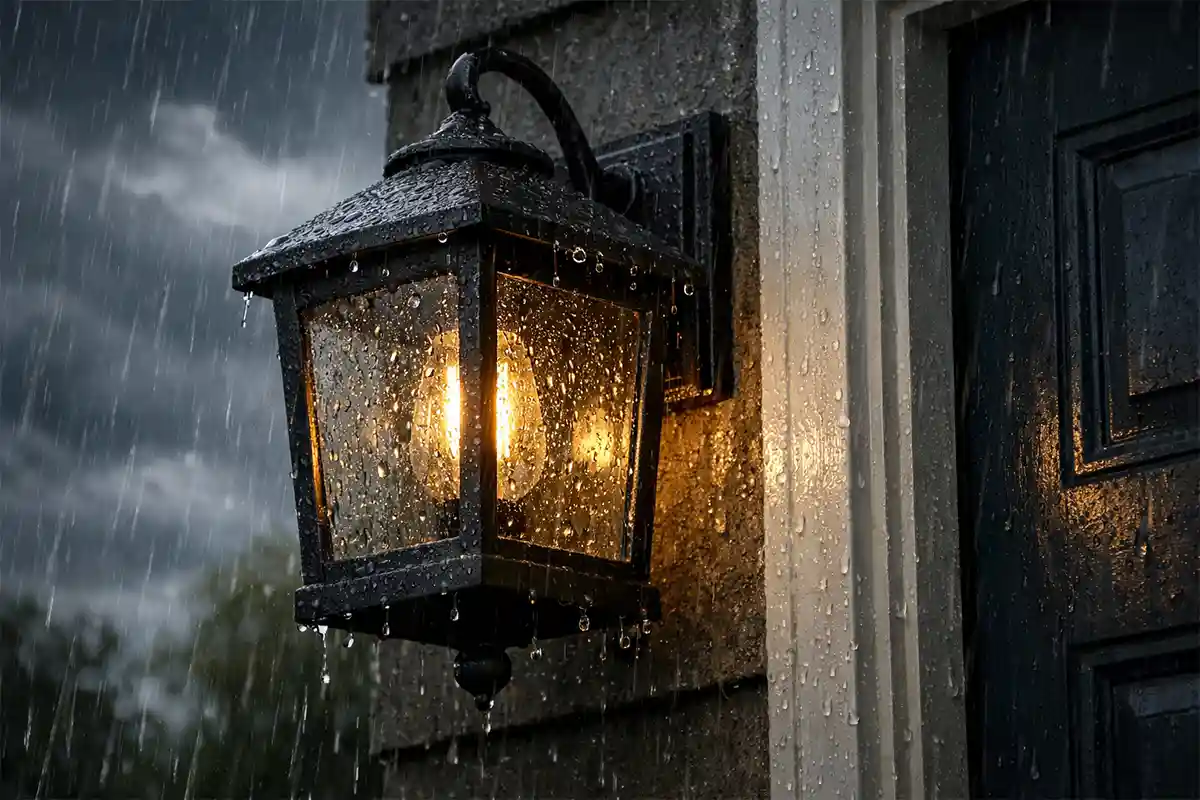
Outdoor wall-mounted light fixture exposed to heavy rain with visible water droplets and moisture accumulation.

After a heavy storm, the porch light hesitates when the switch is flipped. It flickers once, then turns on as if nothing happened. Moments like that are often blamed on the bulb, but rain exposure is usually working quietly in the background. Outdoor lights are built to face the weather, yet they are not sealed … Read more

Corrosion in Outdoor Light Connections

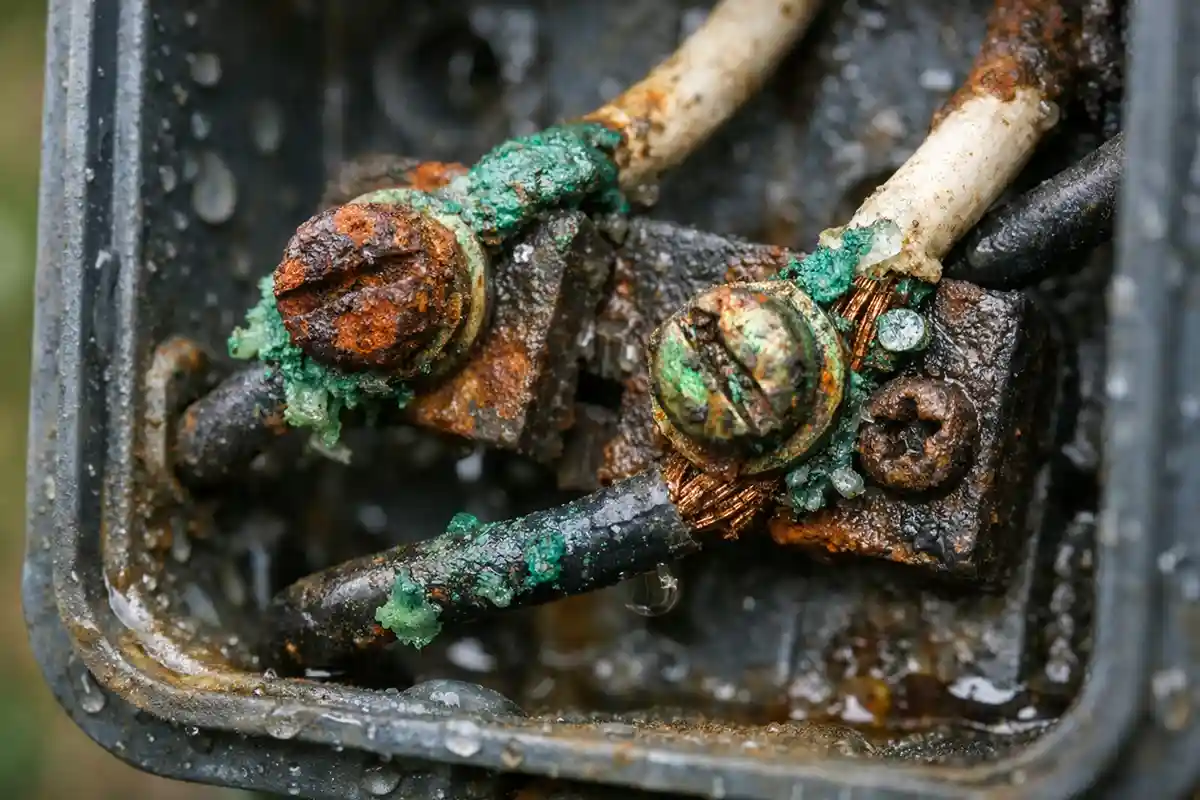
Close-up of corroded outdoor light wiring connections showing rusted terminals and green copper oxidation inside a damp junction box.

You flip the switch, and the porch light comes on like always. Nothing looks unusual from the outside. What you do not see is the slow change happening inside the small metal connection points that carry electricity. Outdoor lighting lives in shifting weather. Rain, humidity, heat, and cold move in and out of the fixture … Read more