
A porch roof can keep falling rain off a light while water still reaches its mounting point. Before replacing the fixture or sealing its edges, establish where fresh wetness first appears: on the exposed housing, on the surrounding wall or ceiling, or inside the glass during rain-free weather.
That distinction controls the repair. Wind can carry rain beneath the roof, the building can deliver water from above or behind, and humid air can condense inside the fixture. The lowest pool shows where water collected; the earliest visible wet surface gives you a better starting point for finding its source.
Warning Sign: Water collecting inside the housing, dripping from the mount, or accompanying flickering or tripping means stop using the light. Switch off its circuit at a safely accessible, dry breaker panel and arrange qualified assessment. Do not touch wet equipment or open the fixture to investigate.
Wind-Driven Moisture vs Water Traveling From Above
Judge the shelter by what gets wet during wind-driven rain. A porch that stays dry during vertical rainfall may receive droplets when the wind turns toward its open side. Wetness concentrated on that side of the fixture and nearby trim supports rain reaching beneath the cover.
That finding changes how protected the location really is. A roof overhead does not settle whether the fixture’s damp- and wet-location ratings match its actual exposure. If rain reaches the housing sideways, include that exposure when assessing the installation.
Water traveling from above produces a different starting clue: fresh wetness on the wall above the light, around a ceiling mount, or along a nearby joint while the outward-facing housing remains comparatively dry. The fixture may be receiving water from its mounting area.
Compare those locations during the same event. An exposed face getting wet first directs attention toward local rain contact; a developing trail above the mount warrants investigation farther upstream. Water appearing after rainfall ends may have been retained along the route, so a delayed drip alone does not establish a roof defect.
Wall, Ceiling, and Cable Entry Paths
At the Wall or Ceiling Mount
On a wall-mounted porch light, start with the visible wall above the backplate. Water running down that surface may reach the mounting interface even when the lantern’s top stays sheltered. A fresh streak approaching the upper edge is more useful evidence than an old stain beneath the glass.
For a ceiling-mounted fixture, inspect the ceiling surrounding the canopy—the cover against the ceiling—from a safe position. Fresh dampness spreading toward that cover or a drip emerging at its edge calls for assessment of the space above. The original source could be a building opening or moisture forming within the assembly; the canopy edge only shows where it becomes visible.
Visible separation adds another issue. If you notice a backplate or mounting block pulling away, report which edge has opened. Movement and a disturbed weather joint deserve assessment, but their presence does not prove that every drop entered there.
Surface streaks can show where water traveled across exposed material. They cannot establish what is happening behind siding, above the porch ceiling, or inside the electrical box. Avoid filling a suspicious gap before that distinction is resolved.
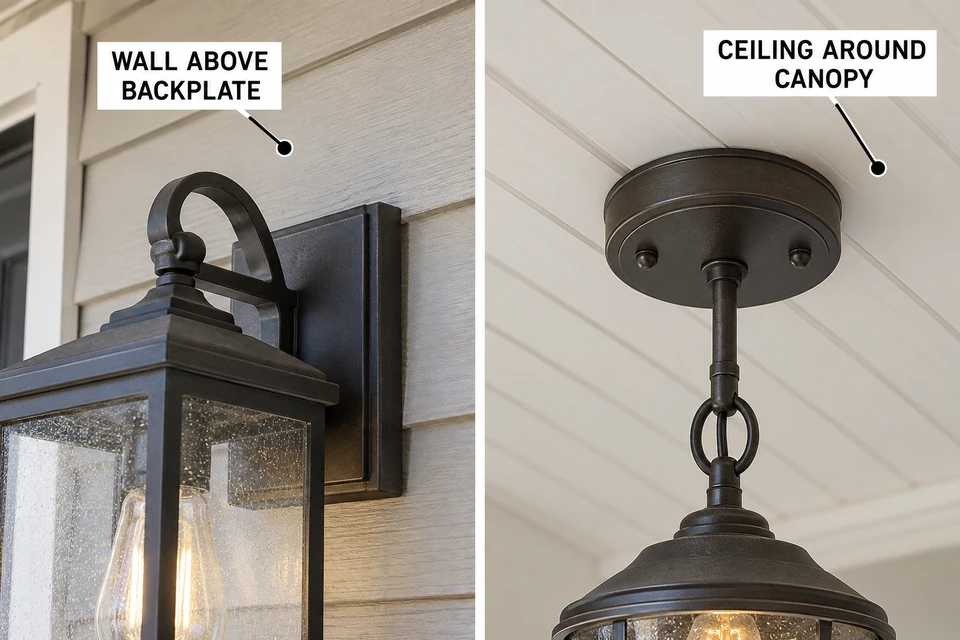
Along the Cable Entry Route
Water can travel along a cable’s outer jacket or through a conduit route toward the fixture’s entry. The visible light may therefore receive moisture from a location that never touches its glass or outer housing.
A wet cable opening identifies an arrival point. Water from the surrounding cavity may emerge through that same opening, while moist air passing through connected spaces can contribute to condensation near the electrical assembly. The opening alone cannot distinguish those mechanisms.
These possibilities require different corrections. Describe any entry-area moisture already observed by a qualified person, but do not loosen the fixture to look for it. Establishing the concealed route requires an inspection that includes safe electrical isolation and the surrounding building conditions.
Condensation That Looks Like a Leak
Moisture that recurs during rain-free cooling periods keeps condensation high on the list. A humid evening followed by a cooler night can leave interior haze without liquid rainwater crossing a fixture seal. That pattern deserves a different investigation from a fresh wall streak developing during a storm.
Condensation forms when glass or another surface cools to the dew point of the air touching it. The moisture-bearing air may already be inside the housing or may enter through connected spaces. Roof cover does not prevent that temperature-and-humidity relationship.
Appearance alone cannot settle the question. Fine fog, larger droplets, and uneven patches change as moisture collects and moves. When assessing water inside an outdoor fixture, weigh those details alongside weather timing and surrounding wetness.
Rain can increase humidity and cool surfaces, so fog after a storm does not automatically establish leakage. Condensation and incoming water can also occur together. A fixture receiving water around its mount may develop fog on its glass as well.
Clearing time provides context, not a universal safety deadline. Moisture disappearing from the lens does not establish that the box or electrical parts are dry. Pooling, recurring drips, or electrical symptoms require assessment regardless of where the moisture originated.
Tracking the First Wet Surface
The strongest observation records a change: a previously dry surface becoming wet, followed by moisture appearing elsewhere. An old stain establishes previous wetting but cannot tell you which route is active today.
The first surface you observe getting wet may still be downstream of a concealed source. A cavity can carry water before anything appears outside, which is why a dry-looking wall cannot eliminate a route behind it. Photograph accessible surfaces from the same safe, dry position without changing the assembly.
- Record the existing condition. Photograph the closed fixture, wall above it, or ceiling around its canopy. Leave stains and moisture undisturbed; do not open or wipe the assembly.
- Note the conditions. Record whether fresh wetness appeared during rain, after rain, or during a rain-free cooling period. Include wind direction when it is apparent.
- Compare later observations. From a safe, dry position, look for a trail extending toward the mount, moisture appearing on the exposed face, or droplets becoming visible inside the lens.
- Pass along the sequence. Give the photographs and timing to the person assessing the building interface or electrical assembly.
A useful description is specific: “The wall above the backplate became wet before droplets appeared in the glass.” That directs inspection without claiming the route has been confirmed. If the first visible moisture is already inside the fixture, report that limitation; the evidence may not distinguish concealed entry from local condensation.
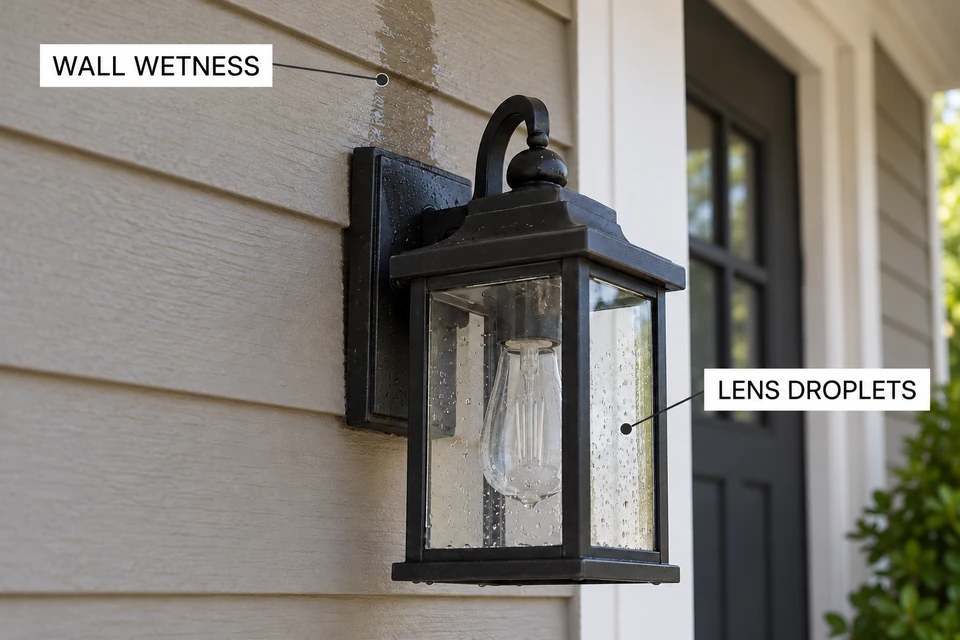
Do not use a hose to reproduce the problem or climb into wet areas to improve the view. Existing evidence may already justify service. An active drip, damaged mounting area, or electrical symptom warrants assessment without waiting for another storm.
Repairing the Building Entry Before the Fixture
Repair the building entry first when the evidence supports water arriving from the building. Electrical isolation and making damaged equipment safe take priority; correcting the upstream source comes before completing fixture reinstatement. A replacement light beneath the same unresolved route remains exposed to the original problem.
A building-envelope professional investigates the wall, ceiling, or roof-related route. An electrician assesses the electrical box, conductors, and fixture. Where water crosses the mounting opening, both scopes may need coordination so that restoring one part does not leave the other unresolved.
If wind-driven rain reaches the housing itself, the assessment shifts toward exposure suitability and installation details. If moisture began immediately after a bulb change, report that timing too: a disturbed cover creates a separate repair question even on a sheltered porch.
Sealing must follow the particular fixture and mounting-system instructions. Preserve intended drainage and ventilation. Covering every joint can conceal the evidence or trap moisture while leaving an upstream entry untouched.
Before the light returns to service, two questions need answers: has the identified moisture route been corrected, and is the electrical assembly fit for use? A clear lens or working bulb answers neither by itself. Use the observed wetting sequence to direct the repair, then verify the source correction and electrical condition separately.
For electrical restoration decisions, follow ESFI’s guidance on qualified assessment of water-damaged electrical equipment.