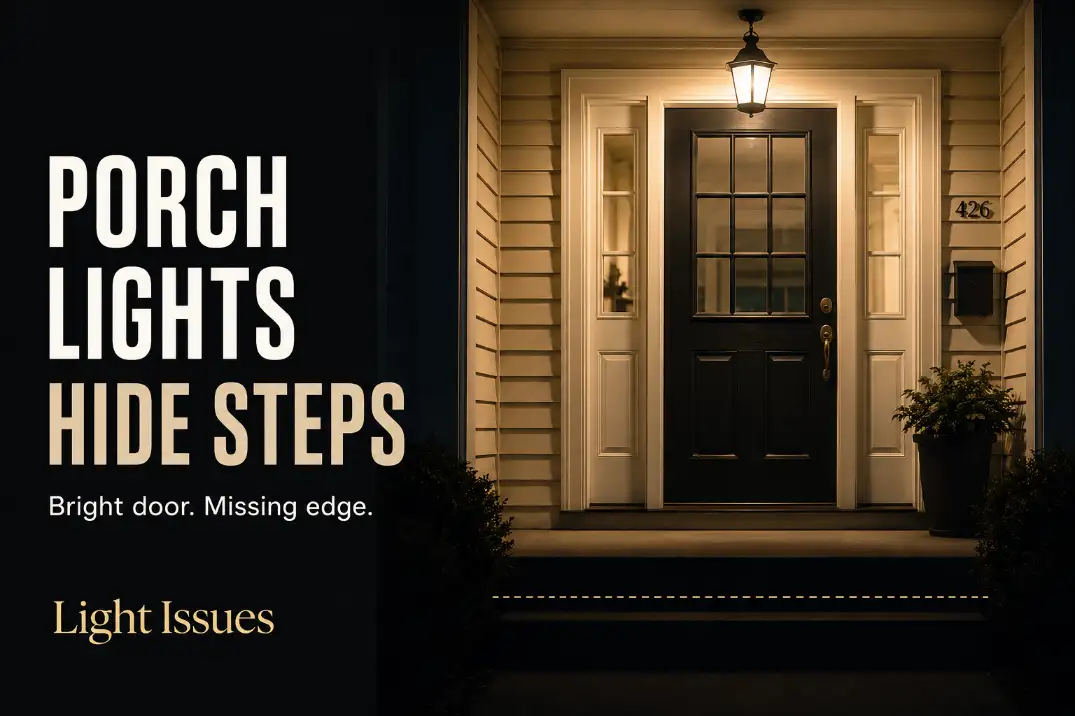
A porch light can be on, the door can look bright, and the first step can still disappear at night. That is the part homeowners often miss.
The problem is not always a weak bulb or a bad fixture. It is usually that the light is landing on the door, wall, porch ceiling, or railing instead of making the step edge readable.
The first check is simple: stand where someone actually walks. Look from inside the doorway before stepping out, then walk up from the path or driveway and look again.
If the edge of the step appears late, blends into the landing, or gets cut by shadow, the porch light is not doing the safety job you think it is doing.
The Step Edge Is the Real Safety Target
The most important part of a porch step at night is the front edge of the tread. Not the door. Not the trim. Not the siding around the fixture. If that front edge is not visible before someone commits to the step, the light is giving the entry a bright appearance without giving the walker enough information.
This is why some porches feel oddly unsafe even when the fixture is powerful. The light may brighten the vertical surfaces while the horizontal walking surface stays flat and dull. A pale front door can glow. White trim can bounce light. A shiny doorknob can catch your eye. Meanwhile, the step edge below remains a weak gray line.
The check has to happen from both directions. From inside the door, the first question is whether you can see where the landing ends before you step forward.
From the walkway, the question is whether the top step separates from the porch surface before you arrive at it. If the step only becomes clear when you are already on it, the light is arriving too late for the movement.
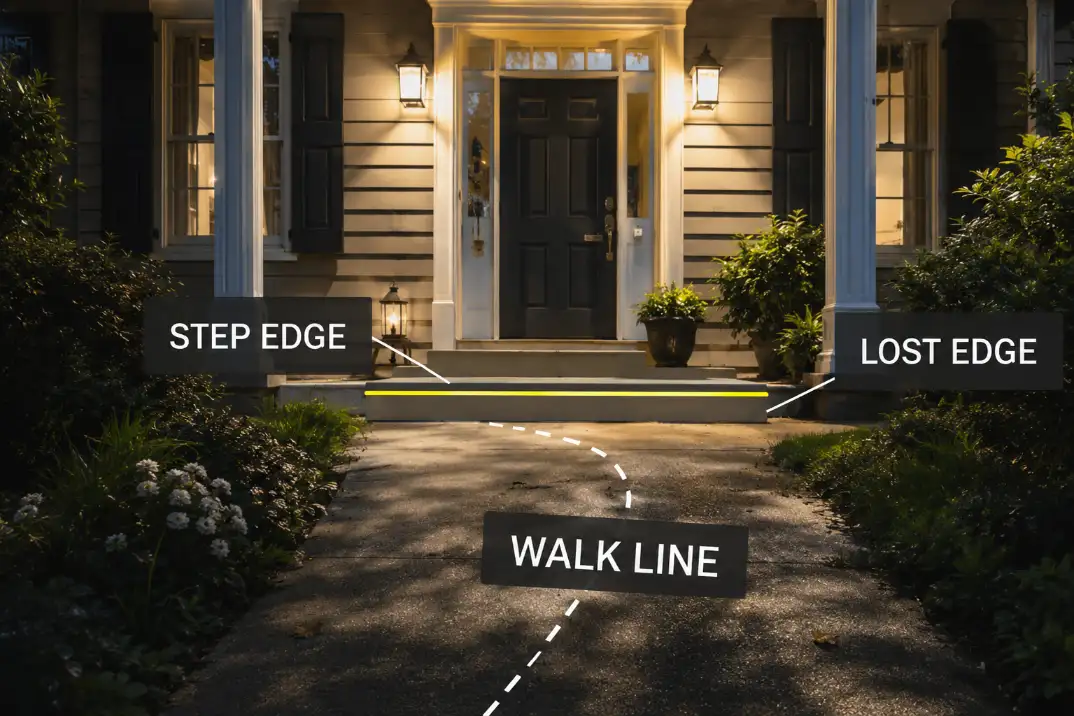
Quick diagnosis: If the porch looks bright but the step edge still feels vague, do not start by shopping for a stronger light. First decide whether the current light is hitting the walking surface or only making nearby vertical surfaces look brighter.
This is also where a broader entry-lighting article can help. If the whole approach feels uncertain, not just the step itself, the problem may connect to why front door lights don’t feel safe even when they technically work.
Rail Shadow Can Hide the Line You Need
A railing can create a more specific failure. The porch may be lit, the steps may have some light, but a post, baluster, or side rail cuts a shadow across the tread right where the eye needs a clean edge. From the porch, that shadow can look harmless. From the walkway, it can break the step line.
This is common when the fixture is mounted close to the door and the railing sits between the light and the lower step. The rail does not have to block all the light. It only has to interrupt the contrast at the edge. A narrow shadow across the front of a tread can make the step look flatter than it really is.
The direction matters. A light mounted above and slightly to one side can throw railing shadows diagonally across the walking path.
A fixture on the opposite side may show the same step more clearly. That does not mean the railing is wrong. It means the light path and the walking path are fighting each other.
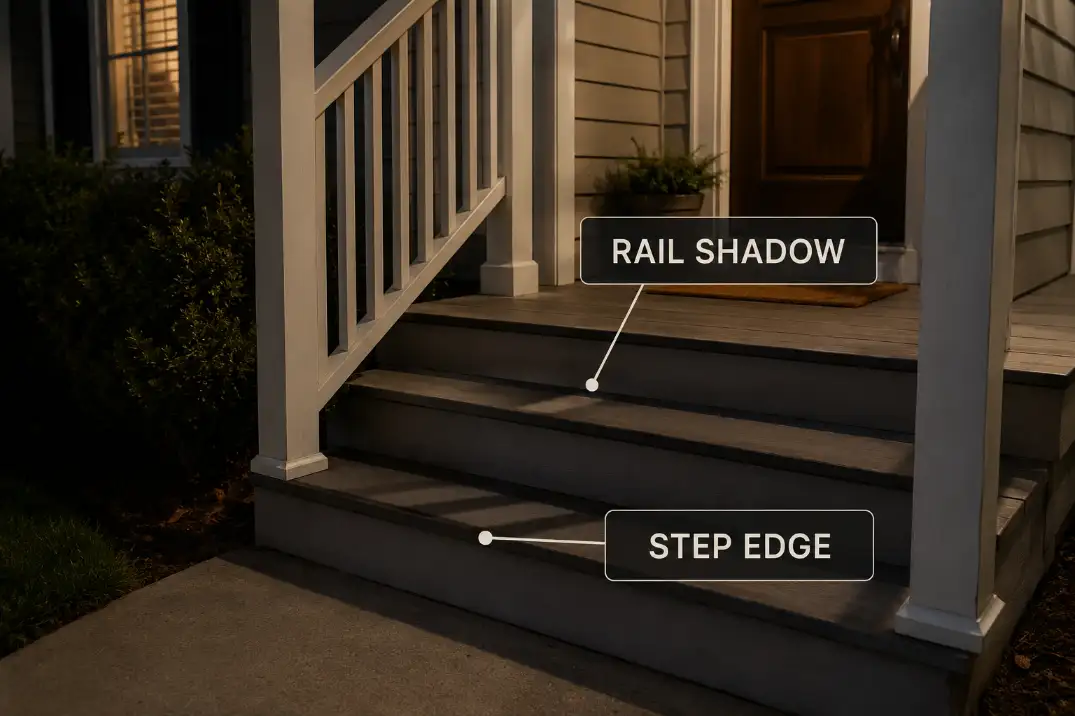
To diagnose this, stand at the bottom of the steps and look up the normal walking route. If the rail shadow crosses the step edge from that approach, the problem is not simply “not enough light.” It is light blocked in the wrong place.
A Light Above the Door Often Lights the Door, Not the Steps
An over-door porch light can be useful for the lock, house number, and general entry recognition. But it can fail the steps because it is mounted for the door plane, not the walking plane. The light spreads across the wall and door, then fades before it defines the landing and step edge below.
A very bright bulb can make this worse. When the fixture or wall becomes the brightest object in the view, the eye adjusts to that brightness. The darker landing below can then look flatter than it would under softer, better-directed light. The homeowner sees “more light,” but the walker gets less usable contrast.
This is why glare and hidden steps often appear together. A porch light can create a bright hot spot at face level while leaving the lower edge weak. If you look toward the door and the fixture pulls your eye away from the step, the light is competing with the walking surface.
Where people go wrong: The easy fix is to install the brightest bulb the fixture allows. That can increase glare, flatten contrast, and leave the step edge almost unchanged. The better question is not “Is the porch bright?” but “Can the walker read the next level change?”
When glare is part of the issue, it is worth separating brightness from direction. A related guide on why outdoor lights create glare can help explain why the eye struggles even when the fixture looks strong.
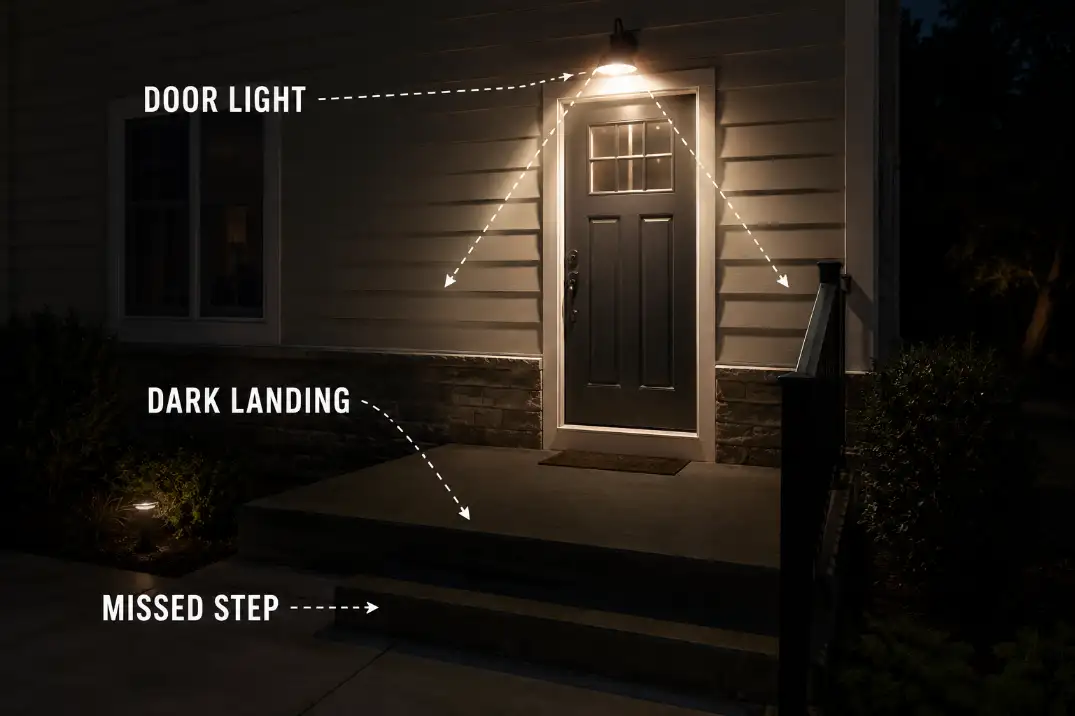
The useful decision is whether the existing fixture can be adjusted, shielded, softened, or redirected enough to reveal the step. If the light is fixed in position and always pulls attention upward, the fix may need support from a lower angle instead of more power above the door.
A Dark Landing Means the Light Is Ending Too Early
The landing is the pause point between the house and the steps. It gives the eye a flat surface to read before the body changes level. When the landing is dark, the first step can feel sudden even if the lower tread has a little light on it.
This is different from a step-edge problem. A step-edge problem means the front line of the tread disappears. A landing problem means the flat transition zone is not readable enough before the step begins. Both can happen together, but they should not be diagnosed as the same thing.
A small porch with one step can be especially tricky. The door area may look bright because the wall is close to the fixture, but the landing surface near the threshold remains uneven or shadowed.
Dark concrete, wet pavers, dark-painted decking, and deep porch overhangs can all reduce surface contrast without making the whole entry look obviously dark.
Use this compact diagnosis before choosing a fix:
| What you see | Likely cause | Fix direction |
|---|---|---|
| Door looks bright, step edge disappears | Light favors vertical surfaces | Redirect, shield, or add lower support light |
| Rail shadow crosses the tread | Post or railing blocks the light path | Change light angle or add side fill |
| Landing feels flat before step-down | Light ends too early | Reveal the landing transition |
| Path is visible but step is late | Decorative path light misses the edge | Aim support light toward the step edge |
The matrix should not replace the night test. It only tells you what to look for first. If the landing is the weak point, a better porch bulb may not change much because the light is still ending before the transition zone.
A Support Path Light Should Reveal Edges, Not Decorate the Walk
A support path light makes sense when the porch light cannot show the step edge from above. The goal is not to decorate the walkway or create a row of glowing dots. The goal is to send a low, controlled wash of light across the edge or landing transition so the walking line becomes readable.
The best support position is often slightly off to the side of the approach, low enough to catch the surface but not aimed into the walker’s eyes. If the light only shines into mulch, shrubs, or the center of the walk, it may look pleasant while doing very little for the step.
For this specific problem, the useful question is whether the support light reveals the level change soon enough to guide the next step.
This is where path lighting can either help or create a second problem. A path light placed too close to the walkway edge can become a glare point or create uneven bright spots.
A better safety layout keeps the source controlled and uses the light pattern to define the walking surface. For more on the safety side of this, see path lights and walkway safety.
A support light should not be the automatic fix for every porch. If the step edge is already readable and the real issue is glare from the main fixture, adding more lights can make the entry busier. But if the landing stays dark from both the doorway and the approach, a lower support angle often solves what the porch fixture cannot.
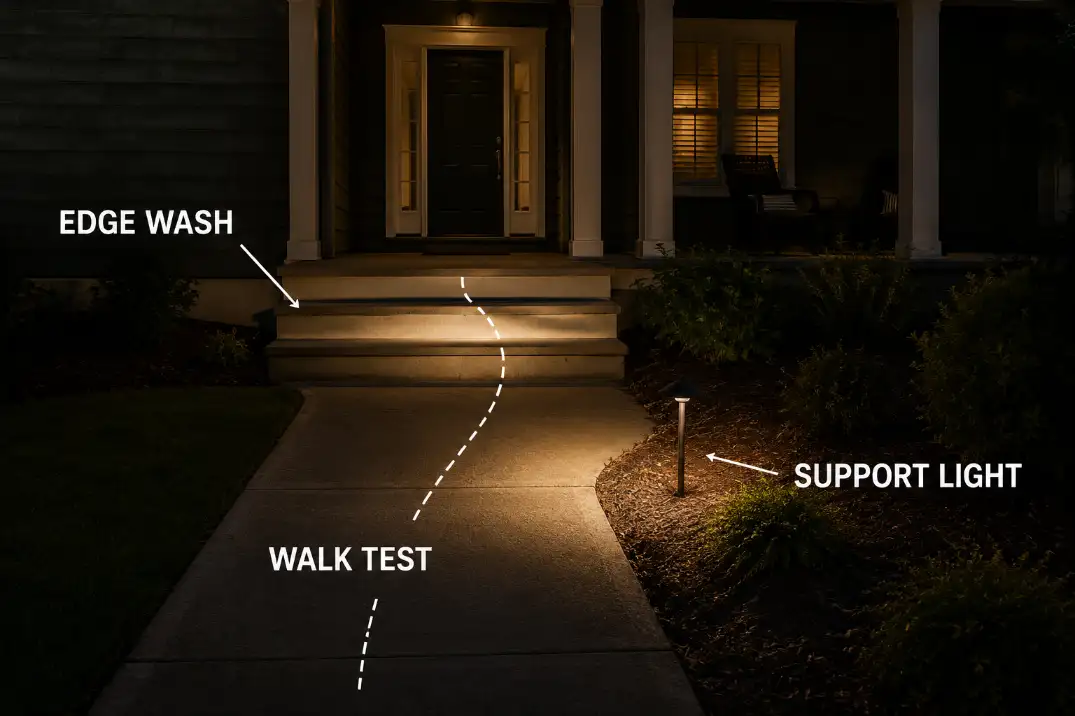
Run a Step Test Before You Replace the Porch Light
The Step Test keeps you from replacing a working fixture for the wrong reason. Run it after dark with the porch light in its normal setting. If you recently changed a bulb, adjusted a fixture, or cleaned the lens, test again because small changes can shift glare and shadow.
- Stand inside the doorway and look down before stepping out. The landing edge should be visible before your foot moves forward.
- Stand on the landing and look toward the first step down. The front edge should separate from the surface behind it.
- Walk up from the path or driveway at a normal pace. The step should become readable before you reach it, not after.
- Check whether railing shadows cross the tread from the walking angle. A shadow that looks minor from the side can hide the line from the approach.
- Look again if the surface is wet, dark, or glossy. Wet concrete, painted wood, and dark pavers can reduce contrast.
- Decide the fix from the failure point: adjust glare, reveal the landing, add side support light, or replace the fixture only if it cannot light the walking plane.
A short replacement filter can help at the end of the test. Keep the porch light if the step edge is readable from both directions. Adjust or shield it if the fixture itself is the brightest thing in your view. Add support lighting if the landing or approach stays dark after the main glare is controlled.
If the problem turns out to be placement rather than fixture failure, the larger issue may be poor targeting. A guide on outdoor lights that miss the target area can help separate bad aim from bad equipment.
The decision is simple: a porch light earns its place only if it helps the person walking. If it lights the door but hides the step, treat that as a diagnosis problem first.
Keep it when the edge is readable, adjust it when glare is the cause, support it when the landing stays dark, and replace it only after the Step Test proves the current light cannot reveal the steps.
For broader fall-prevention context around home steps and outdoor walking areas, the U.S. Consumer Product Safety Commission’s Home Safety Checklist for Older Consumers is a useful safety reference.