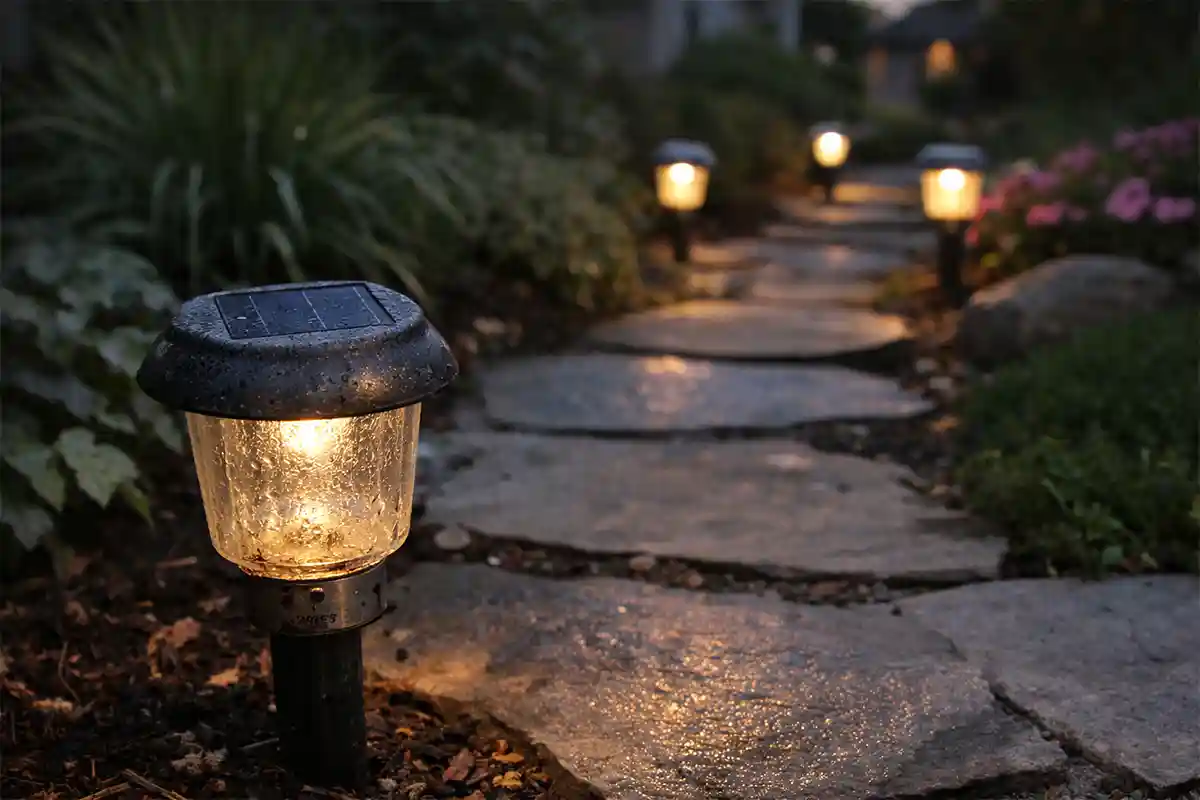
A warm evening settles in, and the pathway lights along the driveway glow softer than they did a few months ago. They still switch on at dusk, but the brightness feels thinner. Some fade out long before the house goes quiet for the night.
At first, it seems like random wear. Maybe the set wasn’t built to last. In reality, the slowdown usually builds in small, barely noticeable steps.
Solar outdoor lights are compact energy systems. When one internal piece weakens — even slightly — the rest of the system has to compensate. Over time, that strain becomes visible in shorter runtimes and dimmer light.
The Real Lifespan of Rechargeable Batteries
A common pattern appears when a light turns on normally at sunset but shuts off earlier each week. That steady shrink in runtime almost always traces back to the rechargeable battery inside.
Most solar garden lights rely on small batteries that charge during the day and discharge every night. In many U.S. climates, that means hundreds of full cycles per year. This daily routine slowly reduces how much energy the battery can store, even if the light still appears functional.
Cold seasons make the change easier to notice. In northern states and colder regions, battery chemistry slows down in winter temperatures. A fixture that lasted until morning in July may barely reach midnight in January.
Entry-level models often include low-capacity batteries from the start. So when lights begin acting inconsistent instead of completely dead, it rarely means a sudden failure. Outdoor lighting that behaves unpredictably often reflects early-stage energy storage decline rather than complete electrical failure. The shift from steady glow to uneven performance usually signals gradual battery fatigue.
Solar Panel Output Loss Isn’t Immediate — It’s Gradual
A thin film of dust on the panel may not seem important at first glance. Yet even a slight haze changes how much sunlight the panel can convert into stored energy.
Small solar panels do not have much excess capacity. UV exposure slowly dulls the surface over time, and lawn debris, pollen, and sprinkler spray add another layer of interference. Each day, the panel collects just a little less energy than it did when new.
The drop rarely feels dramatic. Instead, nighttime performance slowly shortens. By the time the difference becomes obvious, reduced charging has likely been happening for weeks or months.
Moisture Infiltration and Micro-Corrosion
After heavy rain, condensation sometimes appears inside the lens. Even when water is not visible, humidity can enter through tiny gaps around seams and battery covers.
Once moisture settles inside, metal contacts begin to oxidize. Corrosion increases electrical resistance, which weakens the flow of current between the battery and the LED. The light may flicker briefly, glow unevenly, or skip a night altogether.
In coastal areas or humid southern climates, salt in the air accelerates this process. What looks like a fading bulb is often internal corrosion quietly interfering with electrical flow.
Circuit Board Fatigue and Heat Stress
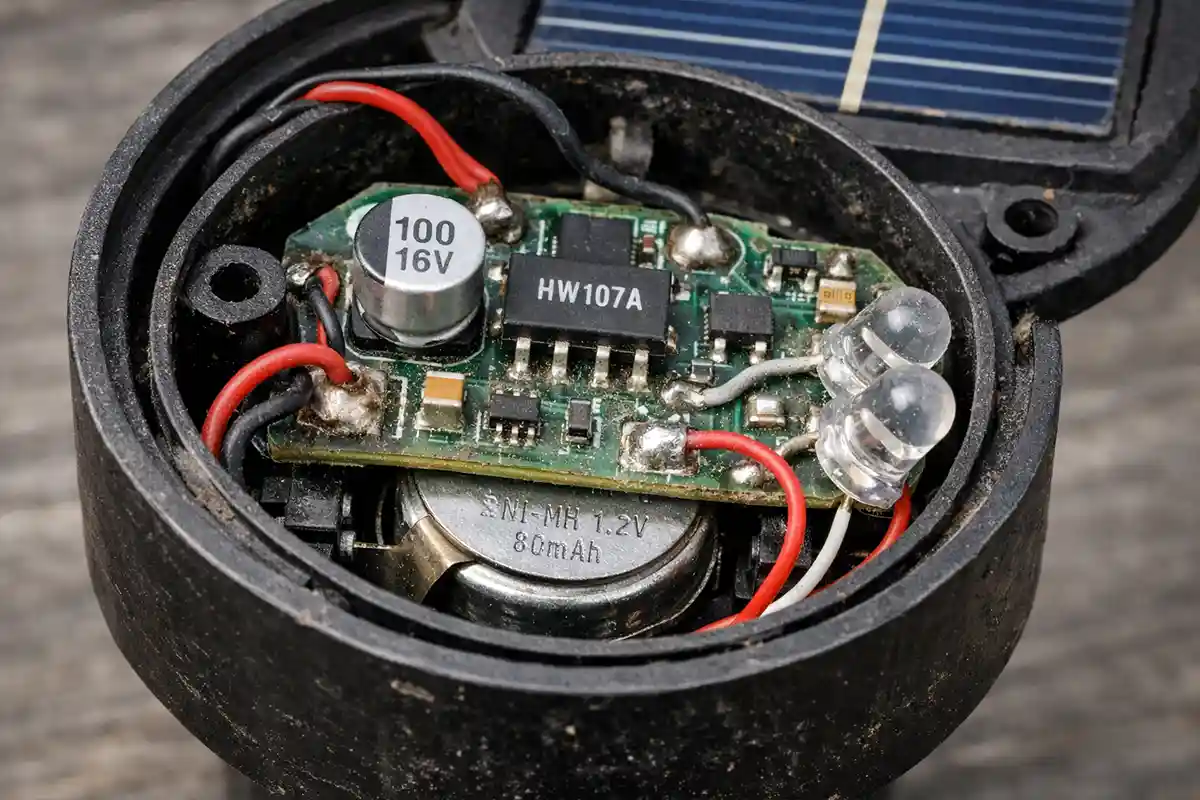
Inside the housing sits a small circuit board that manages charging and decides when the light turns on. During hot summer days, internal temperatures rise. At night, they drop again. This daily expansion and contraction slowly stresses solder joints and thin wiring paths.
Over time, tiny fractures can form in these connections. The result may look random — a brief flash, a delayed start, or a light that shuts off without warning. The LED often gets blamed, but the instability usually starts deeper in the electronics.
Because these boards are sealed and compact, repairs are rarely practical. Once electrical fatigue sets in, performance continues to decline.
LED Durability vs. System Instability
The LED itself is typically the most durable component. Under stable power conditions, it can last for many years. The problem is that solar fixtures rarely provide perfectly stable voltage over time.
As batteries weaken and controllers age, the power reaching the LED becomes less consistent. Brightness may shift slightly. The color tone can look dull compared to when the fixture was new.
In many cases, the LED is still capable of operating normally. It simply reflects the instability happening upstream. Solar outdoor lights fail quickly not because the light source is fragile, but because the small energy system supporting it wears down faster than most people expect.
| What You Notice at Night | What’s Likely Happening Inside | Why It Develops Over Time | Long-Term Effect on the System |
|---|---|---|---|
| Light turns on but shuts off within minutes | Battery capacity has declined | Daily charge-discharge cycles reduce energy storage | Runtime shortens progressively each season |
| Brightness looks weaker than last year | Reduced panel output or unstable voltage | UV exposure and surface haze lower charging efficiency | Gradual dimming even when activation seems normal |
| Light flickers briefly at dusk | Circuit board stress or minor corrosion | Heat expansion and moisture increase electrical resistance | Intermittent behavior becomes more frequent |
| Some fixtures last all night, others don’t | Uneven sun exposure or partial shading | Tree cover or fence lines reduce afternoon charging | Charging imbalance accelerates battery fatigue |
| Performance drops sharply in winter | Cold reduces usable battery capacity | Low temperatures slow internal chemical reactions | Seasonal instability becomes more noticeable each year |
| Battery replacement helps only temporarily | Underlying panel or circuit degradation remains | Multiple components are aging simultaneously | System reaches cumulative fatigue threshold |
Seasonal Stress Cycles Accelerate Wear
Late August evenings still feel warm, and the solar lights along the walkway glow steadily. A few months later, after the first hard freeze, those same lights fade out early. The timing feels seasonal because it is.
Summer heat pushes batteries harder than most people realize. Internal chemical reactions speed up, which slowly shortens overall lifespan. Then winter swings in the opposite direction, limiting how efficiently batteries can accept and release stored energy.
In northern U.S. states, shorter daylight hours make the shift even more noticeable. With fewer hours of strong sun, panels cannot fully recharge weakened batteries. By early spring, performance may already feel unreliable.
Why do my solar lights turn on but shut off after a few minutes?
At dusk, the light clicks on like normal. It looks fine for a moment, then goes dark while there is still plenty of evening left. That quick shutdown creates confusion because sunlight seemed sufficient during the day.
Is the battery failing even if the light activates at sunset?
Yes. A battery can hold enough charge to power the LED briefly but not enough to maintain output for long.
Can two cloudy days really make that much difference?
They can. Small solar panels have limited storage margins, so reduced sunlight quickly shortens runtime.
Does cold air cause faster shutoff?
Yes. Low temperatures reduce usable battery capacity, even if the cell was fully charged earlier.
Could partial shade during the afternoon be responsible?
Yes. Even limited shade during peak sun hours reduces total charging enough to cause early cutoff.
Is moisture inside the fixture part of the issue?
Often. Corrosion increases electrical resistance, which drains stored energy more quickly.
Can a dirty solar panel cause a light to shut off quickly?
Yes. A thin layer of dust or residue can reduce daily charging enough to leave only a short burst of stored energy at night.
Does an aging light sensor affect runtime?
It can. If the sensor misreads ambient light, the system may activate earlier than necessary and drain the battery sooner.
Could internal wiring issues lead to brief illumination?
Yes. Minor corrosion or weakened solder joints can interrupt stable current flow, causing the light to power on and then drop out unexpectedly.
That short burst of light is usually the system using what little energy it has left. The quick shutdown reflects limited reserve, not random behavior.
Poor Placement and Charging Imbalance
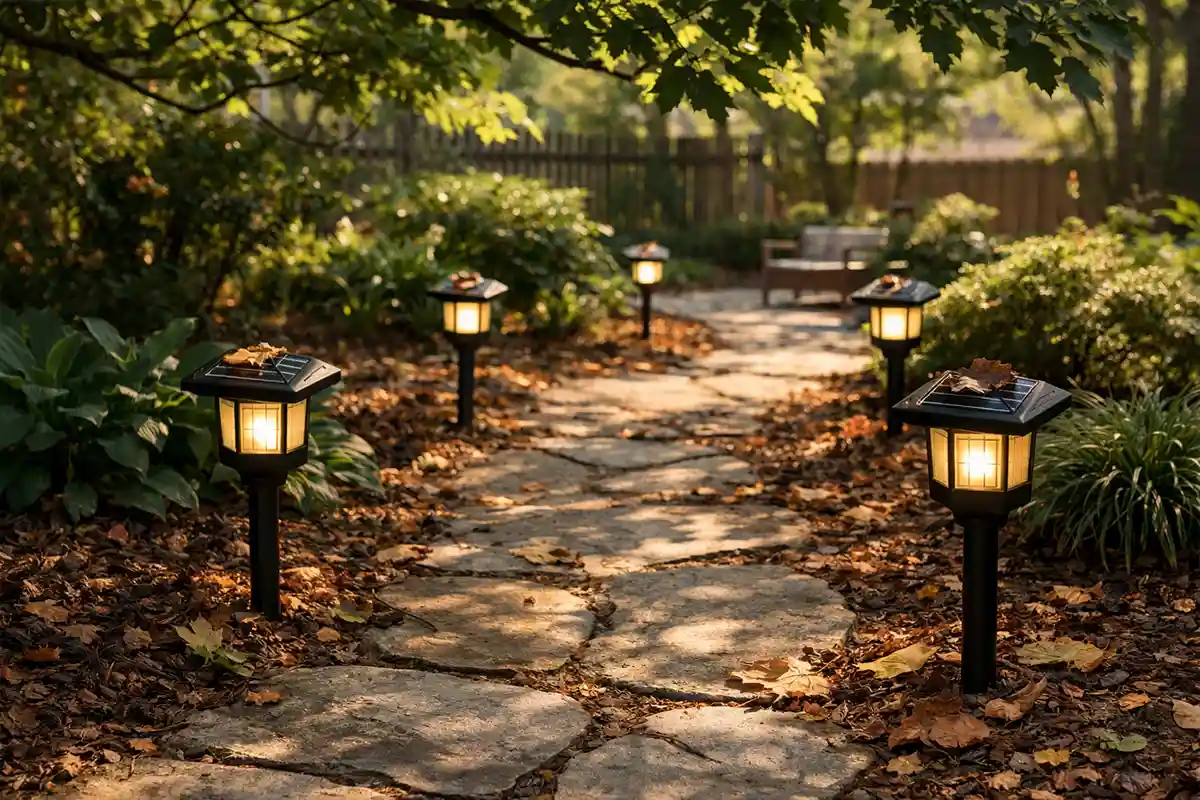
A row of lights placed near a fence line may look evenly spaced, yet one side of the yard receives far less sun. Even light afternoon shading changes charging patterns over time.
Small garden panels do not compensate well for uneven exposure. When one section of the panel is shaded, overall output drops. That reduced intake forces the battery into a routine of partial charging.
Sprinkler overspray and lawn debris add another layer of imbalance. Mineral spots dull the panel surface, and scattered leaves block light intermittently. Over weeks, the energy rhythm becomes inconsistent.
Material Quality and Cost Compression
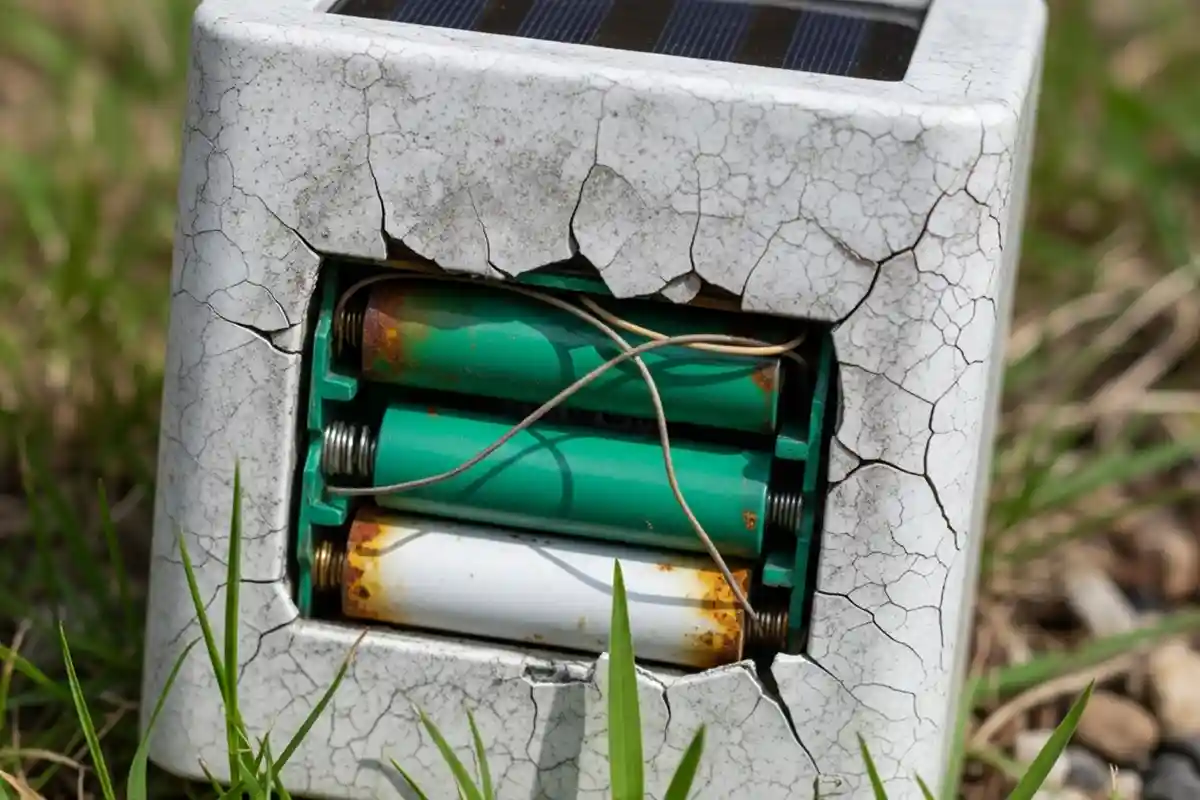
Two lights purchased at the same time can age very differently depending on material quality. After a year of sun exposure, thinner plastic may begin to fade or develop small cracks. Those openings allow humidity to enter more easily.
Lower-cost fixtures often use minimal sealing and lighter internal wiring. Heat buildup during long summer days stresses these components. Over time, slight electrical interruptions appear as dimming or occasional flickers.
When several fixtures in the same yard begin acting unstable, coincidence is unlikely. Subtle light instability frequently traces back to compounding environmental and electrical stress inside outdoor fixtures. What looks random often reflects gradual material breakdown.
Cumulative Electrical Fatigue and System Collapse
One light now shuts off after dinner. Another fails to activate at all. The pattern spreads slowly rather than all at once.
Battery wear, reduced panel efficiency, minor corrosion, and circuit fatigue add up over time. Each factor alone may seem minor. Together, they push the system beyond its operating margin.
At a certain point, performance drops sharply. The failure feels sudden, yet it represents months of layered stress reaching a tipping point.
When Failure Signals Design Limits, Not Defects
A light that once stayed on until sunrise now fades before the evening is over. Replacing the battery helps for a while, but the improvement feels temporary. At that point, the issue often goes beyond a single worn component.
Many solar fixtures are built to meet a price point, not to withstand years of heat, moisture, and freeze-thaw cycles. Compact housings limit battery size from the start. Thin plastic shells and light seals allow environmental stress to build inside over time.
In harsher climates across the U.S., these limits show up faster. Intense summer sun weakens materials, and winter cold strains internal electronics. What looks like repeated bad luck is often the edge of the fixture’s original design capacity.
Upgrading the Right Components Extends Lifespan
A noticeable shift happens after swapping in a higher-quality rechargeable battery. Runtime stabilizes, and lights that once faded early begin lasting deeper into the night. The difference feels immediate because the energy reserve is no longer operating at its minimum margin.
Panels that are kept clear of debris also show measurable improvement. When dust, pollen, or sprinkler residue no longer dull the surface, charging becomes more consistent. Even small gains in daily intake compound over weeks of use.
Fixtures built with thicker housings and sealed battery compartments tend to age more slowly. Better material density reduces internal humidity swings and slows corrosion. The change is not dramatic on day one, but over seasons it becomes visible in steadier brightness and fewer random shutdowns.
Placement Strategy as a Longevity Multiplier
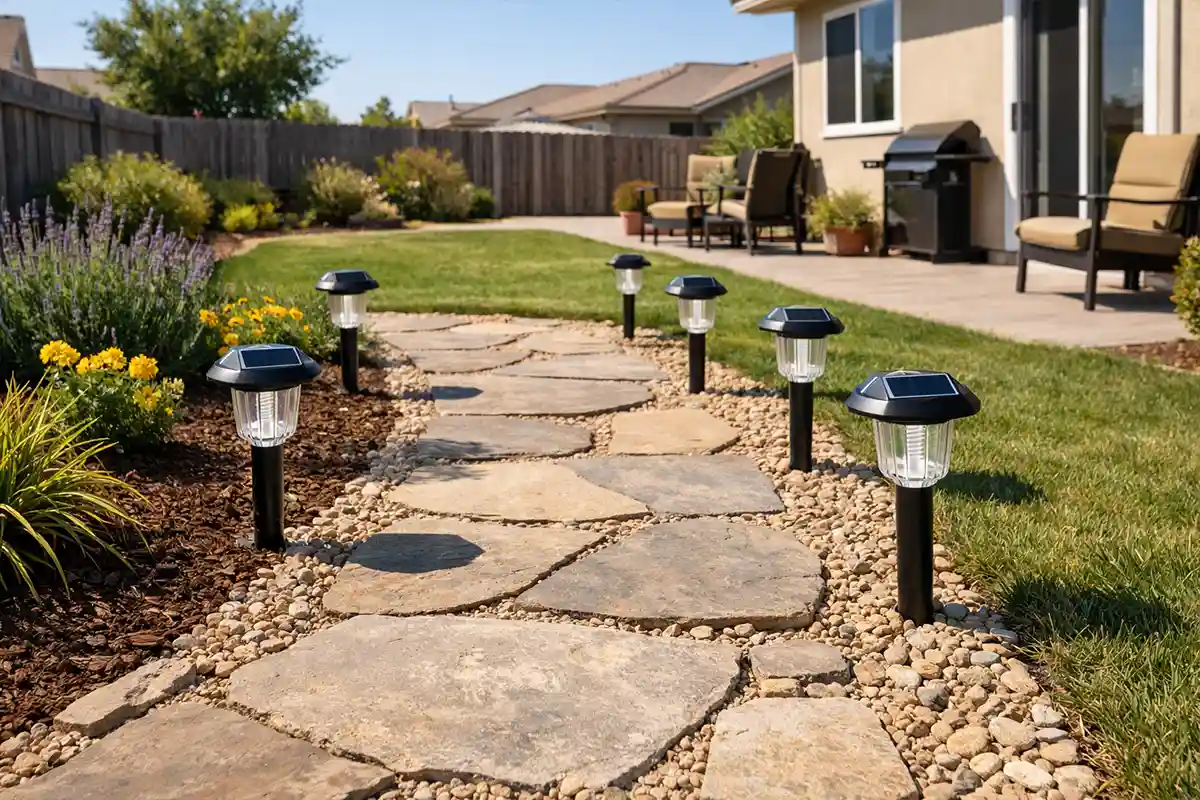
A pathway section that receives direct afternoon sun often performs better than a shaded corner near a fence. The difference shows up at night as longer, steadier illumination. Consistent exposure strengthens daily charging rhythm.
Relocating fixtures away from tree cover reduces leaf buildup and intermittent shade. Lights placed beyond sprinkler spray zones experience less mineral spotting on panels. These small spatial adjustments gradually reduce the stress load carried by the battery and controller.
Over time, the system benefits from a stable energy cycle. Instead of partial charges and deep nightly drain, the battery operates within a healthier range. That balance slows the cumulative fatigue that typically shortens solar light lifespan.
Recognizing Early Warning Patterns
Brightness rarely drops without subtle signals first. A light may activate a few minutes later than usual. Another might flicker briefly before settling into steady output.
Shortened runtime across several fixtures often reflects shared environmental strain rather than isolated defects. Slight color dullness can indicate voltage irregularity upstream. Outdoor lights that stop working over time usually decline through layered environmental and electrical fatigue rather than sudden catastrophic failure. Seeing these changes as patterns instead of isolated events shifts how the problem is understood.
Small interventions during this phase tend to produce noticeable stabilization. Once corrosion advances deeply or plastic housings crack, recovery becomes less predictable.
The Moment Replacement Becomes Practical
There comes a point when multiple upgrades no longer restore consistent performance. A new battery improves runtime briefly, yet random shutdowns return. Cracked housings allow repeated moisture entry despite cleaning efforts.
At this stage, higher-grade fixtures with sealed electronics and larger internal batteries often perform more reliably over multiple seasons. The investment feels different because material quality becomes visible in steadier output and fewer interruptions.
Before that tipping point, subtle signs often line up in recognizable ways:
When these observations begin to overlap, the pattern usually reflects cumulative system stress rather than isolated defects.
The longer-term advantage comes from viewing solar lighting as an integrated energy setup instead of a decorative accessory. Placement, material quality, and environmental exposure quietly shape performance over years, not weeks.