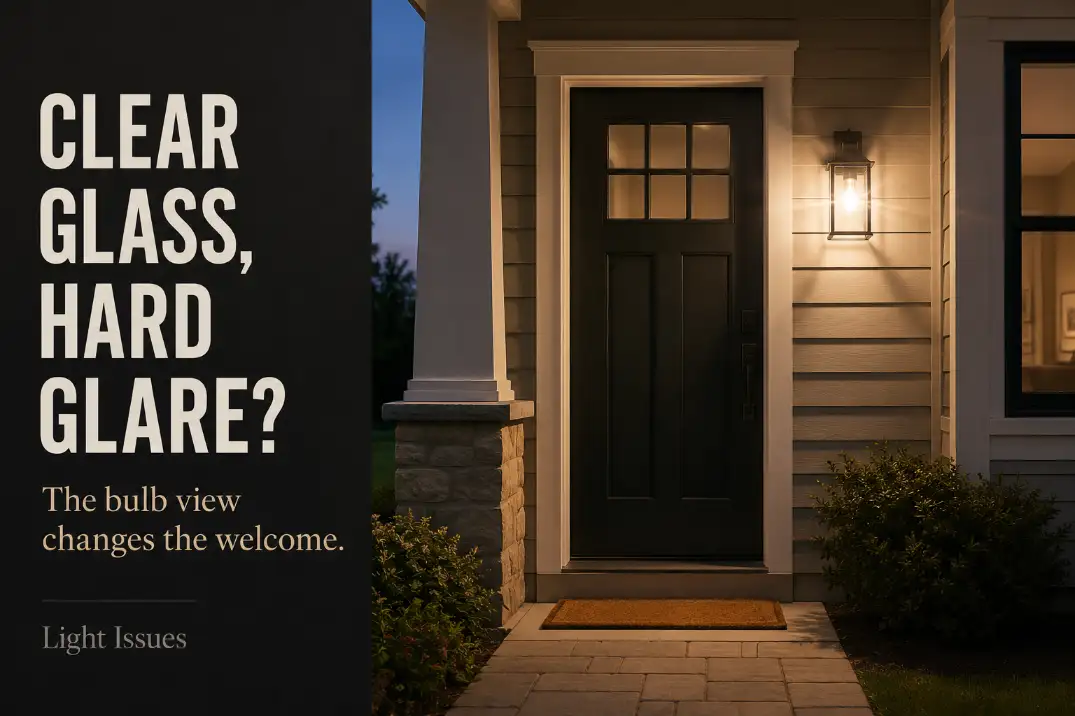
A clear-glass entry light can look sharp from the curb and still feel harsh the moment someone stands at the door. The real issue is often not total brightness. It is whether the bulb itself is visible from the exact place where a guest waits, turns toward the lock, or looks for the doorbell.
That difference controls the fix. A bright doorway can still be useful. A visible lamp aimed into someone’s eyes feels like glare, even if the fixture is small and the porch is not especially well lit.
The first check is not a wattage check. Stand where a guest actually stands after dark. If you can see the bulb directly through the clear glass from the doormat, the lock side, or the approach angle, the fixture is not just lighting the door. It is showing the source.
Clear Glass Problem
Clear glass fails at the door when it turns the bulb into the main thing people see. The fixture may look clean, classic, and intentional in daylight, but at night the glass does little to hide the lamp.
That is why the same light can feel refined from the street and uncomfortable up close. From the curb, the fixture reads as a warm accent on the house. From the doormat, the bulb may sit almost directly in the viewer’s line of sight.
Clear glass is not automatically wrong. It can work when the bulb is tucked deeper inside the fixture, softened by the lamp type, mounted away from direct view, or positioned so the eye sees glow instead of source. It fails when the bright lamp faces the person using the door.
Small details can add harshness. Rain spots, dust, beveled glass, or reflective panes can scatter tiny highlights around the bulb. Those marks are usually secondary, though. Cleaning the glass may improve the look, but it will not fix a glare path if the lamp is still exposed.
The useful question is not “Is the glass clear?” It is “Can someone at the door see the bulb?”
Guest Eye Line
The door position is the only test that really counts. A fixture can pass the driveway test, the sidewalk test, and the daytime style test while still failing the guest eye-line test.
Check it after dark from four normal positions: walking up the path, standing on the doormat, turning toward the lock, and standing slightly to the side of the door. Do not stare at the fixture on purpose. Use it the way a guest would: glance toward the door, look for the handle, find the bell, wait for someone to answer.
If the bulb catches your eye without effort, that is the diagnostic clue. The fixture is competing with the task your eyes are trying to do.
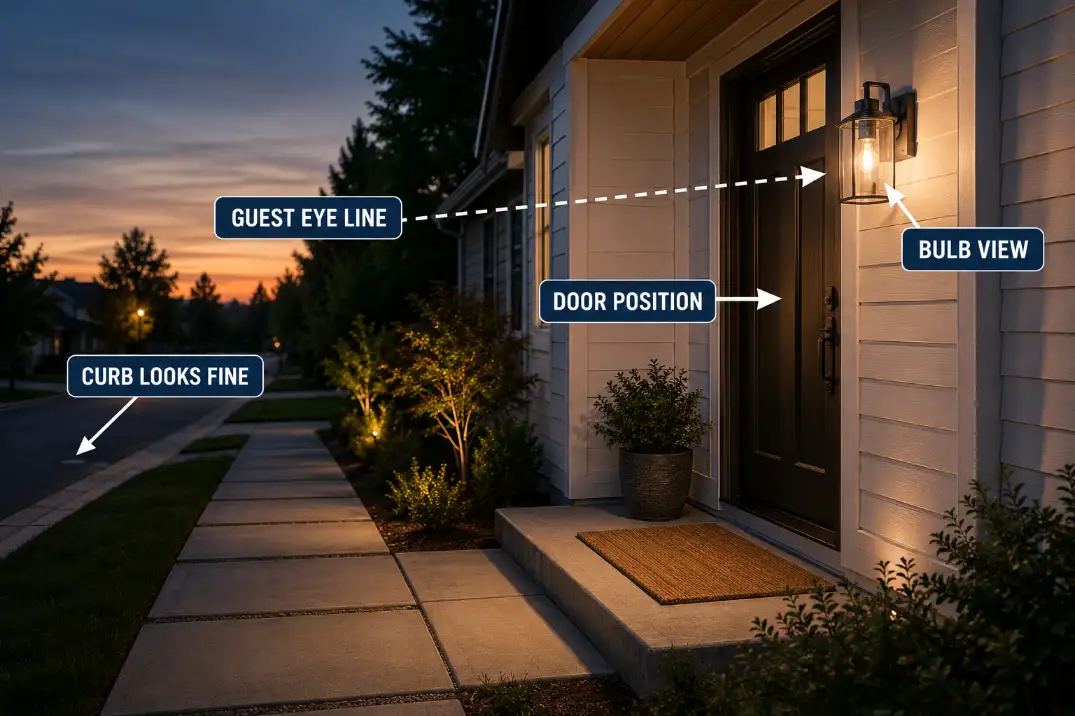
Guest height varies, so this is not about one perfect measurement. The pattern matters more than the number. If an adult sees the bulb while approaching or waiting, the fixture is likely producing source glare. If shorter guests or children see it more strongly because the lamp sits low in the lantern, that is another clue that the problem is source position, not just brightness.
This same source-control principle shows up in broader exterior lighting too. A light can make an area feel less comfortable when the bright source is exposed instead of controlled, which is why outdoor security lights without glare depend on direction and shielding as much as output.
For an entry fixture, keep the test tight. You are not trying to light the whole front yard. You are trying to make the door, lock, step, and face-level waiting area usable without putting the lamp in someone’s eyes.
Exposed Bulb View
The exposed bulb is usually the harshest part of a clear-glass entry fixture. The eye reads that bright point before it reads the door surface, the step, or the lock.
This can happen with decorative filament-style bulbs, clear LED bulbs, and high-output lamps. A filament bulb may look attractive in product photos because the glowing lines become part of the fixture style. At the door, those same glowing lines can become the brightest thing in the scene.
Warm color does not automatically solve it. A warm bulb can feel softer than a cool one, but if the lamp is still visible through clear glass, the eye is still looking at the source. Lower brightness may help, but only if the entry remains usable. If dimming makes the keyhole, step, package area, or visitor’s face too dark, it has traded glare for poor function.
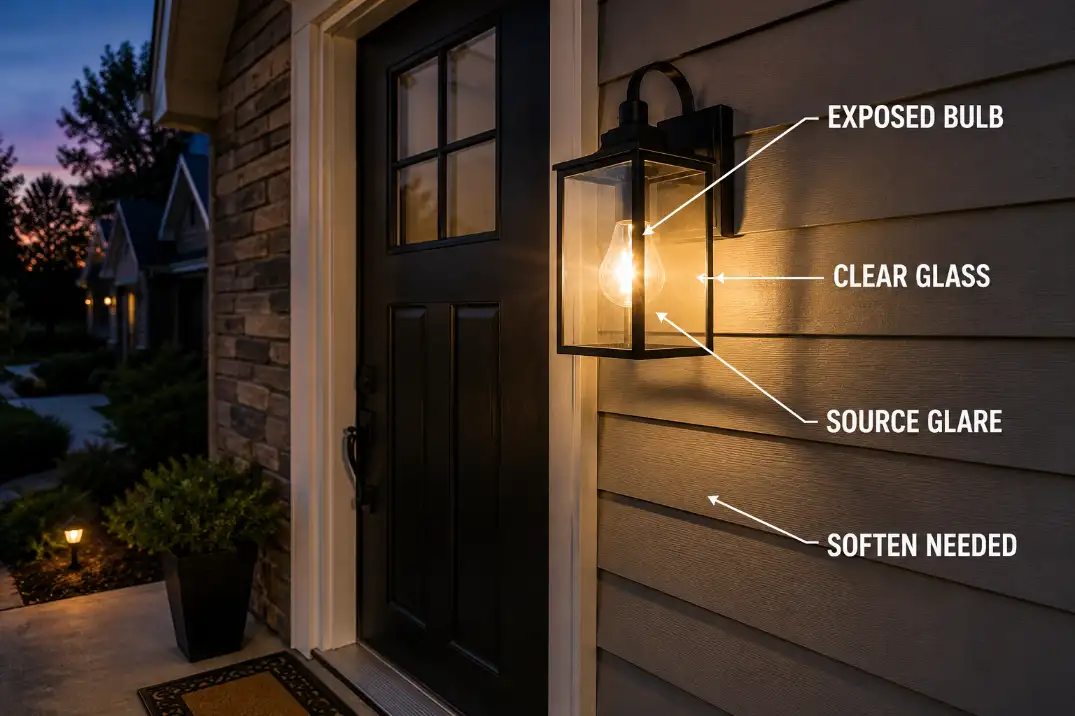
A frosted bulb or diffusing element can reduce the harsh point of light. So can a lower-output lamp when the doorway already has enough usable light. But those are source-control moves, not style upgrades. The goal is not to make the bulb prettier. The goal is to keep the lamp from becoming the thing guests see first.
When this diagnosis is missed, homeowners often chase wattage. They install a softer bulb and still see glare. Then they install a dimmer bulb and lose useful door light. The real issue was not the amount of light. It was the unfiltered view of the lamp.
Fixture Height
Fixture height matters because it decides whether the bulb sits below, above, or directly inside the normal viewing zone at the door. A clear-glass lantern mounted near face level can feel much harsher than the same fixture mounted where the source is less exposed.
There is no single universal height that fixes every entry. Door trim, sidelights, transom windows, house numbers, doorbell placement, and porch ceiling height all influence where someone naturally looks.
The diagnosis is simpler than a measurement rule: does the fixture place the bulb where people look while using the door?
If the fixture is beside the handle side, the eye may move toward it while someone reaches for the lock. If it sits close to a sidelight, the glass can reflect the bulb back into the entry zone. If it is mounted low on a narrow wall, the lamp may sit directly in the face-level field instead of above or behind it.
Aim and angle matter here too. Even when a fixture is not adjustable like a floodlight, its opening, shade shape, and lamp position control where the bright part lands. The same basic idea applies when deciding where outdoor lights are aimed: the light should support the task without putting the source into the viewer’s eyes.
Moving a hardwired fixture is a bigger project than changing the bulb or choosing a better-shielded replacement. That is why height should be treated as a diagnosis lens first. If the existing box location forces the lamp into the eye line, a fixture that hides the bulb may be more realistic than relocating the electrical box.
Side Glare
Side glare usually shows up only after you test the real approach route. A fixture may look acceptable from the sidewalk, then become harsh when someone arrives from the driveway, steps onto a narrow porch, or turns toward the lock.
That diagonal view can feel sharper than the front view because the eye catches the bare lamp before it catches the door surface. The person is not looking for the fixture. The fixture interrupts the task.
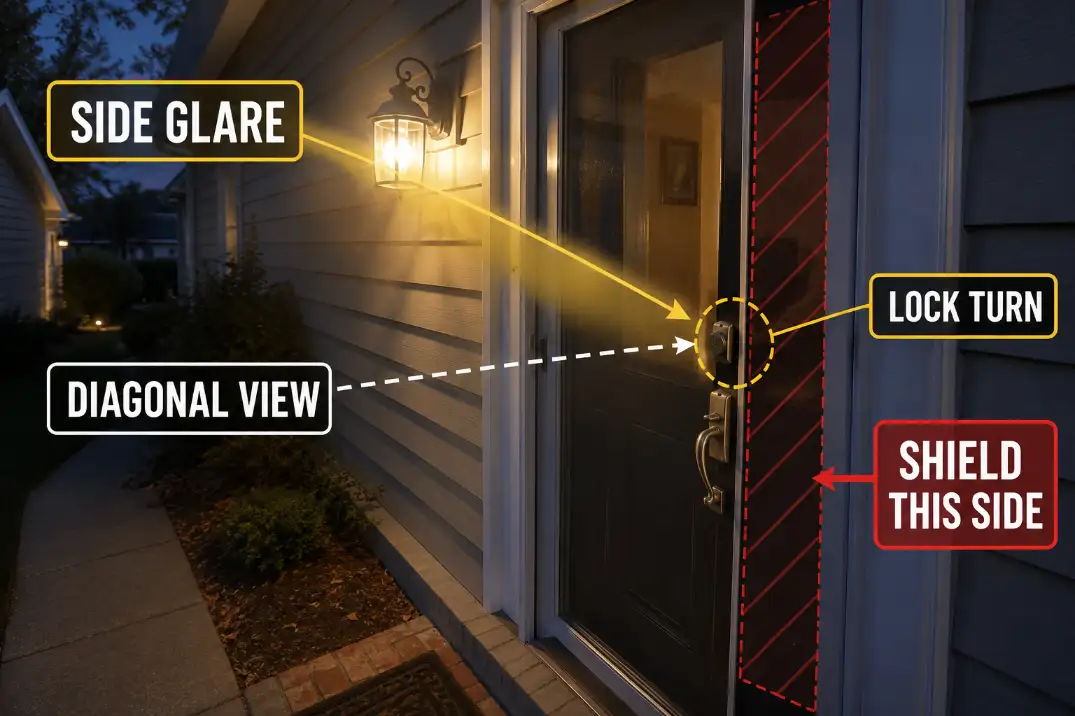
Storm doors and glass sidelights can multiply the issue. The bulb may appear once inside the fixture and again as a reflection. On a small porch, the nearby wall can make the bright point feel even more concentrated because there is not much surrounding space for the light to soften.
This is also where a door light can shift from helpful to visually disruptive. Harsh glare can make the entry feel bright while still making details harder to read. In broader security lighting, harsh security lighting can work against visibility when the eye is pulled toward the source instead of the target area.
For a clear-glass entry light, the side test is simple: approach the door from the direction people actually use, then turn toward the lock. If the bulb appears suddenly at the edge of your view, the fixture needs side shielding, diffusion, or a different source position.
Door-glare decision matrix
| What you see | What it usually means | Better fix path |
|---|---|---|
| Bulb visible from the doormat | The source is exposed | Reduce direct lamp view before adding brightness |
| Glare appears when turning to the lock | The side angle is failing | Look for shielding on the door-facing side |
| Fixture looks fine from the curb but harsh up close | The curb view is decorative; the door view is diagnostic | Test from the actual standing position |
| Dimmer bulb makes the door too dark | Brightness is not the main problem | Improve source control instead of only lowering output |
Shielded Entry Swap
A shielded entry swap makes sense when the clear-glass fixture cannot hide or soften the lamp from normal door positions. That does not mean the replacement has to be dull or heavy. It means the next fixture should control what the eye sees.
The better replacement path is not “choose a darker light.” It is “choose a fixture that keeps the bulb from being the brightest visible object at the door.”
Shielding can happen in several ways. A fixture may use frosted, seeded, ribbed, or diffused glass to break up the lamp view. It may use a partially opaque frame that blocks the bulb from the side. It may direct more light downward toward the step and lock instead of outward toward the face. It may place the lamp deeper inside the housing so the glow reaches the entry without exposing the source.
The replacement idea should be judged from the same positions that revealed the problem. If the lamp would still be visible from the doormat, side approach, or lock turn, the new fixture may repeat the same failure in a different style.
Do not make the entry too dim in the name of glare control. The door still needs enough usable light for the step, lock, visitor, package area, and threshold. A good shielded fixture does not hide the doorway. It hides the harsh source while keeping the doorway readable.
If the fixture is hardwired, weather-exposed, or tied into an existing exterior electrical box, keep the fix inside the right safety boundary. Bulb and lamp-output changes are different from fixture replacement, box relocation, or wiring work. When the problem points to the fixture itself, the safest decision is often to choose the right shielded design and have the electrical side handled properly.
The clean rule is this: fix the view of the bulb before you fix the wattage. Dimming helps only when the source is already controlled. If the bulb is still visible from the door position, the clear-glass fixture can keep glaring even after the light is technically “less bright.”
For safe exterior electrical work boundaries, review ESFI’s outdoor electrical safety guidance.