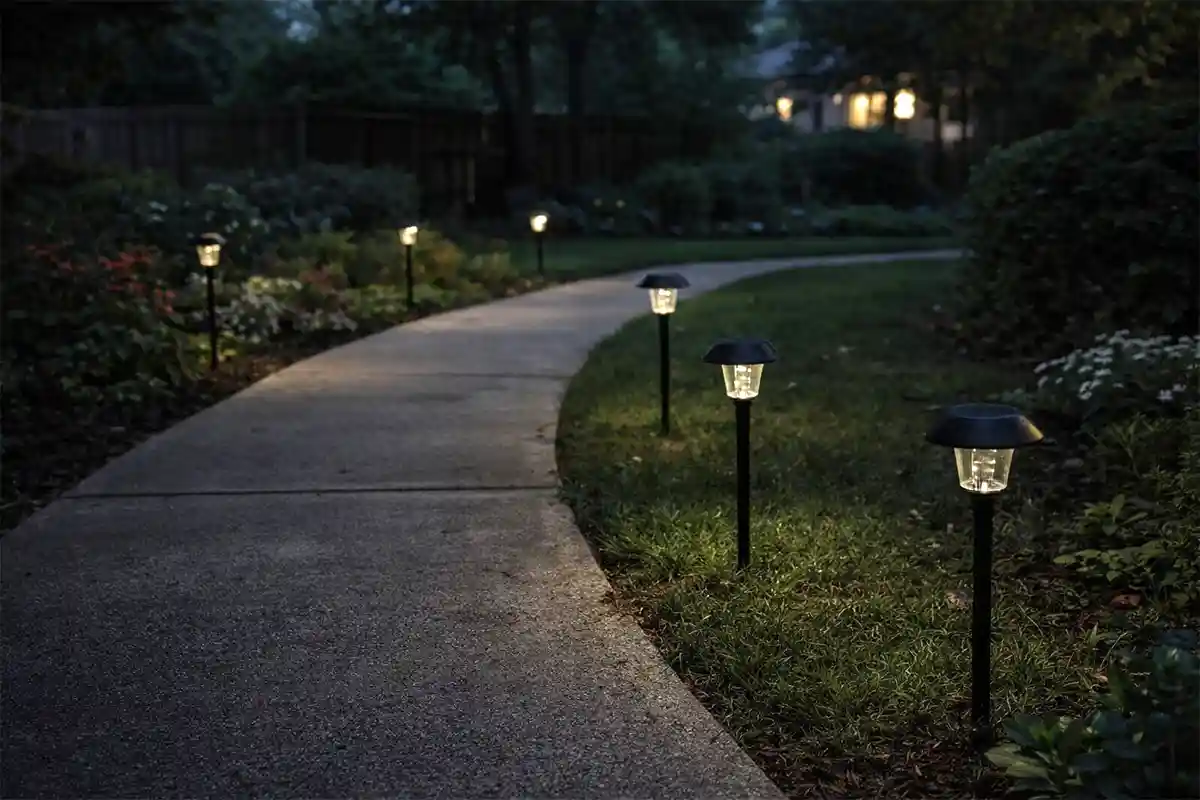
The issue started at a single-story home where six solar pathway lights were installed along a 26-foot concrete walkway. Each fixture sat about 8 inches from the driveway edge and roughly 58–62 inches apart. The panels faced south and lined up just below a window line that ran about 48 inches above ground.
In late September, two lights near the mailbox stopped turning on around 7:40 p.m., even though the others activated normally. From the street, everything looked properly spaced and evenly mounted. At first, it felt like a simple battery problem.
For three evenings, the pattern repeated. The same two fixtures stayed dark while the remaining four glowed evenly along the siding alignment of the house. That repetition was the first signal this was not random.
Inadequate Daytime Charging
The two failing units were positioned slightly closer to a maple tree that leaned toward the driveway at about a 12-degree angle. During summer, the shadow barely touched the panel surface. By early fall, the lower sun angle caused shade to stretch nearly 16–20 inches across the walkway by midafternoon.
A common belief is that “if the panel gets some sun, it’s enough.” That assumption is incorrect. Solar panels are wired in small internal cell rows, and even partial shading across one section can reduce total output significantly. The charge controller inside the light needs a stable voltage range to fully store energy.
In this case, the top half of the panel remained bright, but the lower third was shaded between 3:30 p.m. and 5:00 p.m. That time window reduced charging efficiency just enough to prevent the battery from reaching full capacity. The light was not broken; it simply never reached activation threshold.
If charging loss becomes a pattern rather than a one-time event, the underlying cause is often explained in detail in Why Your Solar Outdoor Lights Aren’t Charging — And How to Fix It, especially when shadow movement shifts seasonally.
The early technical signal here was uneven dusk activation between fixtures mounted at identical height and spacing.
Battery Degradation and Capacity Loss
After noticing the pattern, the homeowner replaced the rechargeable batteries. For two nights, all six lights illuminated evenly from the garage corner to the mailbox post. By the fourth evening, the same two units dimmed within 25 minutes.
The batteries had been exposed to repeated heat reflecting off the concrete driveway, which can reach over 90°F during summer afternoons. Heat accelerates internal resistance buildup. When resistance increases, voltage drops faster under load, even if the battery appears fully charged.
Many people assume that installing higher-capacity batteries permanently fixes runtime issues. That belief is misleading. If the panel cannot supply enough energy during the day, a larger battery may actually underperform because it never charges fully.
In this case, the symptom was short runtime rather than total failure. The lights turned on briefly but could not sustain brightness past the first 30 minutes of darkness.
Dirty panels, weak batteries, and poor sunlight exposure can all explain why your solar lights stopped working.
Faulty Light Sensor or Ambient Light Interference
Another factor appeared during observation. A porch light mounted about 72 inches above ground cast a soft glow across the first two fixtures. The spill light reached roughly 15 inches beyond the driveway edge and touched the photocell sensor window.
Solar lights rely on a small photocell to detect darkness. Even low-level ambient light can delay or prevent activation. Many homeowners believe the sensor only responds to direct daylight, which is not accurate. It measures general light intensity.
On evenings when the porch light remained on, activation was delayed by nearly 10 minutes compared to the fixtures farther down the path. Covering the panel with a hand after sunset confirmed the sensor was still responsive, but ambient spill light was interfering with its threshold.
Internal Corrosion or Moisture Damage
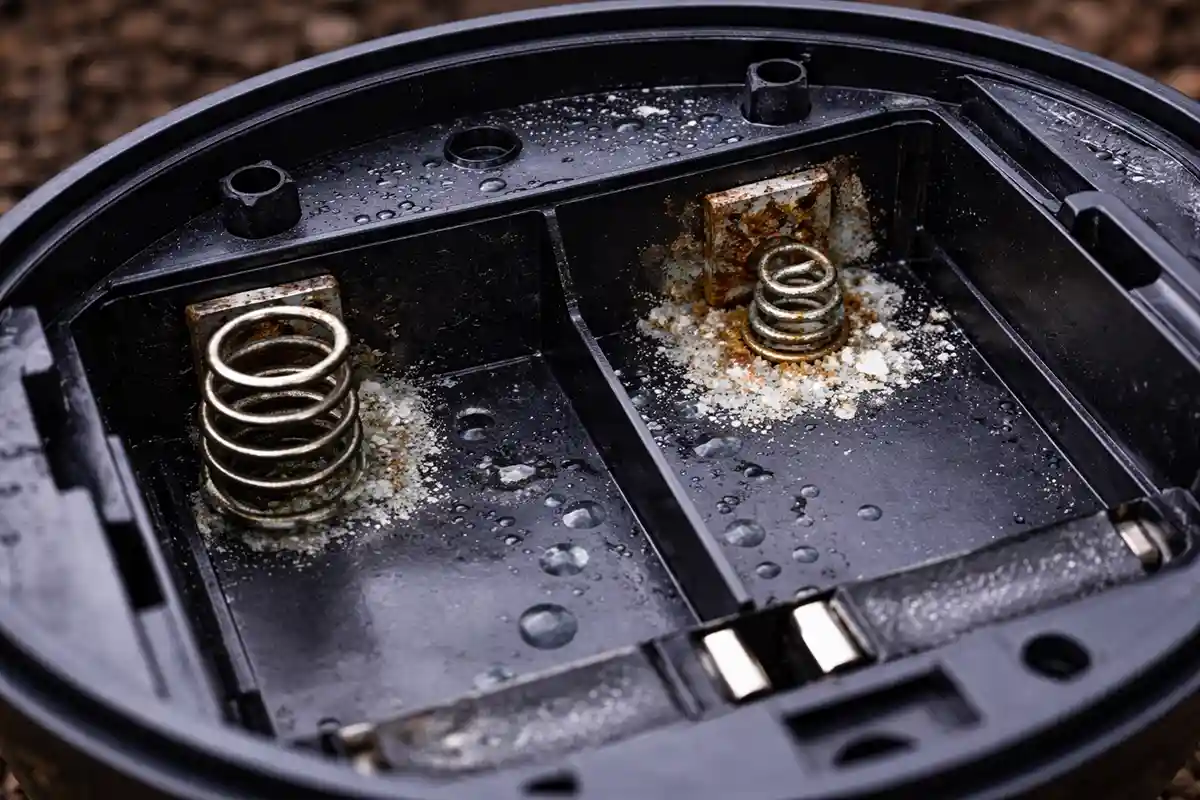
Opening one of the dim units revealed faint white oxidation along the battery terminals. The rubber gasket at the base showed a slight separation, less than 1/16 inch, where the casing met the stake.
The soil beneath that fixture sloped gently toward the house, allowing rainwater to pool during heavy storms. Over time, moisture traveled upward into the battery compartment. Even minor corrosion increases electrical resistance and reduces current flow to the LED driver.
At first, this looked like a single defective light. But once the same two positions repeatedly underperformed, it became clear that shading angle, heat stress, ambient spill light, and early moisture exposure were combining.
What began as a simple “bad battery” assumption turned into a layered imbalance. The difference between a one-time glitch and a recurring pattern was the key turning point in understanding the real cause.
Misaligned Solar Panel Angle and Seasonal Sun Shift
The first correction focused on panel orientation. The two dim fixtures were repositioned about 18 inches farther from the maple tree shadow line and rotated slightly so the panels faced true south rather than slightly southwest. A small level confirmed the tilt increased from nearly flat to approximately 12 degrees, improving low-angle afternoon exposure.
For the first three evenings, all six lights activated within a tight two-minute window around 7:35 p.m. The walkway, viewed from the 48-inch window line, looked evenly illuminated from the garage corner to the mailbox. However, after a steady rain that saturated the soil to a depth of about 2 inches, the same two units faded earlier than the others.
The common assumption was that correcting the angle would permanently solve the issue. In reality, while the adjustment improved total sunlight capture, it did not eliminate intermittent shade that crossed the lower panel cells between 4:00 and 5:00 p.m. Stage 1 created visible improvement, but not structural stability.
Battery Chemistry Mismatch or Improper Replacement
Stage 2 addressed the batteries more precisely. The previous higher-capacity cells were replaced with manufacturer-recommended NiMH batteries rated at the correct voltage and capacity. Inside the housing, the springs now compressed evenly by roughly 1/8 inch, ensuring solid terminal contact.
Over the next four nights, runtime extended beyond 9:15 p.m., even when cloud cover reduced direct sun exposure earlier in the day. The glow remained consistent along the driveway edge, and brightness no longer dropped sharply within the first 30 minutes. This suggested that voltage regulation inside the charge controller was operating within its intended range.
A widespread belief is that “bigger batteries always last longer.” That logic fails when charging duration is limited by shading or seasonal sun angle. Larger capacity without sufficient daily input simply results in undercharged cycles. By restoring correct battery chemistry, voltage stability improved, but full resilience still depended on environmental control.
Gradual System Wear and Early Component Failure
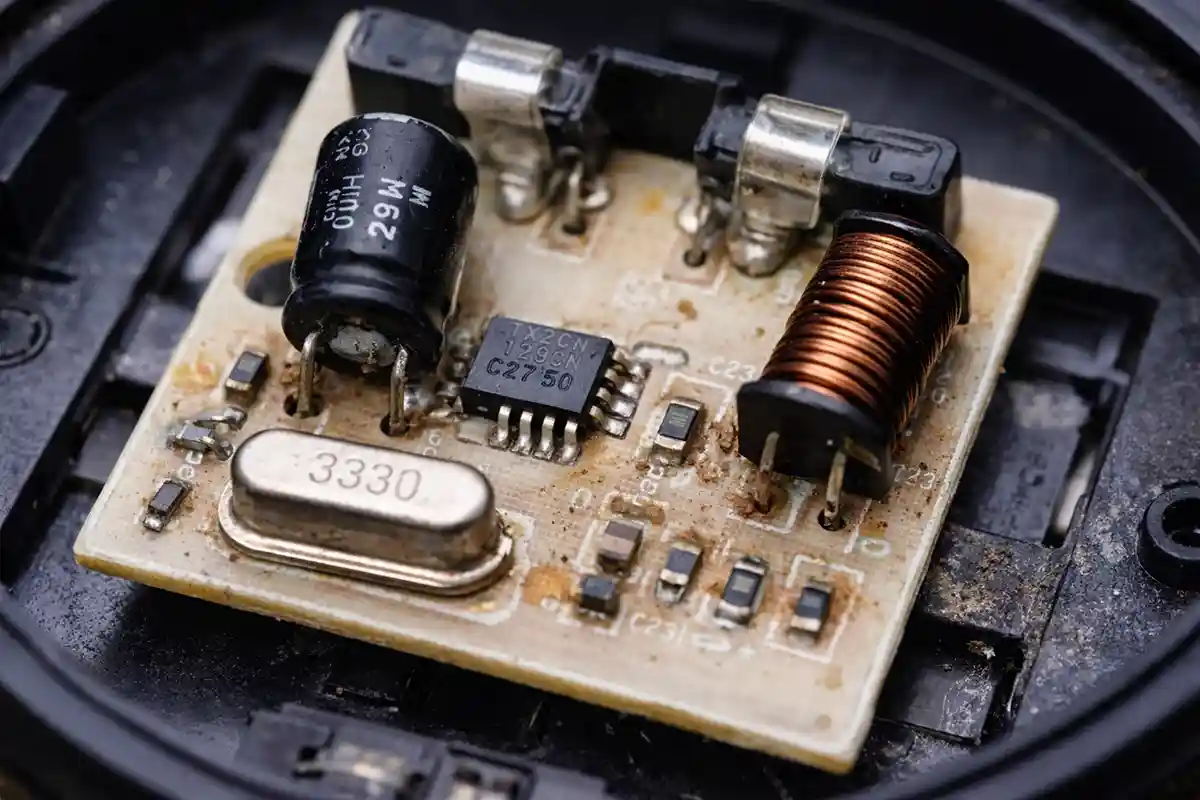
Stage 3 involved internal inspection. One fixture closest to the sprinkler head, positioned about 30 inches from the driveway edge, was opened and examined under bright garage lighting. Slight discoloration appeared along the solder joints of the small driver board.
Although no components were burned, fine oxidation lines were visible near the battery terminals. These micro-corrosion areas increase resistance and can disrupt the LED driver’s ability to maintain steady current. After cleaning the contacts and reseating the board, activation became synchronized with the other units.
The change was noticeable. All lights turned on simultaneously when viewed from the sidewalk 15 feet away. Yet after another heavy rain cycle, minor flickering returned on the previously affected unit. This indicated that internal wear had been reduced but not fully eliminated.
Patterns like this often point to cumulative stress rather than a single defect, a behavior explored more deeply in Why Solar Outdoor Lights Fail So Quickly (And What’s Really Causing It). Repeated moisture exposure combined with voltage fluctuation accelerates long-term degradation.
Light Pollution and Competing Illumination Sources
Stage 4 addressed ambient interference. The porch light mounted 72 inches above ground was placed on a timer to turn off at dusk. Previously, its glow extended about 12–15 inches onto the first two solar panels, raising the photocell’s light detection threshold.
Once the spill light was eliminated, activation timing improved immediately. The two fixtures near the mailbox no longer lagged by 8–10 minutes compared to the others. From the driveway centerline, all units appeared evenly bright within moments of full darkness.
The stabilization point emerged only after angle correction, battery alignment, internal cleaning, and sensor isolation worked together. Each individual step reduced symptoms, but true consistency required balancing all three planes: sunlight exposure, internal conductivity, and nighttime darkness detection.
Timeline of Intervention
| Stage | Observed Behavior | Adjustment Made | Result After Rain Cycle |
|---|---|---|---|
| Stage 1 ● | Two lights dim early near mailbox | Tilt and reposition panels 12° south | Runtime improved ✓ |
| Stage 2 ● | Brightness inconsistent after 30 min | Installed correct NiMH batteries | Longer stable output ✓ |
| Stage 3 ● | Flicker after heavy rain | Cleaned contacts and reseated board | Flicker reduced |
| Stage 4 ● | Activation delayed near porch | Removed ambient spill light | Even dusk activation ✓ |
Micro Case Questions
Why did the first fix only partially work?
Because improving panel angle increased sunlight but did not remove intermittent late-afternoon shading.
Why did correct batteries matter more than higher capacity ones?
They matched the panel’s charging output, allowing full daily cycles instead of undercharged storage.
Why did flickering return after rain?
Moisture exposure near the sprinkler head continued affecting internal resistance despite cleaning.
When did stability actually begin?
After ambient light interference was removed and charging conditions were consistently balanced.
By the end of Stage 4, the six fixtures along the 26-foot walkway activated reliably for multiple consecutive nights, including after rainfall. Stability was achieved not through a single repair but through layered adjustments applied in sequence.
When Simple Adjustments Restore Night Activation
After the layered corrections were completed, the difference was visible from the street. All six fixtures, spaced about 60 inches apart and positioned 8 inches from the driveway edge, activated within the same two-minute window after sunset. The panels, now tilted at roughly 12 degrees facing true south, received uninterrupted light across the full surface until nearly 5:15 p.m., even as the fall sun dropped lower behind the tree line.
The soil around each base was regraded so it sloped slightly away from the casing, preventing water from collecting along the lower seam. During the next heavy rain, water flowed toward the yard instead of pooling against the housing. No flicker appeared after the storm, and runtime extended beyond 9:30 p.m. consistently.
Many homeowners believe that once a light turns back on, the issue is permanently solved. That assumption can be misleading. In this case, stability was confirmed only after two full rain cycles and one week of consistent dusk activation without delay. The charging plane, moisture path, and sensor threshold were finally aligned.
When Battery Replacement Is the Real Solution
Once shading and sensor interference were corrected, battery performance became predictable. The correctly rated NiMH cells charged fully during clear afternoons and maintained steady brightness across the entire 26-foot walkway. When viewed from the 48-inch window line, the glow remained even from the garage corner to the mailbox.
A quick voltage check showed that batteries reached stable output levels before sunset, something that had not occurred when partial shading was present. The internal charge controller could now complete a full daily cycle. This eliminated early dimming that previously appeared within 25–30 minutes.
There is a common belief that solar lights fail mainly because the battery “wears out.” While aging plays a role, this case showed that improper charging conditions often shorten battery life prematurely. Broader patterns of repeated battery decline are explained further in Why Are My Solar Light Batteries Dying So Quickly?, especially when undercharging becomes routine.
With proper angle, dryness, and darkness at dusk, battery replacement became a lasting fix rather than a temporary boost.
Recognizing Irreversible Structural Damage
One fixture closest to the sprinkler head, about 30 inches from the driveway edge, showed corrosion covering nearly half the battery terminal surface. Rust had spread beyond a thin edge line and reached into the metal contact plate. Even after cleaning, activation remained inconsistent following heavy rain.
If the homeowner had stopped after adjusting panel angle alone, moisture would have continued entering through the lower seam gap of less than 1/16 inch. Over time, corrosion would have advanced to the circuit board, likely causing total non-response. The failure pattern would have expanded from two units to most of the lower walkway section.
Structural damage is often underestimated because the casing looks intact from above. The lesson here is that visible oxidation across more than one-third of a contact surface usually signals that replacement is more reliable than repair.
Knowing When Replacement Is the Smarter Investment
After replacing the severely corroded unit with a higher IP-rated fixture and slightly elevating its base by about 1 inch above surrounding soil, all six lights operated consistently for three consecutive weeks. The new unit showed no flicker after rainfall, and activation timing matched the others within seconds.
The structural principle learned from this case is straightforward: solar light activation depends on three balanced planes—charging exposure, internal conductivity, and true darkness detection. When any one plane tilts, instability begins.
The earliest warning sign was uneven activation between fixtures installed at identical height and spacing. That small difference, even if only five minutes apart, should never be ignored.
Early Signal Checklist
-
Panel surface shaded more than 20 percent after 4:00 p.m.
-
Activation delay greater than 5 minutes between adjacent units
-
Soil sloping toward the casing instead of away
-
Water pooling within 2 inches of the base after rain
-
Battery terminals showing rust beyond a thin edge line
-
Porch or security light spill within 12–18 inches of the photocell
-
Runtime under 30 minutes after a full sunny day
For consumer safety and outdoor product reliability guidance, refer to U.S. Consumer Product Safety Commission.