
A landscape-lighting run works from one transformer tap but stays dark from another. The useful diagnosis is whether the failure follows the output or the cable run when the same compatible load is compared. Simply finding a connection that makes the lights turn on does not settle that question.
Moving the run may change the available voltage, disturb a poor connection, or change the return path. Comparing two different yard runs introduces still more differences: their cables, connections, and fixtures.
Start by establishing whether the same known-working load should operate under both proposed tap conditions. Even that run lighting on a higher-voltage tap does not prove the lower tap is dead.
What Multi-Tap Outputs Are Designed to Do
Read each tap as a voltage choice, not as another identical socket. Multi-tap landscape transformers offer output levels that can accommodate different installation conditions while keeping the voltage reaching the fixtures within their permitted range.
The model determines which taps are available, how common terminals are assigned, and which connections share protection or capacity. A row of terminals does not mean each terminal can supply the transformer’s full rated load or operate as an independently controlled zone.
For the broader distinction between whole-system failure and a delivery problem, the guide to transformer problems in low-voltage systems provides the surrounding diagnostic framework.
Here, keep the question narrower: should this particular load operate correctly under both proposed tap conditions? The answer depends on the fixture’s input requirements and the voltage delivered through its cable—not just the number beside the transformer terminal.
Moving the Same Known Load Between Taps
Fix Boundary: Isolate input power before any manufacturer-permitted connection change; a timer’s OFF setting is insufficient. Use only the designated low-voltage connection area. If access exposes mains parts, requires internal disassembly, or is unclear, leave the comparison to a qualified professional. Restore required covers before operation.
A useful reference consists of the same known-working fixture or documented compatible load and the same sound connecting lead. A short reference lead helps remove the original yard cable and its buried connections from the comparison.
Compatibility comes first. The reference equipment must accept both proposed output conditions, including voltage and AC or DC requirements. “Low voltage” alone does not establish compatibility, and a fixture intended for one supply type should not become an improvised test load for another.
The correct common or return connection also matters. Its assignment comes from the model documentation; similar-looking common terminals are not automatically interchangeable. If the comparison changes the common connection as well as the selected tap, the result concerns that combined output path.
Keep the control state and other connected-load conditions consistent. Changing the timer setting, removing several other runs, or using a different lead introduces another possible explanation for the result.
“Same load” means the same equipment. It does not mean the equipment necessarily draws identical current or power at different voltages.
This comparison asks whether the selected output can operate that reference load. A small fixture may work while a larger installed load exposes a connection or supply problem, so success has a limited meaning.
If the manual does not clearly support the comparison, document the model, tap labels, and observed behavior for service. Do not use trial connections across the terminal row to discover how the transformer is arranged.
Tap Label, Terminal, and Load Differences
A tap change that restores operation may have changed two things at once: supply voltage and electrical contact. Establish which connections were disturbed before crediting the new tap.
A voltage tap, a common terminal, and a separately controlled output perform different functions. Identify them from the actual model labeling and documentation; terminal position alone is insufficient.
Where inspection is permitted with input power isolated, visible corrosion, heat discoloration, or a cracked insulating support changes the decision. These are reasons for appropriate service, not instructions to tighten a damaged assembly until the lights return. The relevant common connection deserves the same attention as the selected tap.
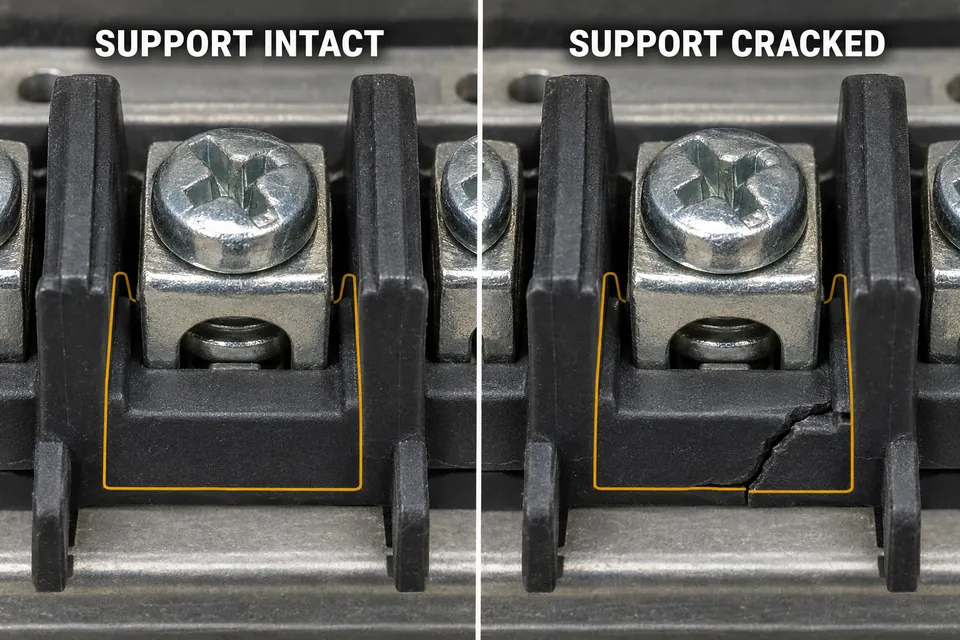
If operation returns after a lead is moved, a weak contact may have improved during the move. That result cannot cleanly separate contact quality from output performance. Conversely, an intact-looking terminal does not prove that its connection performs correctly under load.
A run that works only at a higher tap needs a different interpretation. Voltage drop along a landscape-lighting run can affect what reaches the fixtures, and their electronics have specific operating requirements. Restored illumination establishes a voltage-dependent difference; it does not locate the cause.
Follow the manufacturer’s limits for the complete transformer and any separately specified output or circuit. Do not multiply capacity by the number of taps or assume a higher tap permits more connected load.
Higher voltage must not become a workaround for a damaged connection. Acceptable fixture voltage, sound connections, and supported loading still matter after the lights turn on.
A Dead Tap vs a Bad Cable Run
Assign the next repair to the part of the system that the failure follows. If compatibility or connection conditions changed during the comparison, the result is not strong enough to make that assignment.
When the Failure Stays With the Output
If the same compatible reference load works on one output and fails on another under equivalent conditions, suspicion shifts toward the failing output path. That includes the terminal contact, relevant return connection, any applicable protection, and internal components.
It does not identify a failed winding. A dark fixture is an operating result, not a measurement proving zero output. Dimness, flickering, or failure under a larger load also require more interpretation than a simple working/dead label allows.
Where confirmation requires energized measurements or internal access, a qualified professional can determine whether the selected output delivers appropriate voltage under load and where the loss occurs. That is the service question to request, without turning the homeowner comparison into live terminal testing.
When the Failure Stays With the Run
If the reference load operates on both suitable outputs but the original yard run fails on either, attention shifts downstream. The original cable, its connections, attached fixtures, and total load remain possible causes.
That result fits the diagnostic path for lights failing on one side of the yard. It provides a reason to investigate that run before replacing the transformer.
The size of the reference load still limits the conclusion. If it is much smaller than the installed run, its success leaves transformer performance under the larger load unresolved.
| Observation | What it supports | What remains unresolved |
|---|---|---|
| Same compatible reference load works on one output and fails on another | Suspicion of the failing output path | Terminal, return, protection, and internal causes still need separation |
| Reference works on both; original run fails on both suitable outputs | A problem associated with the original run or its load | Full-load transformer performance is not yet proven |
| Original run works only on a higher-voltage tap | A voltage-dependent operating difference | The lower tap is not proven dead; delivery and compatibility need evaluation |
| Results change after connections or other conditions change | An uncontrolled comparison | Fault location cannot be assigned confidently |
Report an inconsistent result as inconsistent. Forcing it into “bad tap” or “bad cable” can send the repair toward the wrong component.
When One Failed Output Makes Replacement Sensible
Replacement should follow a confirmed fault and an unsupported repair path—not merely the discovery of a tap that appears unusable. Manufacturer support can establish whether the affected terminal assembly or other component has an approved service procedure and available parts.
A serviceable connection assembly and an inaccessible internal fault may lead to different decisions. Warranty coverage, parts availability, and the extent of damage matter more than the fact that another tap still lights the yard.
If the fault requires inaccessible electrical work or involves damaged insulation or connections, the guidance on when an outdoor-lighting fault needs an electrician helps define the handoff. Provide the model, affected tap labels, reference-load details, comparison conditions, and visible damage.
Replacement becomes reasonable when safe, supported repair is unavailable or damage prevents reliable connections and insulation. Moving every run to the remaining output does not resolve those concerns by itself.
Continued use of another output needs manufacturer guidance or a qualified assessment confirming that the arrangement is safe and within the relevant limits. A transformer-only failure also does not make sound, compatible fixtures and cable obsolete.
Treat the working tap as diagnostic evidence, not permission to ignore the failed one. Repair the confirmed fault where supported; replace the transformer when that fault cannot be safely corrected.
For the relationship between cable-run conditions, connected load, and voltage available at the last fixture, see FX Luminaire’s voltage-drop calculator.