Deck and Patio Lights Not Working After Winter? Fix Guide
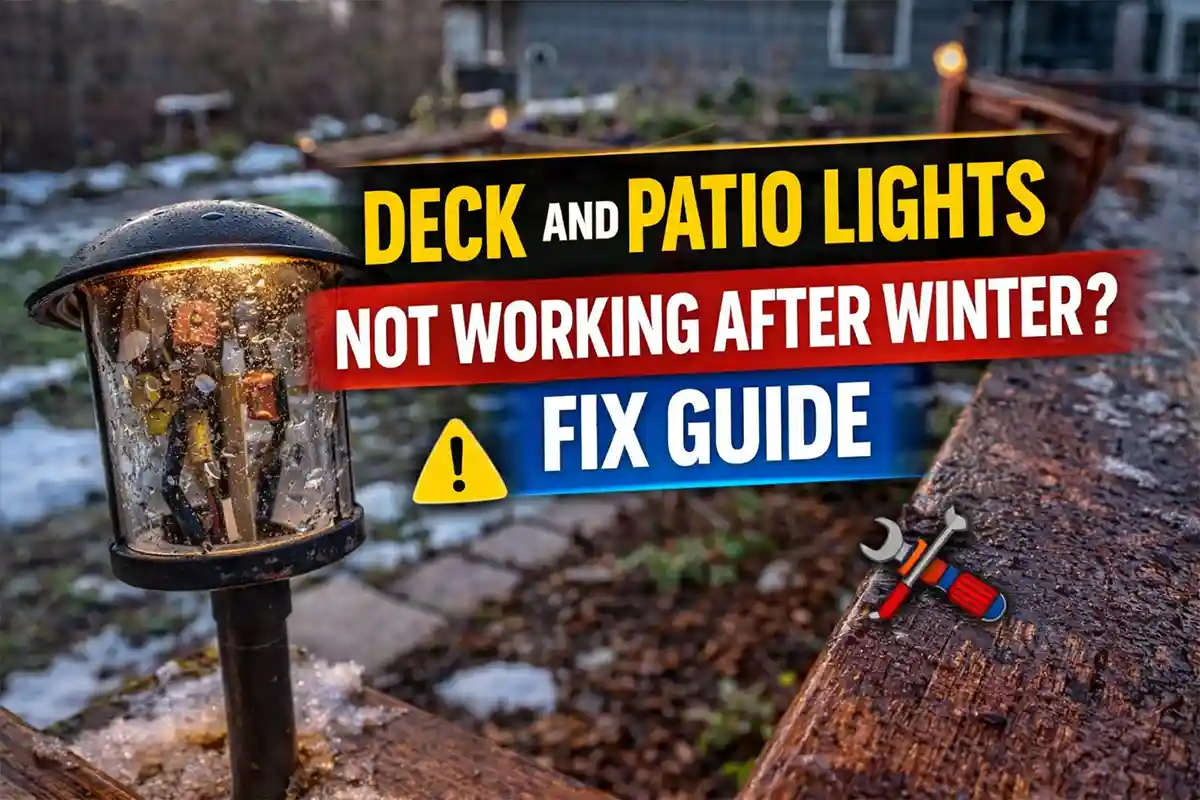
Outdoor deck and patio lights not working after winter in a backyard.

Quick Solution Summary If deck or patio lights stop working after winter, the most common causes are moisture intrusion, corroded wire connections, tripped GFCI outlets, or damaged underground cables. Outdoor lighting systems endure months of cold temperatures, snow accumulation, and repeated freeze-thaw cycles. These conditions slowly weaken electrical components. During winter in northern states such … Read more
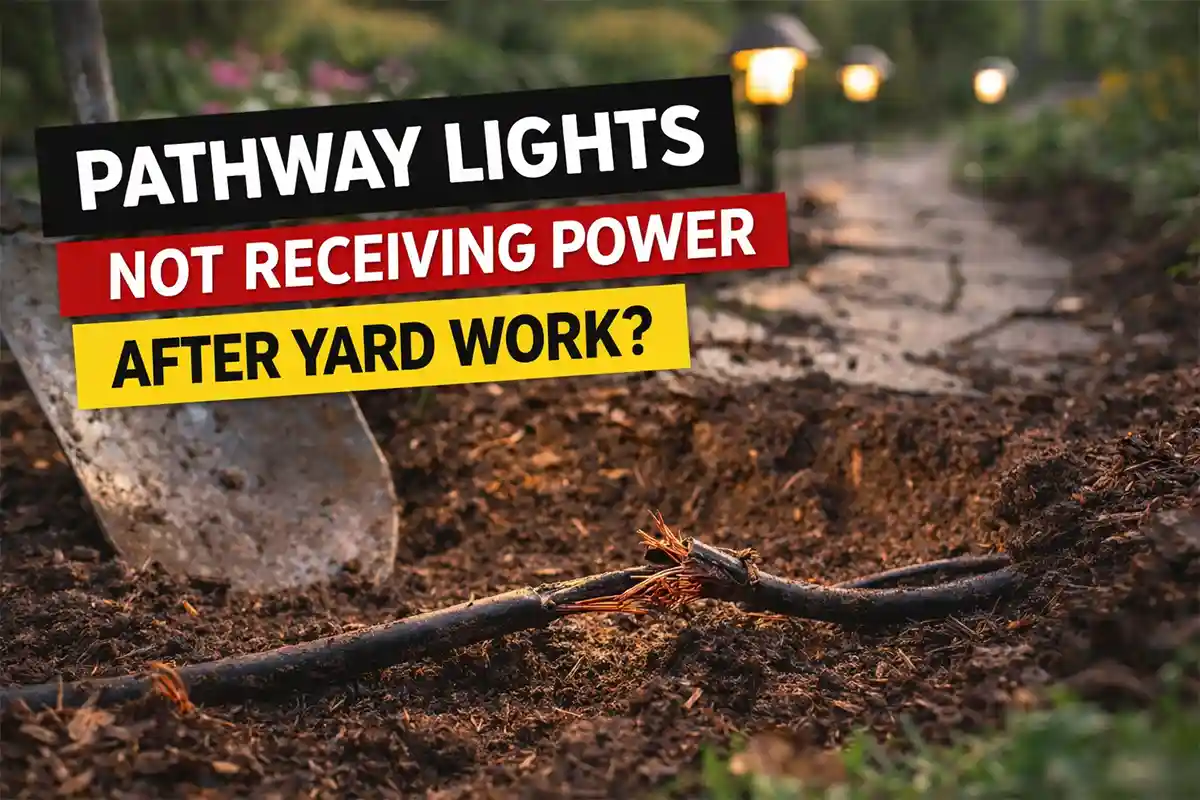
Pathway Lights Not Receiving Power After Yard Work?

Pathway lights not receiving power after yard work due to damaged underground landscape lighting cable.

Quick Solution Summary If your pathway lights stopped receiving power right after yard work, the most common cause is accidental damage to underground low-voltage lighting cables. Landscape lighting wires are typically buried only 4–6 inches below soil, making them easy to cut or pull loose during activities like planting shrubs, installing irrigation lines, edging garden … Read more

Outdoor Lights Turning Off After a Few Minutes? Fix It Fast

Outdoor landscape lights turning off after a few minutes in a residential yard

Outdoor lights that turn on normally but shut off a few minutes later usually point to instability somewhere in the lighting system rather than a completely failed fixture. In most residential setups, the issue is caused by transformer overload, voltage drop along long cable runs, moisture intrusion, or loose electrical connections that temporarily break contact. … Read more

Outdoor Lights Not Working on One Side of the Yard

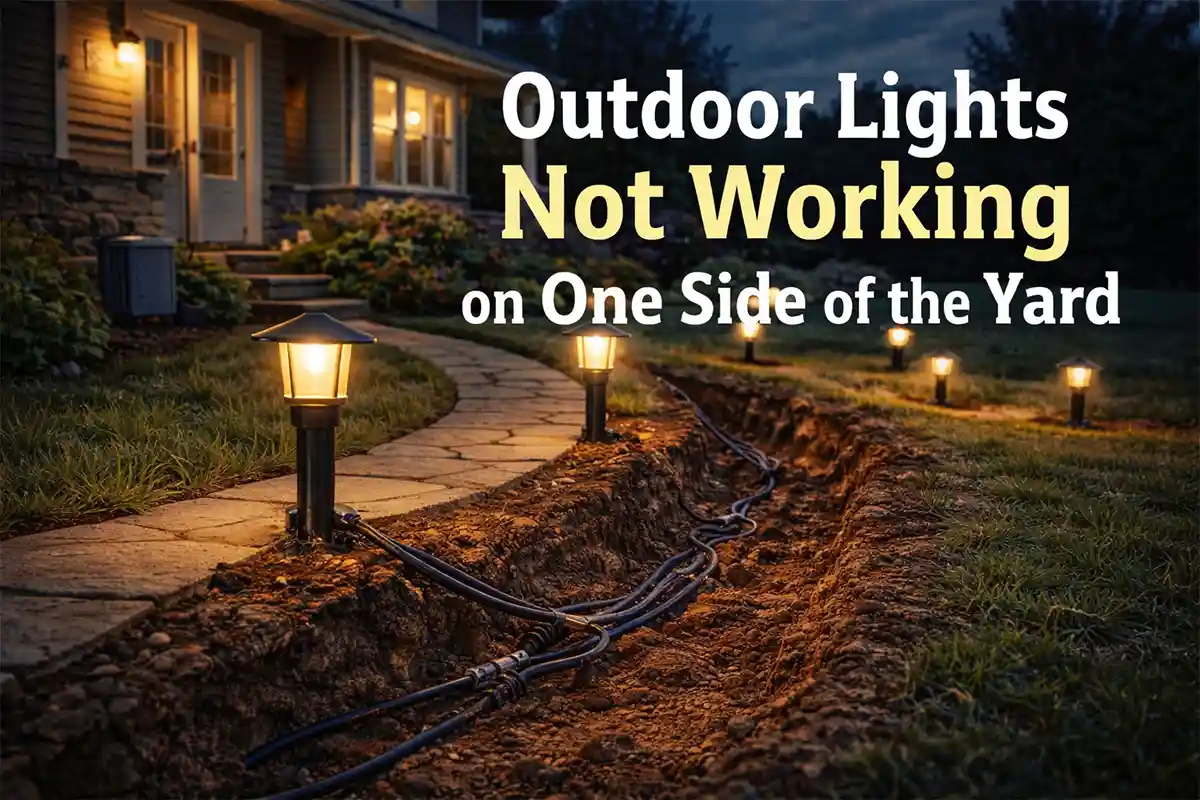
Outdoor pathway lights in a residential yard with one side not working and visible underground landscape lighting wiring trench

When a section of yard lighting suddenly stops working, the first explanation often seems obvious. A burned-out bulb, a faulty transformer, or a damaged fixture are common assumptions. However, outdoor electrical systems rarely behave that simply. The same visible symptom—lights failing on one side of a yard—can result from several very different conditions inside the … Read more

Outdoor Lights Losing Power at the End of the Line

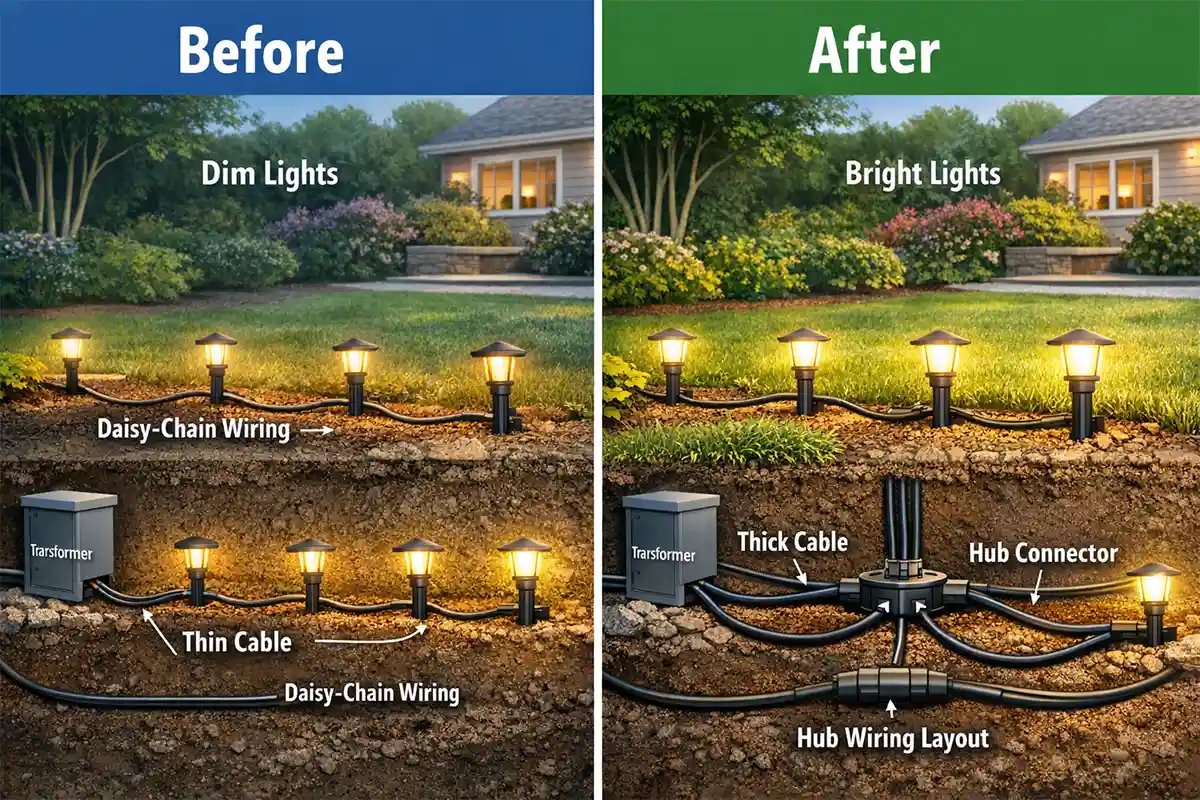
Landscape lighting voltage drop: dim lights with daisy-chain wiring vs bright lights with hub wiring.

Outdoor lighting systems distribute electricity through cables in a way that closely resembles fluid moving through a pipeline. As electrical current travels through copper wiring, a portion of the energy naturally converts into heat because of electrical resistance within the conductor. This gradual energy loss causes the voltage available to decrease as distance from the … Read more

Outdoor Lights Tripping GFCI Outlets

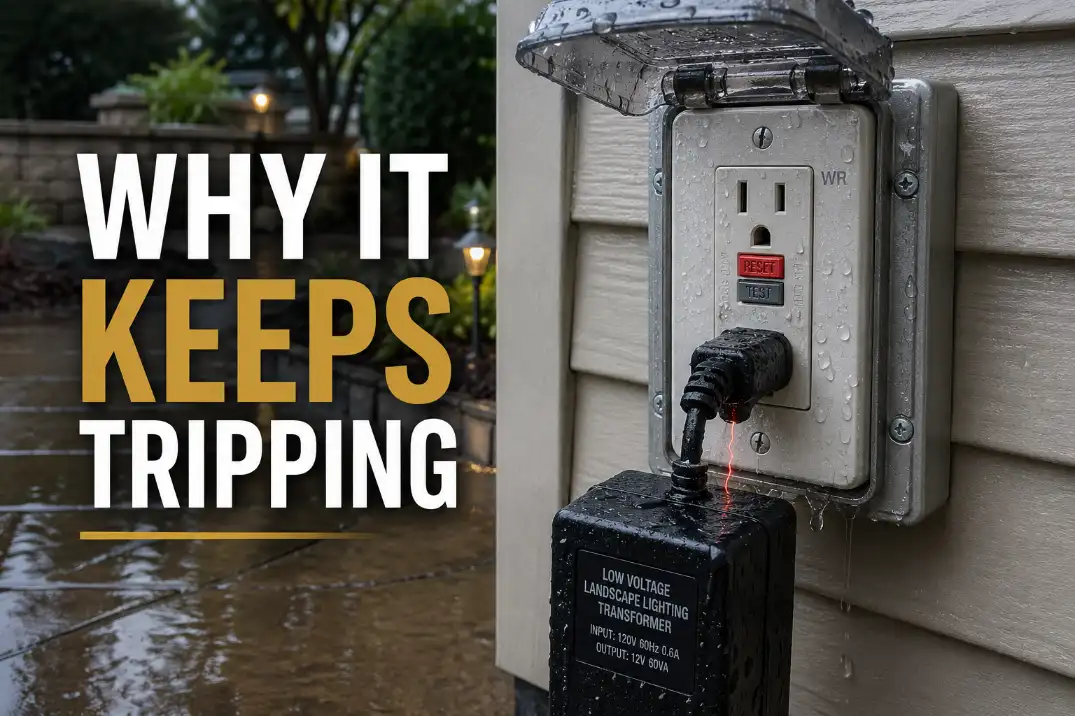
Outdoor GFCI outlet tripped after rain with a landscape lighting transformer plugged into a wet exterior receptacle.

Outdoor lights that trip a GFCI outlet after rain are usually exposing a small leakage-current problem, not pulling too much power. A GFCI can shut off when the outgoing and returning current differ by about 5 milliamps, so a damp plug, wet splice, cracked fixture, or water inside a box can trip it even when … Read more

Voltage Drop in Outdoor Lighting Systems

Low-voltage landscape lighting system with transformer and uneven pathway brightness at dusk.

Outdoor lighting rarely fails all at once. It fades unevenly. One path light looks steady. The next looks softer. The far end looks tired. Most people assume this is fixture aging. Or weather damage. Or bulb quality. The system is not losing information. It is losing voltage across distance. The Brightness Difference That Feels Accidental … Read more

Outdoor Lights Working Intermittently: Fix the Right Problem First

Outdoor path lights working intermittently with one flickering fixture, wet soil, and a highlighted weak wire splice.

Outdoor lights that work intermittently usually have an unstable power path, not a mystery bulb problem. The first useful question is whether one fixture, one section, or the entire lighting zone is affected. The second is whether the problem follows rain, irrigation, darkness, heat, or time. A light that flickers when touched points toward a … Read more

Flickering Outdoor Lights: Common Causes and First Checks

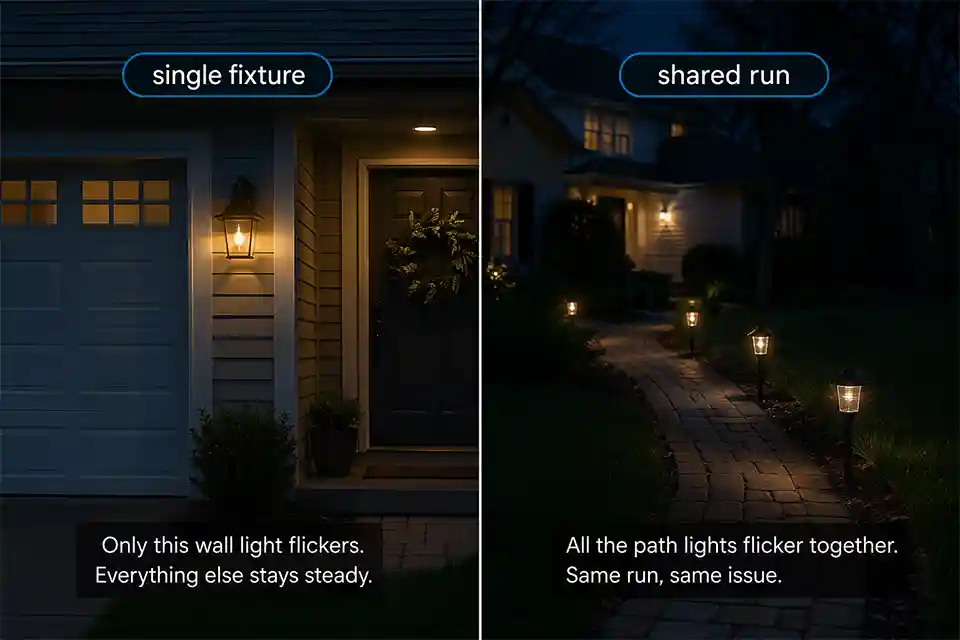
Single flickering porch light compared with several flickering path lights on one outdoor lighting run

Outdoor lights usually flicker for fewer reasons than people think. In most cases, the pattern points first to a loose or aging connection, moisture affecting a splice or fixture, or unstable power showing up only under real load. The fastest way to narrow it down is not to start with the bulb. Start with two … Read more