Quick Solution Summary
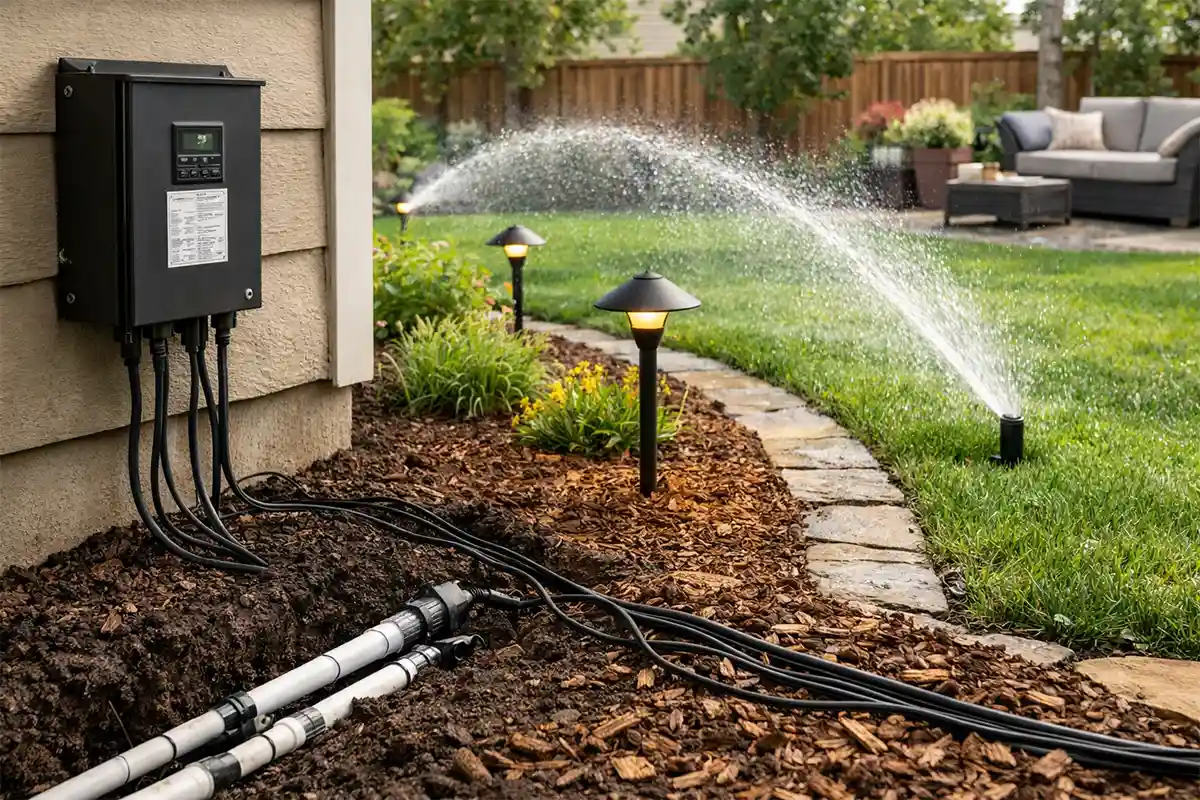
If your outdoor lighting circuit loses power the moment your irrigation system turns on, the problem usually comes from moisture exposure, a shared GFCI outlet, or underground wiring damage near sprinkler lines.
In many homes, landscape lighting transformers and irrigation controllers are plugged into the same outdoor outlet. When sprinkler valves activate, they can briefly draw additional current or introduce ground leakage if water reaches nearby wiring. That often causes a GFCI outlet to trip or voltage to drop below the lighting system’s operating threshold.
Another common scenario involves buried lighting cables installed in the same trench as irrigation pipes. When sprinklers run, saturated soil can expose small insulation cracks or corroded wire splices. Electricity may partially leak into wet soil, which causes lights to shut off, flicker, or dim for several seconds.
In most cases, fixing the issue involves:
-
separating irrigation and lighting circuits
-
repairing damaged underground cable sections
-
waterproofing wire splices
-
reducing transformer load to below about 80% capacity
Once the affected wiring or outlet is corrected, outdoor lighting systems typically operate normally even while irrigation zones run.
Quick Diagnostic Checklist
Before digging up wires or replacing fixtures, look for these clues.
Signs irrigation is interfering with the lighting circuit:
-
Lights turn off exactly when sprinklers start
-
The lighting transformer briefly clicks or hums
-
Outdoor outlet GFCI trips during irrigation
-
Only lights near sprinkler zones fail
-
Lights return once the irrigation cycle ends
These symptoms usually indicate moisture exposure or electrical load interaction rather than a fixture failure.
If your lights also behave unpredictably during storms or wet weather, similar electrical behavior is explained in Why Your Outdoor Light Works Fine Until It Rains.
How to Confirm Irrigation Is Causing the Power Loss
A simple test can confirm whether the irrigation system is responsible.
Step-by-step diagnostic test
-
Turn the landscape lighting system on manually.
-
Activate one irrigation zone using the controller.
-
Observe whether lights shut off immediately or fade over several seconds.
-
Check whether the outdoor GFCI outlet trips.
-
Watch the transformer while irrigation valves activate.
Typical results:
| Observation | Likely Cause |
|---|---|
| Lights shut off instantly | GFCI trip or direct short |
| Lights dim gradually | Voltage drop or overload |
| Only nearby fixtures fail | Damaged underground cable |
| Lights flicker during sprinkling | Moisture affecting connections |
| Transformer clicks repeatedly | Circuit instability |
This quick test helps narrow down the underlying problem before inspecting underground wiring.
Most Common Causes Ranked
When irrigation triggers lighting failure, these causes appear most frequently in residential yards.
| Cause | Impact | Typical Fix |
|---|---|---|
| Shared GFCI outlet | Outlet trips when irrigation starts | Separate circuits |
| Water entering wire splices | Partial short in wet soil | Replace waterproof connectors |
| Damaged underground cable | Irrigation trench exposed wiring | Replace cable section |
| Transformer overload | Voltage dips below LED threshold | Upgrade transformer |
| Sprinkler vibration loosening wiring | Intermittent connection loss | Re-secure and seal wiring |
The first two causes account for the majority of cases.
Outdoor lighting systems often continue functioning normally until environmental changes—such as irrigation water—reveal weaknesses in the electrical path.
When Irrigation and Lighting Share the Same GFCI Outlet
Many homes power both systems from a single outdoor outlet.
This setup can cause problems when irrigation activates.
Irrigation controllers typically consume 5–20 watts, but sprinkler valves or pump relays may briefly draw 150–400 watts when starting. That momentary demand can cause a voltage dip on the same circuit.
If water reaches nearby wiring or conduit during irrigation, the GFCI may also detect a ground fault current as low as 4–6 milliamps, which triggers an immediate shutdown.
Typical symptoms include:
-
lights shutting off instantly
-
outdoor outlet reset button popping out
-
transformer losing power until reset
A similar electrical protection problem occurs when outdoor lighting circuits experience ground leakage, as discussed in Outdoor Lights Tripping GFCI Outlets.
The most reliable fix is installing separate circuits or dedicated outlets for irrigation and lighting systems.
Moisture and Electrical Conductivity in Soil
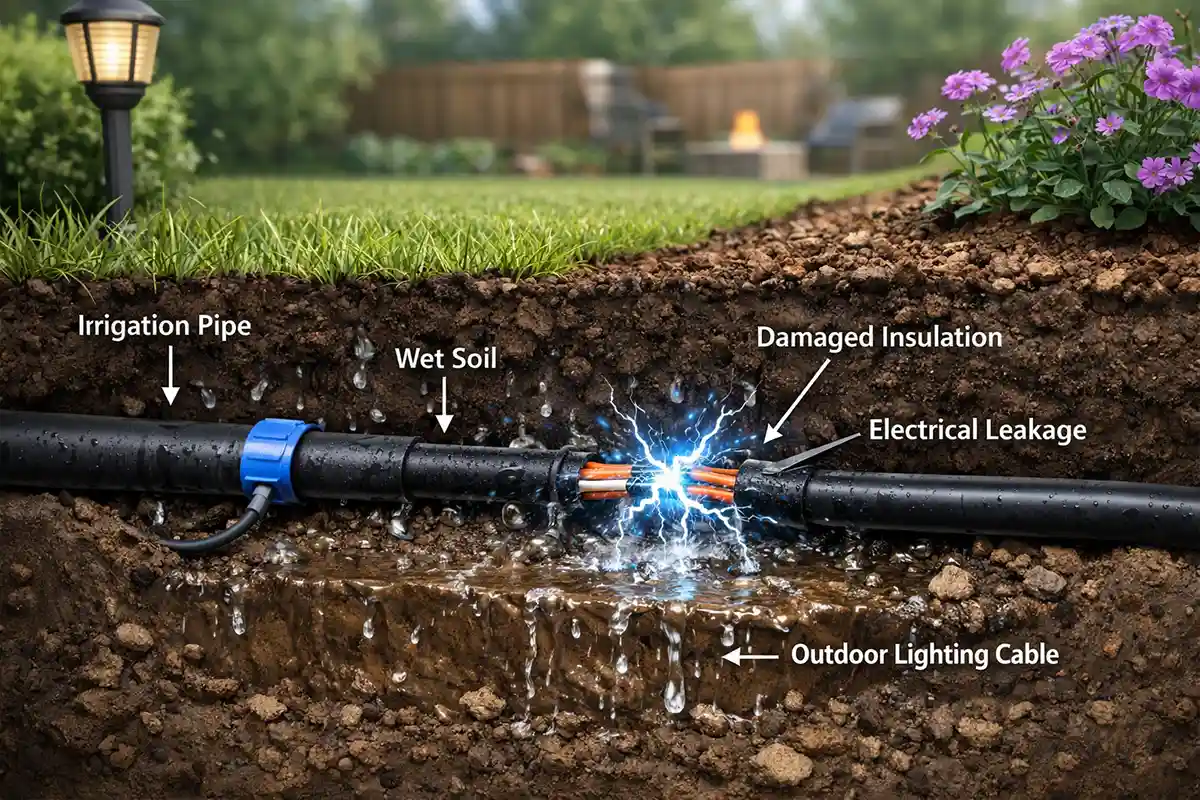
Dry soil acts as an electrical insulator, but irrigation dramatically changes that environment.
Once soil becomes saturated, dissolved minerals such as calcium, sodium, and magnesium increase conductivity. If cable insulation is damaged, electricity can leak into the surrounding soil.
Typical soil conductivity behavior:
| Soil Condition | Electrical Behavior |
|---|---|
| Dry soil | Insulating |
| Lightly damp soil | Slight conductivity |
| Irrigated soil | Moderate conductivity |
| Wet clay soil | High conductivity |
In humid states like Florida, soil may stay moist for long periods, which increases the chance of electrical leakage. By contrast, desert regions such as Arizona experience fewer moisture-related faults because soil dries quickly.
However, repeated irrigation cycles can still expose wiring defects.
Underground Cable Damage Near Irrigation Lines
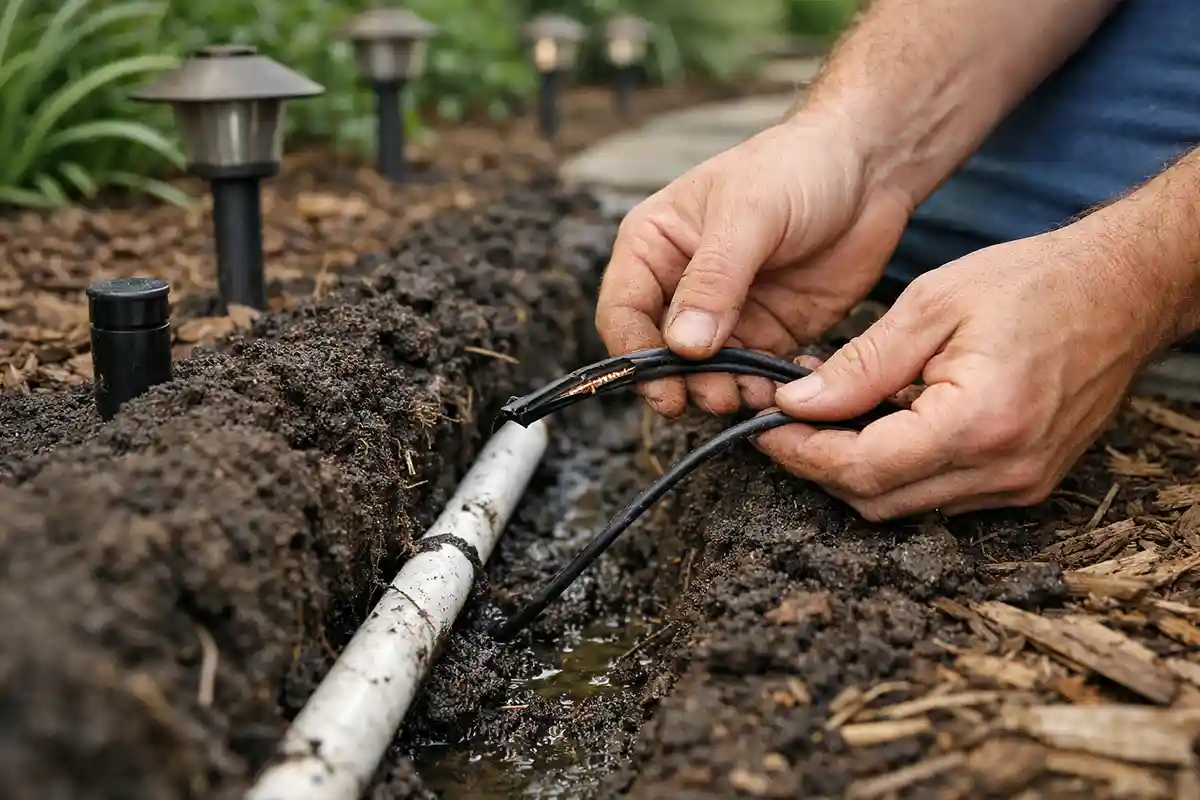
Landscape lighting cables often run within the same trench as sprinkler pipes to simplify installation.
While convenient, this layout increases the chance of accidental damage during maintenance.
Common causes include:
-
replacing sprinkler heads with a shovel
-
trenching new irrigation zones
-
rodents chewing wire insulation
-
soil shifting due to repeated irrigation pressure
Small insulation cuts may remain unnoticed for months. Once irrigation water saturates the soil, electricity can escape through the damaged area and cause the entire circuit to shut down.
A deeper explanation of this issue appears in Underground Lighting Cables Damaged – Causes, Signs and How to Fix Them.
Transformer Overload and Voltage Drop
Low-voltage landscape lighting systems typically operate between 12 and 15 volts. LED drivers require a minimum voltage to stay active.
If irrigation equipment draws additional power from the same circuit, transformer output may temporarily fall below 10.5–11 volts.
When that happens:
-
lights dim
-
fixtures flicker
-
the system shuts off entirely
Voltage loss becomes more noticeable in long wiring runs exceeding 150–200 feet, where resistance already reduces available voltage.
This electrical behavior overlaps with issues described in Voltage Drop in Outdoor Lighting Systems.
Keeping transformer load below about 75–80% capacity improves system stability.
Step-by-Step Fix
Once the cause is identified, these steps usually resolve the issue.
1. Separate power sources
Plug irrigation controllers and lighting transformers into different outlets or circuits whenever possible.
2. Inspect and reseal wire splices
Replace any exposed connectors with:
-
gel-filled waterproof connectors
-
heat-shrink splice kits
-
direct-burial rated wiring
3. Repair damaged cable sections
If insulation damage is found, cut out the affected section and install a new cable with waterproof connectors.
4. Reduce transformer load
Calculate the total wattage of fixtures.
Example:
| Fixture | Wattage |
|---|---|
| 10 pathway lights | 4W each |
| 2 flood lights | 12W each |
| Total | 64W |
For stability, a 100-watt transformer would be more appropriate than a 75-watt unit.
5. Relocate wiring away from sprinkler spray
Fixtures and splices located within 2–4 feet of sprinkler heads are more likely to experience repeated moisture exposure.
Moving these components slightly away from irrigation spray zones can significantly reduce electrical issues.
Loose wiring connections can also contribute to unstable lighting circuits, as explained in Loose Outdoor Wiring Connections – How to Fix Them Safely and Permanently.
When the Problem Appears Intermittently
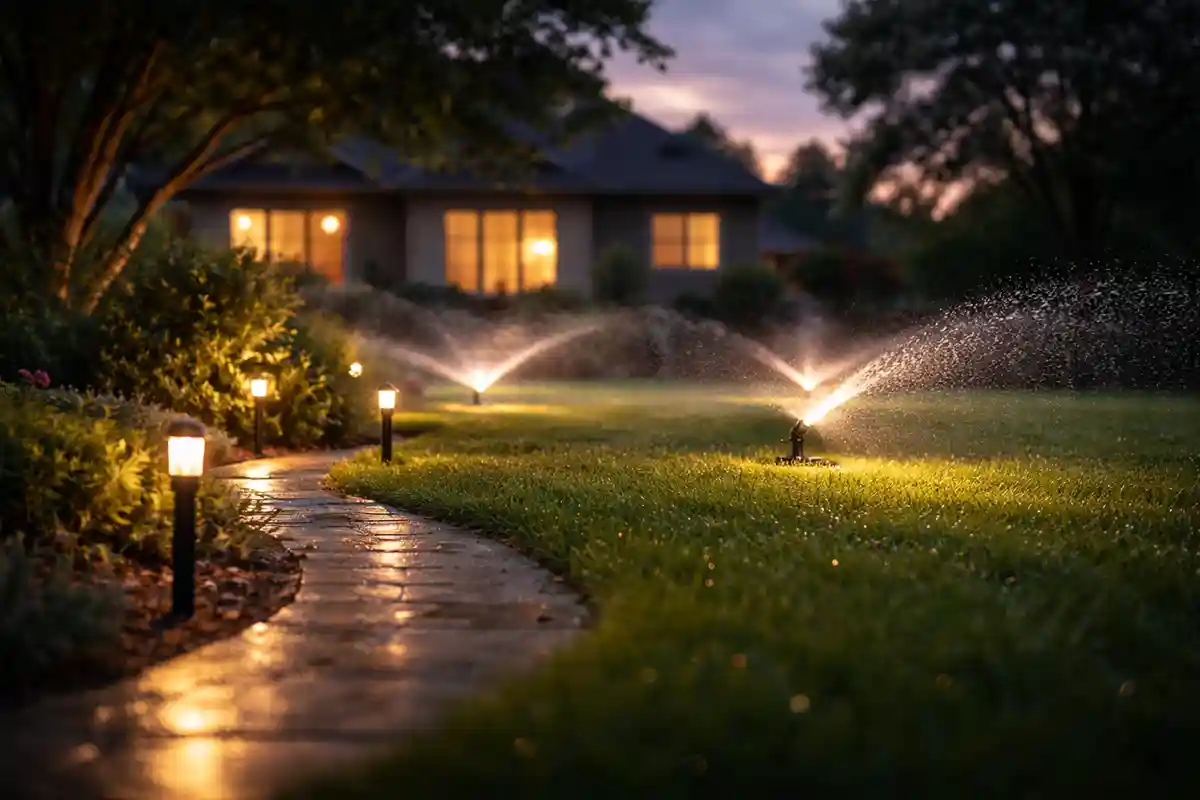
Sometimes irrigation does not fully shut down the lighting system.
Instead, lights may:
-
flicker
-
dim temporarily
-
cycle on and off
This behavior often indicates unstable voltage or moisture affecting a wiring connection.
As electrical resistance changes during irrigation cycles, the circuit fluctuates around the operating threshold of LED drivers.
Similar intermittent behavior is explored in Outdoor Lights Working Intermittently.
Frequently Asked Questions
Can sprinkler water damage landscape lighting systems?
Yes. While outdoor wiring is designed for moisture exposure, damaged insulation or poorly sealed splices allow water to reach conductors, which can cause short circuits or GFCI trips.
Why do the lights come back on after irrigation stops?
Once irrigation ends, soil begins draining and conductivity decreases. Electrical leakage falls below the threshold that triggers shutdown.
Should irrigation and landscape lighting share a power outlet?
It is generally safer to power them separately. Independent circuits reduce the chance of voltage dips and nuisance GFCI trips.
Can sprinkler pressure loosen buried wiring?
Repeated water pressure pulses can shift soil around cables, gradually loosening connectors or exposing insulation over time.
For additional electrical safety guidance, the National Electrical Code landscape lighting recommendations from the National Fire Protection Association provide installation standards for outdoor wiring.
Key Takeaways
When outdoor lights lose power during irrigation cycles, the cause usually involves moisture exposure, underground cable damage, or shared electrical circuits.
The most common fix is separating irrigation and lighting power sources and ensuring all wiring connections are properly waterproofed.
Regular inspection of buried cables, transformers, and splices helps prevent these problems from developing over time.