Quick Solution Summary
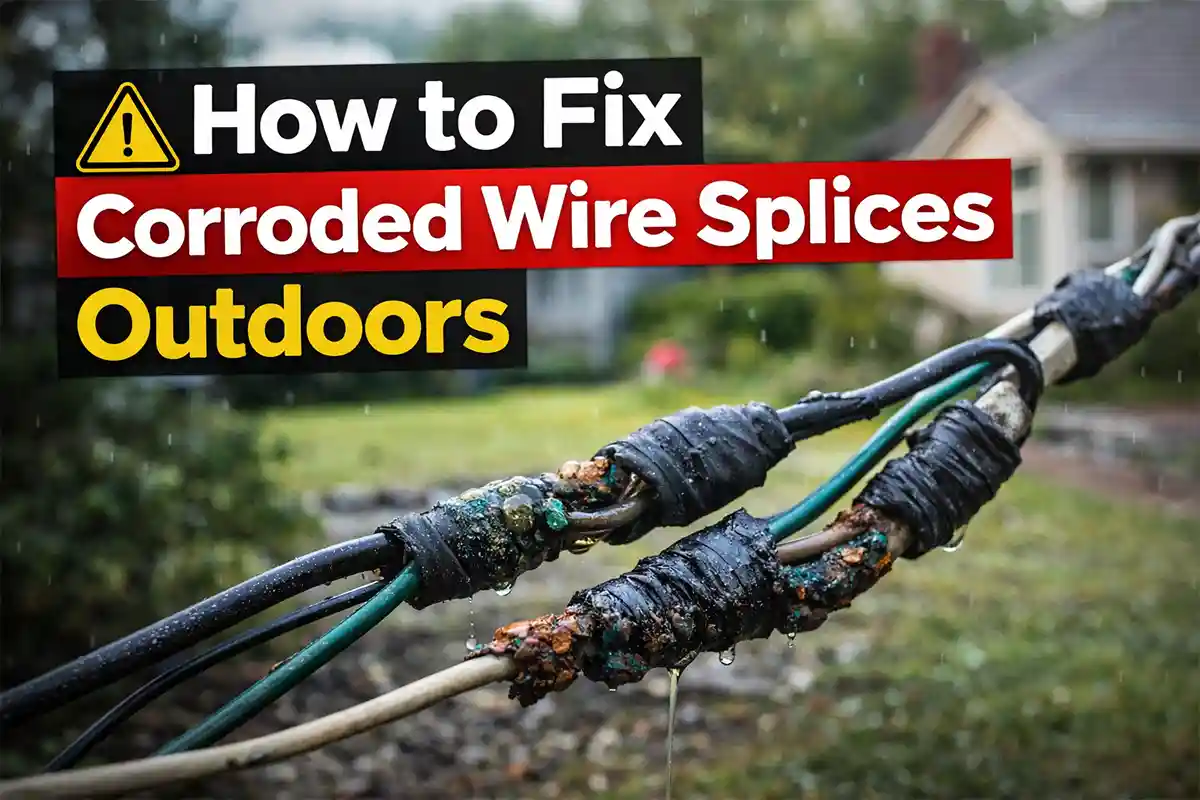
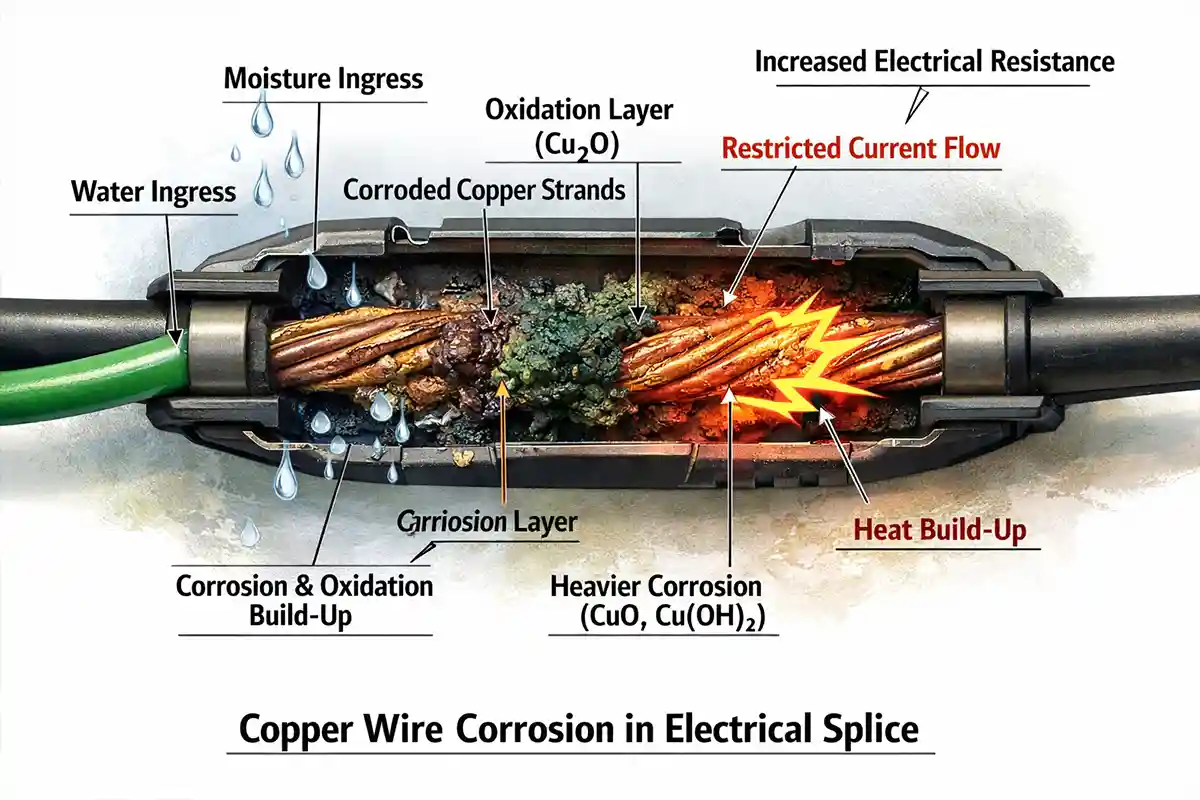
Corroded wire splices outdoors usually develop when moisture penetrates a connection point and reacts with exposed copper conductors. Oxygen, water, and dissolved minerals slowly oxidize the metal surface, forming green or white corrosion that increases electrical resistance. As resistance builds, current flow becomes unstable. Outdoor lights may flicker, dim, or shut off entirely after running for several minutes.
The correct repair is not simply tightening the connection. The damaged portion of wire must be cut back until clean copper is visible, then the splice must be rebuilt using connectors rated for wet environments or direct burial. Gel-filled wire nuts, adhesive-lined heat-shrink connectors, and resin-sealed splice kits provide long-term protection against moisture intrusion.
In humid regions such as Florida or the Gulf Coast, corrosion can begin within 6–12 months if connections are poorly sealed. In colder northern states, freeze–thaw cycles allow water to expand inside connectors, gradually breaking seals. Even dry climates like Arizona experience corrosion where irrigation systems or soil moisture reach underground wiring. Proper sealing and periodic inspection prevent recurring electrical failures.
What Is a Corroded Outdoor Wire Splice?
A corroded outdoor wire splice occurs when moisture and oxygen react with exposed metal conductors inside an electrical connection, forming oxidation that increases electrical resistance and disrupts current flow.
Copper wiring is especially susceptible because it reacts readily with oxygen and water. When corrosion begins, the metal surface slowly converts into copper oxide or copper carbonate. These compounds appear as green, blue, or white powdery deposits on the conductor.
Unlike normal surface discoloration, corrosion penetrates microscopic gaps between copper strands. Once this occurs, the electrical conductivity of the wire decreases significantly.
For example, a clean 12-gauge copper wire typically has a resistance of roughly 0.08 ohms per 50 feet. A corroded splice can introduce an additional 1–3 ohms of resistance, which is enough to disrupt a low-voltage lighting circuit operating at 12–15 volts.
The resulting instability often leads to symptoms like flickering lights, intermittent shutdowns, or uneven brightness levels.
When your outdoor lighting system stops responding, reviewing the possible causes of outdoor lights that stopped working can help you decide what to inspect next.
Signs of a Corroded Outdoor Wire Splice
Electrical corrosion rarely appears without warning. Several symptoms typically develop before the lighting system fails completely.
Quick Diagnostic Checklist
-
Lights flicker or dim after 5–10 minutes of operation
-
Voltage drops 10–20% across a single splice
-
Green, blue, or white powder forming on copper conductors
-
Wire insulation becoming brittle or discolored
-
Outdoor lights working intermittently during humid weather
-
GFCI outlets tripping when landscape lighting activates
When two or more of these conditions appear together, corrosion inside a splice is a likely cause.
Electrical behavior such as unpredictable shutdowns often overlaps with problems seen in Outdoor Lights Working Intermittently, where unstable connections frequently originate from moisture-damaged splice points.
Why Outdoor Wire Splices Corrode So Easily
Outdoor electrical systems face constant environmental stress. Unlike indoor wiring, connections must withstand humidity, soil moisture, temperature fluctuations, and chemical exposure.
Several environmental factors accelerate corrosion.
| Environmental Factor | Impact on Splice | Likelihood | Recommended Action |
|---|---|---|---|
| High humidity (70–90%) | Accelerates oxidation of copper | High | Use sealed connectors |
| Irrigation overspray | Water infiltrates connection points | Medium | Relocate or elevate wiring |
| Freeze–thaw cycles | Expands small gaps in connectors | Medium | Heat-shrink sealed splices |
| Coastal salt air | Causes electrochemical corrosion | High | Marine-grade connectors |
| Soil mineral content | Creates conductive contamination | Medium | Resin-sealed splice kits |
Moisture intrusion is the most common trigger. When water penetrates a connector, it creates an electrochemical environment that speeds oxidation dramatically.
Outdoor electrical systems experiencing widespread corrosion often show broader moisture-related issues. For example, persistent dampness inside fixtures or wiring compartments is commonly associated with problems described in Moisture Damage in Outdoor Lighting Explained.
Types of Corrosion Found in Outdoor Wire Splices
Not all corrosion forms in the same way. Several different chemical processes may occur depending on environmental conditions and wiring materials.
Copper Oxidation
This is the most common corrosion type in landscape lighting systems.
When copper reacts with oxygen and moisture, it forms copper oxide and copper carbonate. These compounds appear as green deposits sometimes called verdigris. While initially thin, the layer thickens over time and increases electrical resistance.
Galvanic Corrosion
Galvanic corrosion occurs when two different metals contact each other in the presence of moisture. For example, a copper conductor connected to an aluminum terminal can create a small electrical potential difference.
This difference triggers an electrochemical reaction that slowly eats away at one of the metals. The effect is often accelerated in coastal environments where salt content increases electrical conductivity.
Soil Mineral Corrosion
Underground splices are vulnerable to chemical reactions with minerals found in soil.
Calcium, magnesium, and iron compounds dissolved in groundwater can deposit conductive residues on exposed wire. Over time this creates conductive bridges between strands and speeds corrosion.
This issue often appears in systems with buried cable joints similar to those discussed in Underground Lighting Cables Damaged: Causes, Signs, and How to Fix Them.
Electrolytic Corrosion
Electrolytic corrosion occurs when small electrical currents travel through moisture between metal conductors. This process accelerates metal breakdown and may occur in low-voltage systems where connectors are poorly sealed.
Where Corroded Splices Commonly Occur
Outdoor lighting systems tend to develop corrosion in predictable locations where moisture collects or connectors are exposed to environmental stress.
Underground Cable Connections
Low-voltage landscape lighting often uses direct-burial cable splices located 2–6 inches below soil level. If these connections are not sealed properly, groundwater slowly enters the connector.
As soil moisture fluctuates between 40–80% humidity, corrosion begins forming on exposed conductors.
Fixture Wiring Compartments
Many outdoor fixtures contain small internal wiring cavities protected by rubber gaskets. Over time, ultraviolet radiation and temperature swings degrade these seals.
Condensation forms inside the fixture housing, gradually attacking wire connections. In areas with seasonal rainfall such as the Midwest, this moisture accumulation becomes a common failure point.
Junction Boxes and Cable Entry Points
Outdoor junction boxes mounted near ground level frequently collect moisture from rain or irrigation spray. Water can travel along cable insulation and enter through small gaps around the connector.
Poorly sealed cable entry points are a frequent source of long-term electrical damage. Situations like this are often linked with broader issues explained in Why Water Gets in Through Cable Entry Points.
Technical Explanation: How Corrosion Disrupts Electrical Flow
Corrosion affects electrical systems by increasing resistance inside the circuit.
Copper conductors normally allow electrons to flow freely. When corrosion forms, the oxidized layer acts as a partial insulator. The electrical path becomes irregular, forcing current through narrower conductive channels.
In a typical landscape lighting system:
-
Transformer output: 12–15 volts
-
Current load: 3–8 amps
-
Wire size: 12–14 gauge copper
If a splice develops 2 ohms of additional resistance, the resulting voltage drop can reach 6–10 volts, depending on current flow.
This causes several system behaviors:
-
Lights dim significantly
-
Fixtures turn off after warming up
-
Transformers overload
-
LED drivers shut down to protect circuits
These symptoms are frequently mistaken for loose connections. In reality, many unstable lighting systems suffer from both corrosion and mechanical degradation at the splice point, similar to the failures described in Loose Outdoor Wiring Connections: How to Fix Them Safely and Permanently.
Step-by-Step Guide to Fix Corroded Outdoor Wire Splices
Repairing a corroded splice requires removing the damaged metal and rebuilding the connection with moisture-sealed components. Simply cleaning the wire rarely restores proper conductivity because corrosion spreads between individual copper strands.
Follow these steps to restore the circuit safely.
1. Turn Off Power to the Circuit
Disconnect the transformer or switch off the breaker supplying the outdoor lighting system. Use a multimeter to confirm that voltage at the splice location reads 0 volts before handling the wires.
Low-voltage landscape lighting systems typically operate between 12 and 15 volts, but even these systems can damage equipment if short circuits occur during repairs.
2. Locate the Corroded Connection
Inspect all likely splice locations:
-
Underground cable joints
-
Fixture base wiring compartments
-
Junction boxes near walkways or garden beds
-
Cable entry points into lighting fixtures
Signs of corrosion often include green copper deposits, powdery residue, or darkened conductor strands.
If the problem appears after rainfall or irrigation cycles, the failure may also be connected to conditions described in Why Your Outdoor Light Works Fine Until It Rains, where moisture intrusion temporarily disrupts electrical connections.
3. Cut Back the Damaged Wire
Corrosion spreads internally between copper strands. The safest approach is to remove the affected section completely.
Cut the wire 1–2 inches past the visible corrosion until the copper surface appears bright and clean. If the wire remains discolored, trim further until the conductor shows its natural metallic shine.
4. Strip Fresh Insulation
Using a proper wire-stripping tool, remove about ½ inch (12–13 mm) of insulation from each wire end.
Avoid nicking the conductor strands, since damaged strands increase resistance and weaken the connection over time.
5. Install a Waterproof Connector
Outdoor wiring must always use connectors rated for wet or direct-burial environments.
Common options include:
-
Gel-filled waterproof wire nuts
-
Adhesive-lined heat-shrink butt connectors
-
Resin-sealed direct burial splice kits
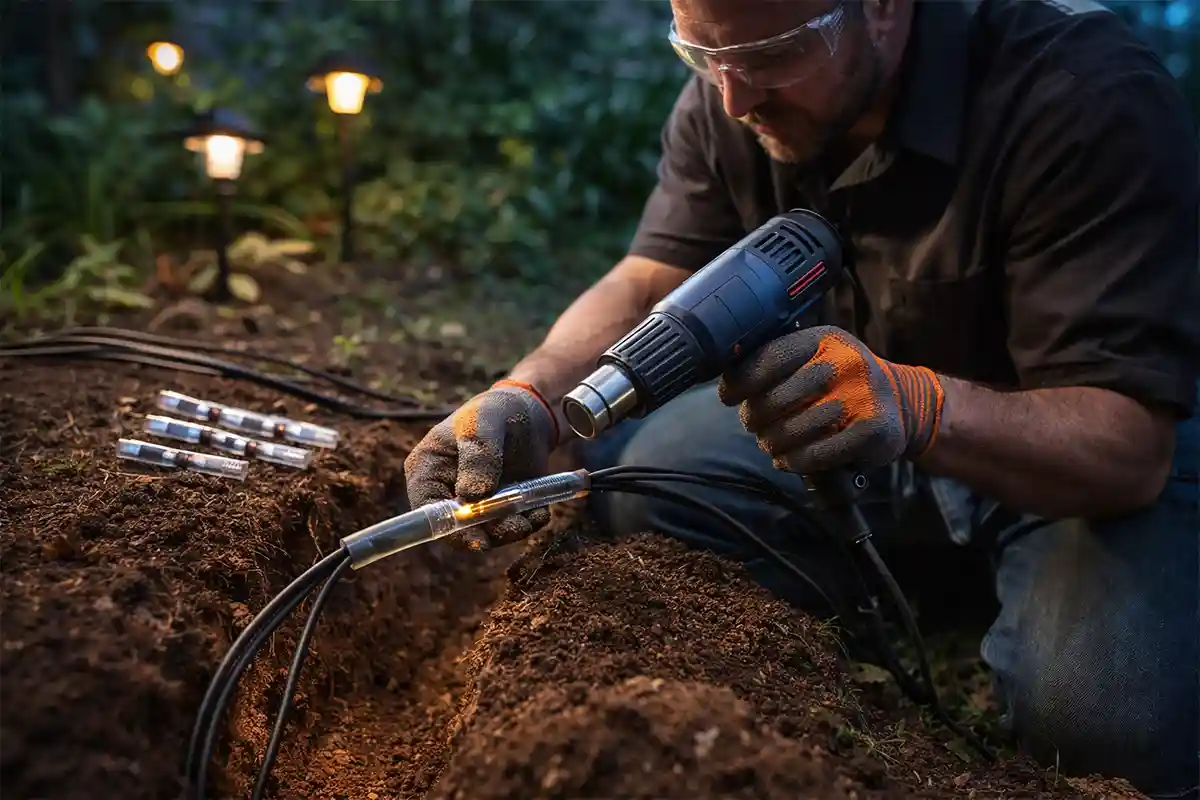
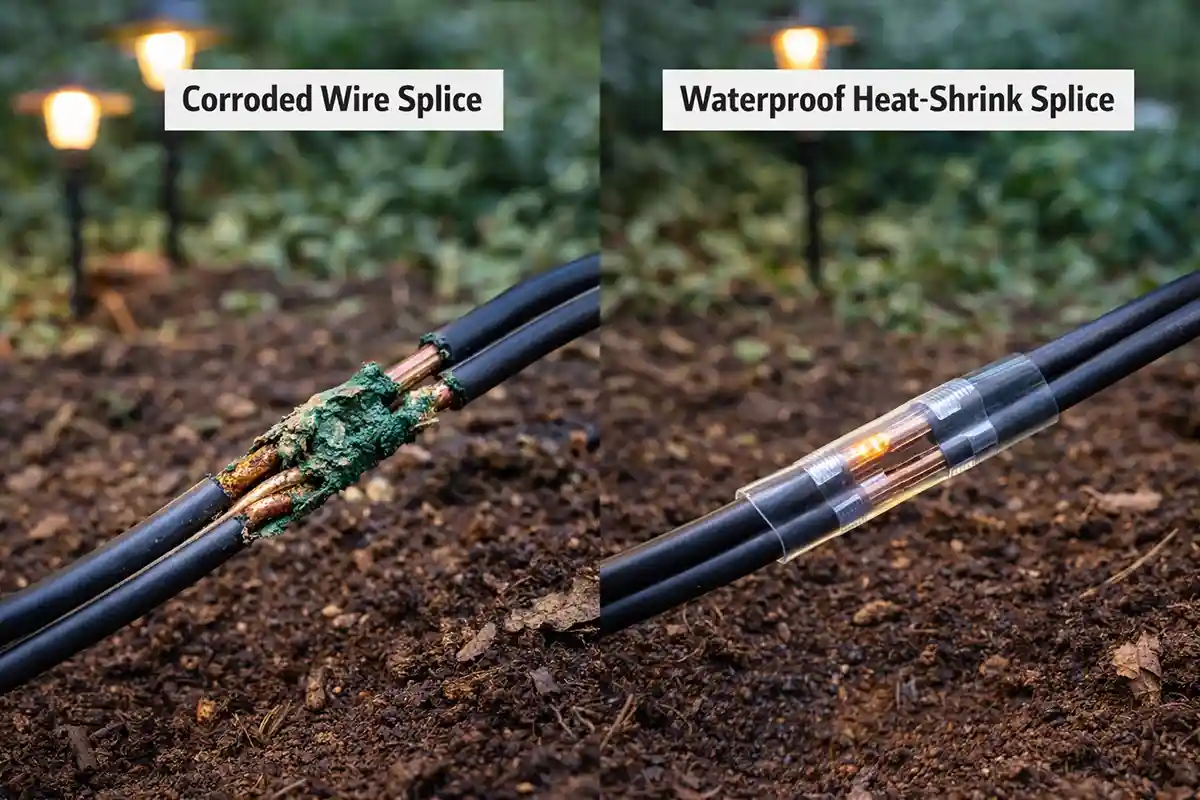
Heat-shrink connectors provide excellent protection because the adhesive lining melts when heated, forming a watertight seal around the wire.
6. Seal and Protect the Splice
Once the connection is secure, protect it from environmental exposure.
Options include:
-
Placing the splice inside a weatherproof junction box
-
Wrapping with self-fusing silicone electrical tape
-
Using a resin-filled splice capsule for underground installations
When completed correctly, the repaired splice should show minimal voltage drop and stable current flow throughout the lighting circuit.
Waterproof Connector Comparison
Selecting the correct connector type greatly influences how long the repair will last.
| Connector Type | Water Protection | Typical Lifespan | Best Application |
|---|---|---|---|
| Standard wire nut | Low | 6–12 months outdoors | Temporary repairs |
| Gel-filled wire nut | Moderate | 3–5 years | Landscape lighting splices |
| Heat-shrink butt connector | High | 5–10 years | Fixture wiring and exposed areas |
| Resin-sealed splice kit | Very high | 10+ years | Underground cable connections |
| Waterproof junction box | High | 10+ years | Multi-wire connection points |
Connectors rated IP67 or higher offer the best protection against long-term moisture exposure.
Standard indoor wire nuts should never be used outdoors without additional sealing because they allow water vapor to reach the metal conductors.
Long-Term Prevention Strategies
Preventing corrosion is much easier than repairing it after the wiring begins failing.
Several installation practices dramatically reduce corrosion risk.
Elevate Junction Boxes
Whenever possible, mount junction boxes 4–6 inches above soil level. This prevents water accumulation from rain or irrigation runoff.
Avoid Sprinkler Spray Zones
Landscape irrigation systems frequently expose wiring to constant moisture. Redirecting sprinkler heads or relocating wiring routes helps reduce corrosion risk.
Use Dielectric Grease
Applying a small amount of dielectric grease inside connectors provides an additional moisture barrier and reduces oxygen exposure.
Inspect Connections Periodically
Outdoor electrical systems benefit from inspection every 12–18 months. Early signs of corrosion can be detected before major voltage problems occur.
In systems where corrosion repeatedly appears, the issue may contribute to broader electrical instability such as flickering lights or irregular brightness. These symptoms often resemble conditions discussed in Flickering Outdoor Lights: Common Causes.
Environmental Risk Scenarios
Different climates create different corrosion risks for outdoor wiring systems.
Humid Coastal Regions
Areas such as coastal California or the Gulf Coast often experience 70–90% relative humidity combined with salt-laden air. Salt particles increase electrical conductivity in moisture, accelerating electrochemical corrosion.
Northern Freeze–Thaw Climates
In northern states where winter temperatures frequently drop below 32°F (0°C), water trapped inside connectors expands when frozen. This expansion can crack insulation and loosen seals.
Repeated freeze–thaw cycles gradually allow moisture to reach the metal conductors.
Arid Desert Environments
Even dry climates like Arizona are not immune to corrosion. Irrigation systems, groundwater seepage, and nighttime condensation can expose wiring to moisture.
Corrosion in these regions often develops more slowly but still leads to gradual electrical resistance buildup.
Understanding environmental influences is important because corrosion often appears as part of a larger system degradation pattern. Many outdoor lighting systems that fail prematurely show similar long-term wear patterns described in Why Outdoor Lights Stop Working Over Time.
Practical Maintenance Checklist
Routine maintenance helps prevent corrosion before it damages the lighting system.
Recommended inspection routine:
-
Check exposed wiring every 12 months
-
Inspect underground splice areas after major landscaping work
-
Verify transformer output voltage remains within 12–15 volts
-
Examine connectors for discoloration or cracking
-
Replace connectors showing moisture intrusion
-
Confirm junction box seals remain intact
Small preventative repairs often extend the lifespan of outdoor lighting systems by 5–10 years.
Key Insights
Corroded wire splices are one of the most common hidden causes of outdoor lighting failure. Moisture, oxygen, and environmental contaminants gradually attack exposed copper conductors, increasing electrical resistance and destabilizing the circuit.
Low-voltage landscape lighting systems are especially sensitive to resistance changes. Even a small amount of corrosion can reduce voltage enough to cause flickering lights, delayed startup, or complete system shutdown.
The most reliable repair method involves cutting away the damaged wire and rebuilding the splice using waterproof connectors designed for outdoor environments. Proper sealing, periodic inspection, and careful cable routing dramatically reduce the risk of corrosion returning.
Electrical safety organizations such as the National Electrical Manufacturers Association (NEMA) emphasize using connectors specifically rated for wet locations and direct burial applications to maintain safe outdoor electrical systems.
Common Questions
Can a corroded wire splice cause lights to turn off randomly?
Yes. Corrosion increases resistance in the electrical circuit. As resistance rises, voltage drops across the splice and the lighting system may shut off or flicker.
Is it possible to clean corrosion instead of replacing the splice?
Cleaning rarely solves the problem. Corrosion penetrates between copper strands, so cutting back the damaged wire and rebuilding the splice is the most reliable solution.
How long do outdoor wire splices normally last?
A properly sealed splice using waterproof connectors can last 10 years or more. Poorly sealed connections may begin corroding within 6–18 months, especially in humid climates.
Are waterproof connectors required for landscape lighting?
Yes. Outdoor wiring must use connectors rated for wet environments or direct burial. Standard indoor connectors allow moisture to reach the conductors and eventually cause corrosion.
Electrical safety organizations such as the National Electrical Manufacturers Association (NEMA) emphasize using connectors specifically rated for wet locations.