Outdoor Lights Tripping GFCI Outlets

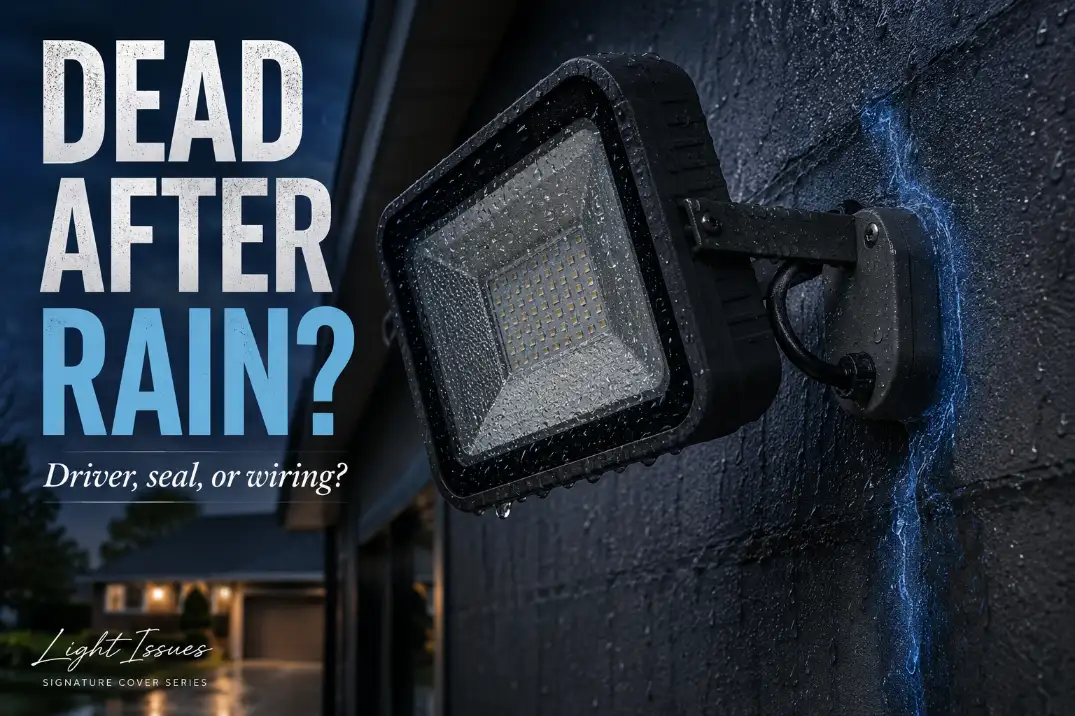
Outdoor GFCI outlet tripped after rain with a landscape lighting transformer plugged into a wet exterior receptacle.

Outdoor lights that trip a GFCI outlet after rain are usually exposing a small leakage-current problem, not pulling too much power. A GFCI can shut off when the outgoing and returning current differ by about 5 milliamps, so a damp plug, wet splice, cracked fixture, or water inside a box can trip it even when … Read more

Voltage Drop in Outdoor Lighting Systems

Low-voltage landscape lighting system with transformer and uneven pathway brightness at dusk.

Outdoor lighting rarely fails all at once. It fades unevenly. One path light looks steady. The next looks softer. The far end looks tired. Most people assume this is fixture aging. Or weather damage. Or bulb quality. The system is not losing information. It is losing voltage across distance. The Brightness Difference That Feels Accidental … Read more

Outdoor Lights Working Intermittently: Fix the Right Problem First

Outdoor path lights working intermittently with one flickering fixture, wet soil, and a highlighted weak wire splice.

Outdoor lights that work intermittently usually have an unstable power path, not a mystery bulb problem. The first useful question is whether one fixture, one section, or the entire lighting zone is affected. The second is whether the problem follows rain, irrigation, darkness, heat, or time. A light that flickers when touched points toward a … Read more

Flickering Outdoor Lights: Common Causes and First Checks

Single flickering porch light compared with several flickering path lights on one outdoor lighting run

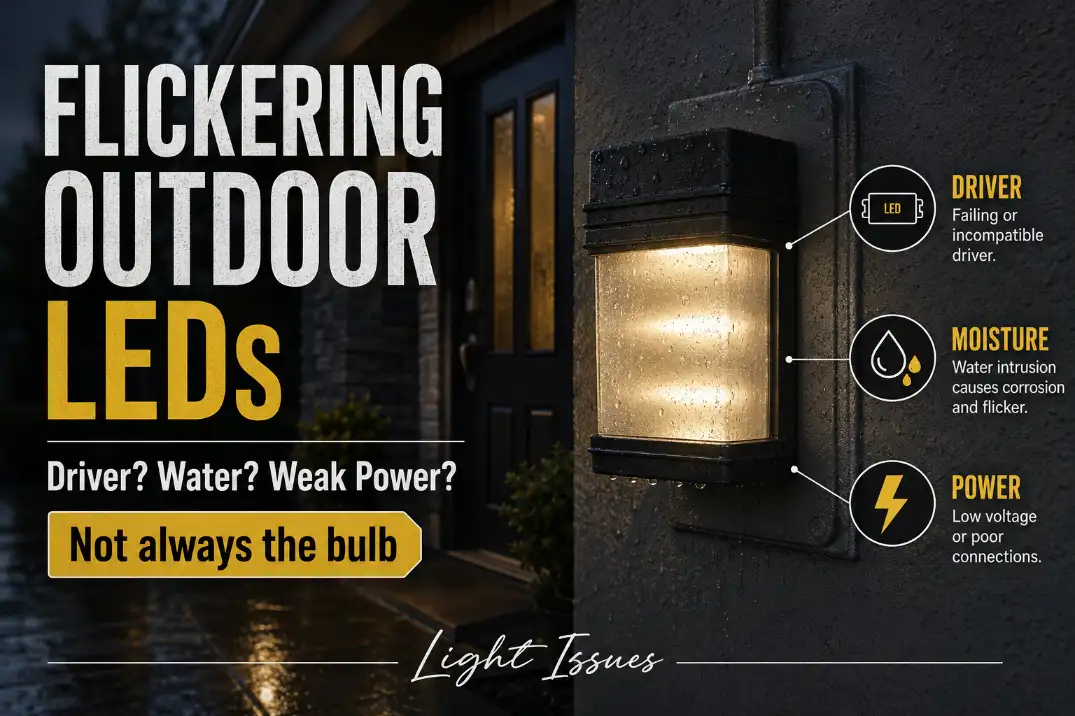
Outdoor lights usually flicker for fewer reasons than people think. In most cases, the pattern points first to a loose or aging connection, moisture affecting a splice or fixture, or unstable power showing up only under real load. The fastest way to narrow it down is not to start with the bulb. Start with two … Read more

Why Outdoor Lights Stop Working Over Time

Aging outdoor path light with dim output, damp mulch, and highlighted corrosion showing why outdoor lights fail slowly

Outdoor lights usually stop working over time because the system gets weaker in layers. Moisture reaches a splice, a connector corrodes, a fixture seal hardens, a cable gets nicked, a transformer starts running near its limit, or a photocell stops reading light correctly. The fastest useful diagnosis is pattern-based: one dead fixture points to a … Read more