Outdoor Lights Turning Off After a Few Minutes? Fix It Fast

Outdoor landscape lights turning off after a few minutes in a residential yard

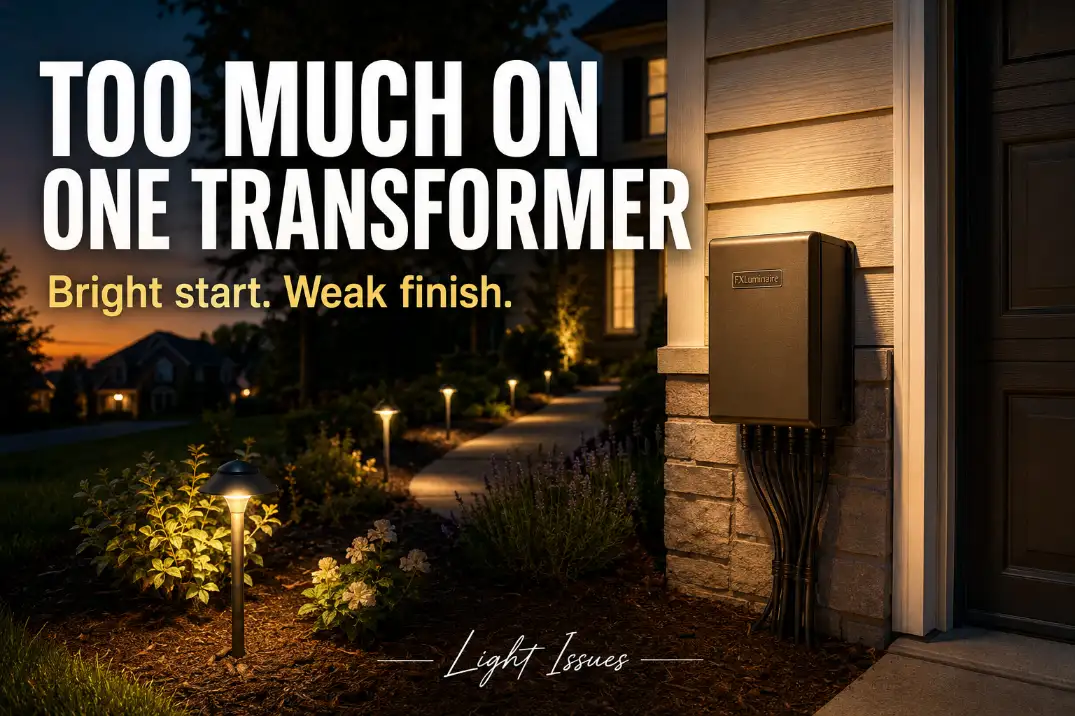
Outdoor lights that turn on normally but shut off a few minutes later usually point to instability somewhere in the lighting system rather than a completely failed fixture. In most residential setups, the issue is caused by transformer overload, voltage drop along long cable runs, moisture intrusion, or loose electrical connections that temporarily break contact. … Read more

Outdoor Lights Not Working on One Side of the Yard

Outdoor pathway lights in a residential yard with one side not working and visible underground landscape lighting wiring trench

When a section of yard lighting suddenly stops working, the first explanation often seems obvious. A burned-out bulb, a faulty transformer, or a damaged fixture are common assumptions. However, outdoor electrical systems rarely behave that simply. The same visible symptom—lights failing on one side of a yard—can result from several very different conditions inside the … Read more

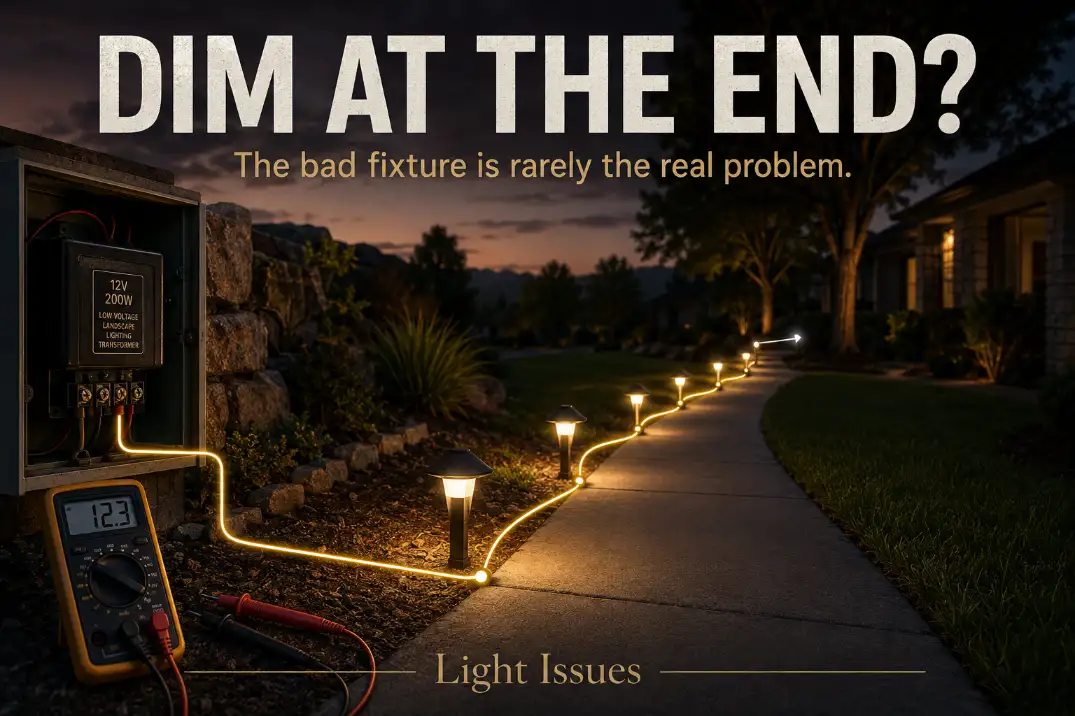
Outdoor Lights Losing Power at the End of the Line

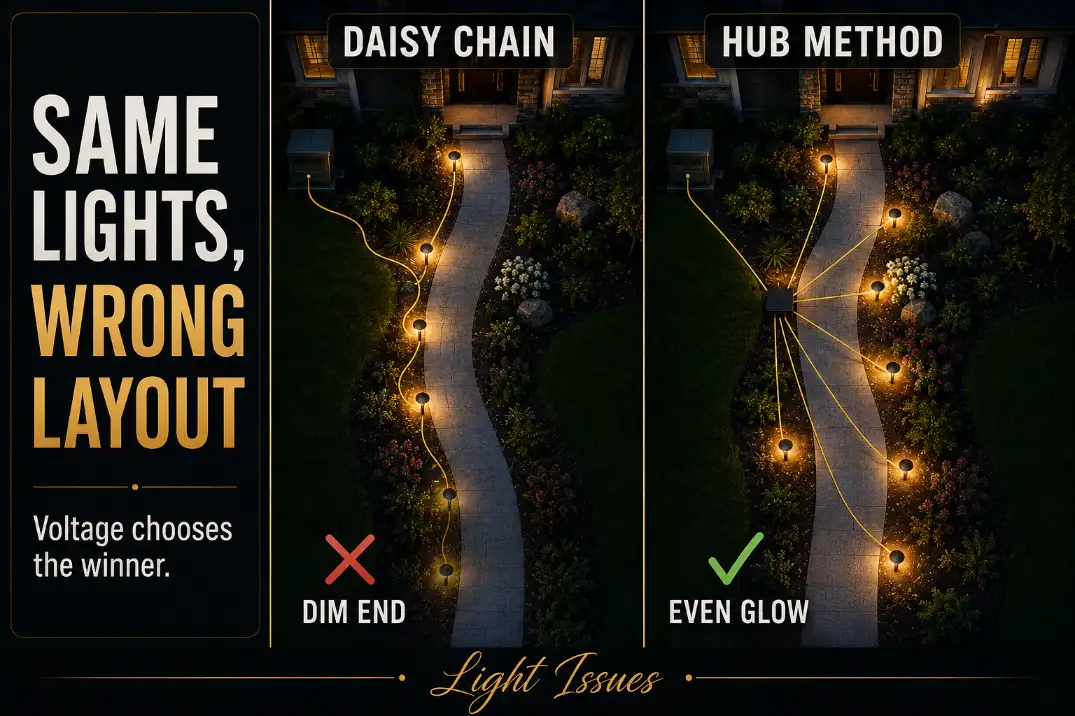
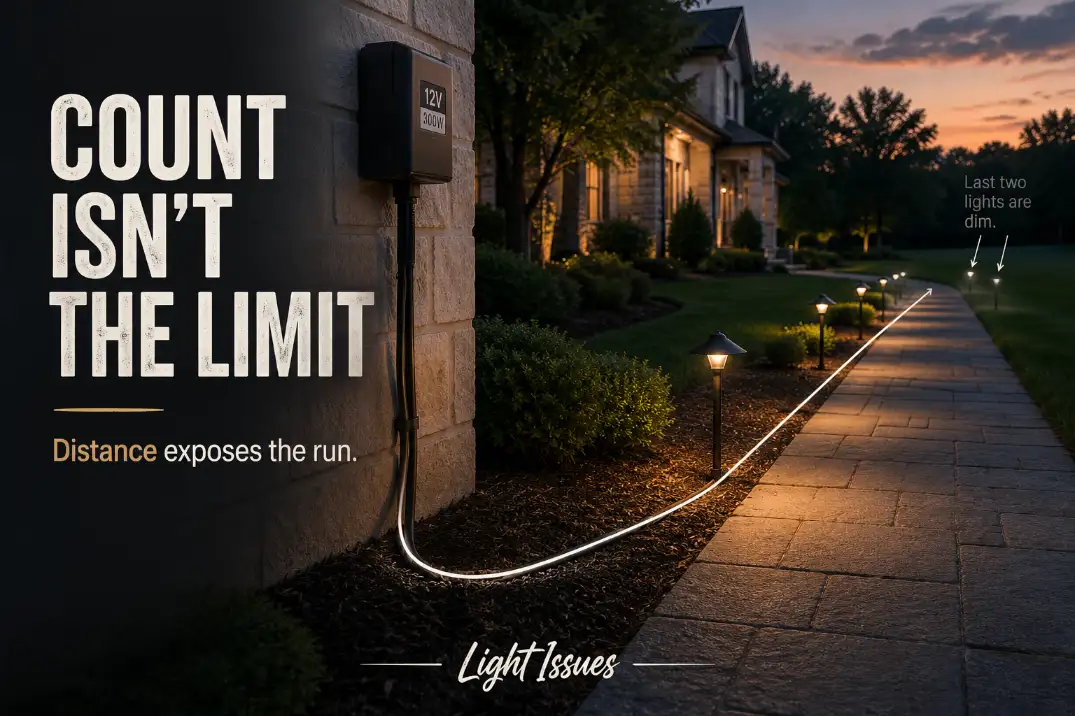
Landscape lighting voltage drop: dim lights with daisy-chain wiring vs bright lights with hub wiring.

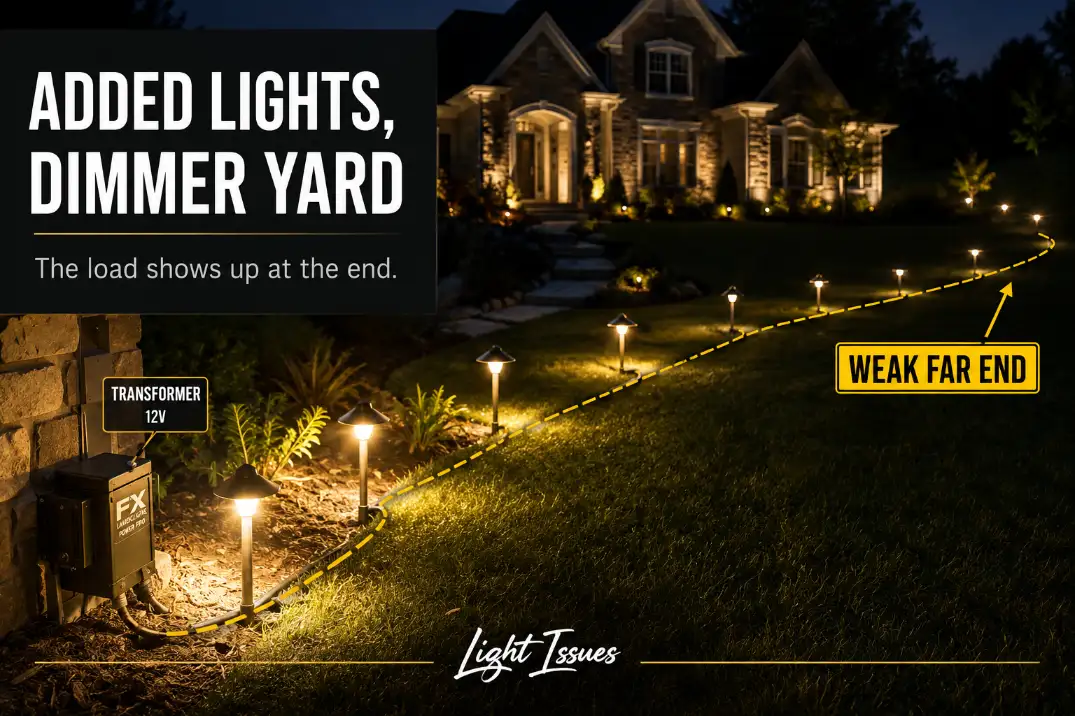
Outdoor lighting systems distribute electricity through cables in a way that closely resembles fluid moving through a pipeline. As electrical current travels through copper wiring, a portion of the energy naturally converts into heat because of electrical resistance within the conductor. This gradual energy loss causes the voltage available to decrease as distance from the … Read more

Loose Outdoor Wiring Connections: The Fix That Actually Lasts

Loose outdoor wiring connection inside a weatherproof junction box with exposed copper highlighted.

Loose outdoor wiring connections usually show up as flickering, intermittent power, a light that works after being tapped, or a fixture that fails after rain. The safe fix starts with one distinction: is this a 120-volt outdoor fixture or a low-voltage landscape lighting splice? A porch light, garage light, wall sconce, or post light is … Read more

Underground Lighting Cables Damaged? Causes, Signs, and How to Fix Them

Exposed low-voltage landscape lighting cable in soil with torn insulation near a pathway light

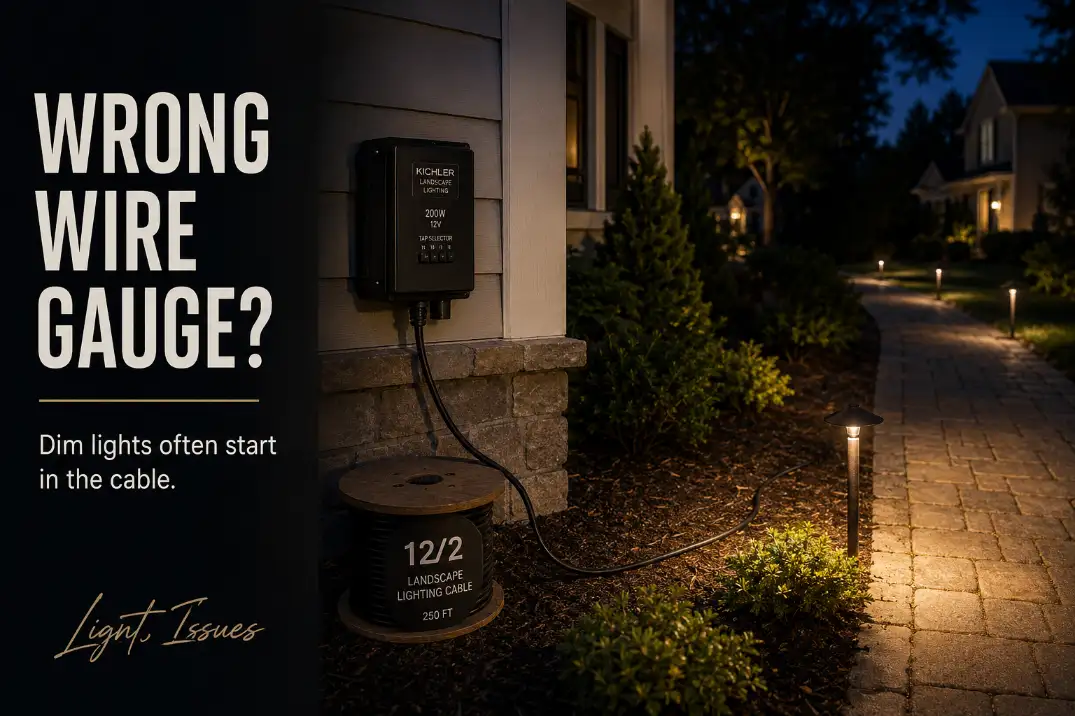
Underground lighting cable damage usually reveals itself through dim fixtures, sections that stop working, or lights that behave differently after rain. In most residential systems, the root cause is not the transformer or the bulb but resistance building inside compromised wiring below the soil line. Once insulation fails or copper begins corroding, voltage delivery becomes … Read more

How to Fix Solar Lights with Uneven or Dimming Output

Outdoor solar pathway lights with uneven brightness at night, some glowing strongly while others appear dim.

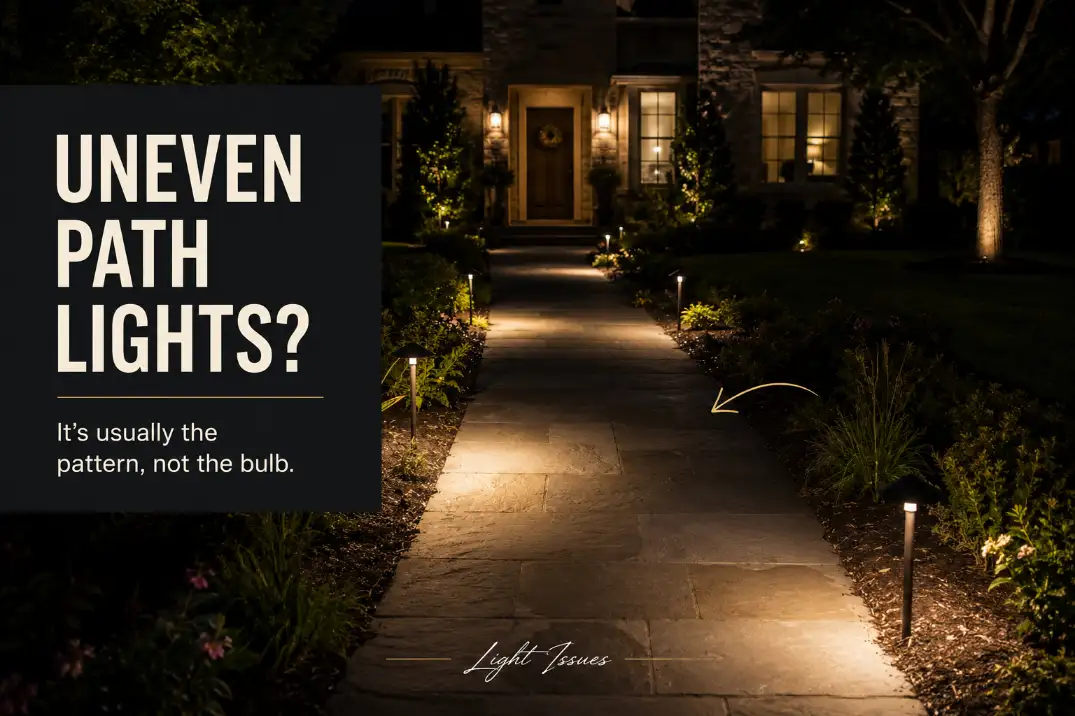
Uneven or dim solar lights are almost always the result of interrupted energy flow between the panel, battery, and LED. If one fixture along a straight driveway edge glows brightly while another just three feet away looks weak, the difference is not random. It usually comes down to unequal sun exposure, early battery fatigue, or … Read more

Why Are My Solar Light Batteries Dying So Quickly?

Outdoor solar garden lights installed along a pathway with visible solar panels and internal rechargeable batteries at dusk.

A typical setup might include six solar lights spaced about 3 to 5 feet apart along a straight concrete walkway. Each fixture stands roughly 16 to 20 inches tall, with a flat solar panel facing straight up. On installation day, everything looks centered and evenly aligned with the driveway edge. The issue often begins where … Read more