If your outdoor lights work during the day but shut off once it gets dark, the issue is usually tied to photocell sensors, voltage drop, moisture inside fixtures, or failing wiring connections. During daylight hours, the system may still receive stable power or remain inactive depending on how the light sensor operates. But once darkness triggers the lights to activate, the electrical load increases, exposing hidden problems in the circuit.
In many homes across the United States, especially in humid regions like Florida or areas with heavy seasonal rain in the Midwest, moisture intrusion or corroded wiring can weaken electrical connections. When the lights attempt to turn on at night, the voltage becomes unstable and the system shuts down.
The most common fixes involve:
-
Cleaning or replacing the photocell light sensor
-
Inspecting fixtures for water or condensation
-
Checking outdoor wiring connections
-
Testing for voltage drop along the lighting line
-
Ensuring no GFCI outlet is tripping under load
With a few targeted checks, most homeowners can identify the root cause quickly and restore reliable nighttime lighting.
Why This Problem Only Appears After Dark
Outdoor lighting systems behave differently during daylight compared to nighttime operation.
During the day:
-
Photocells prevent lights from turning on
-
Electrical load is minimal
-
Weak wiring connections may not show symptoms
At night:
-
The photocell activates the circuit
-
All fixtures draw power simultaneously
-
Any electrical weakness becomes obvious
This explains why your lights appear to work normally when testing them during the day, but fail once darkness triggers full operation.
In many cases, the behavior resembles symptoms seen in systems with intermittent electrical performance, similar to issues discussed in Outdoor Lights Working Intermittently, where hidden wiring instability only appears under certain conditions.
Quick Diagnostic Checklist
Before diving deeper, run through these quick checks.
✔ Cover the photocell sensor with your hand to simulate nighttime
✔ Check whether all lights shut off or only some
✔ Look for water inside fixtures or junction boxes
✔ Inspect exposed wiring for corrosion or loose wire nuts
✔ Test nearby GFCI outlets for tripping
✔ Observe whether lights flicker before turning off
These clues help narrow down the underlying cause.
Common Causes When Outdoor Lights Shut Off at Night
| Cause | What Happens | Fix Difficulty |
|---|---|---|
| Faulty photocell sensor | Lights shut off seconds after activation | Easy |
| Voltage drop in long wiring runs | Lights fail when full load starts | Moderate |
| Moisture inside fixtures | Short circuits occur when lights activate | Moderate |
| Corroded outdoor connections | Resistance increases under load | Moderate |
| Tripping GFCI outlet | Circuit shuts off once lights draw power | Easy |
Each cause affects the lighting system differently, so identifying the correct one is key.
Cause #1: A Failing Photocell Sensor
The photocell is responsible for detecting ambient light levels and automatically turning outdoor lighting on at dusk.
When it begins to fail, several odd behaviors may occur:
-
Lights turn on briefly and then shut off
-
Lights cycle on and off repeatedly
-
The sensor misreads darkness
Photocells are especially vulnerable to UV exposure, dust buildup, and moisture intrusion, particularly in coastal areas of California where salty air accelerates component wear.
If the sensor detects its own light output, it may shut the system off immediately after activation.
A simple test is to temporarily cover the sensor with electrical tape and observe whether the lights stay on.
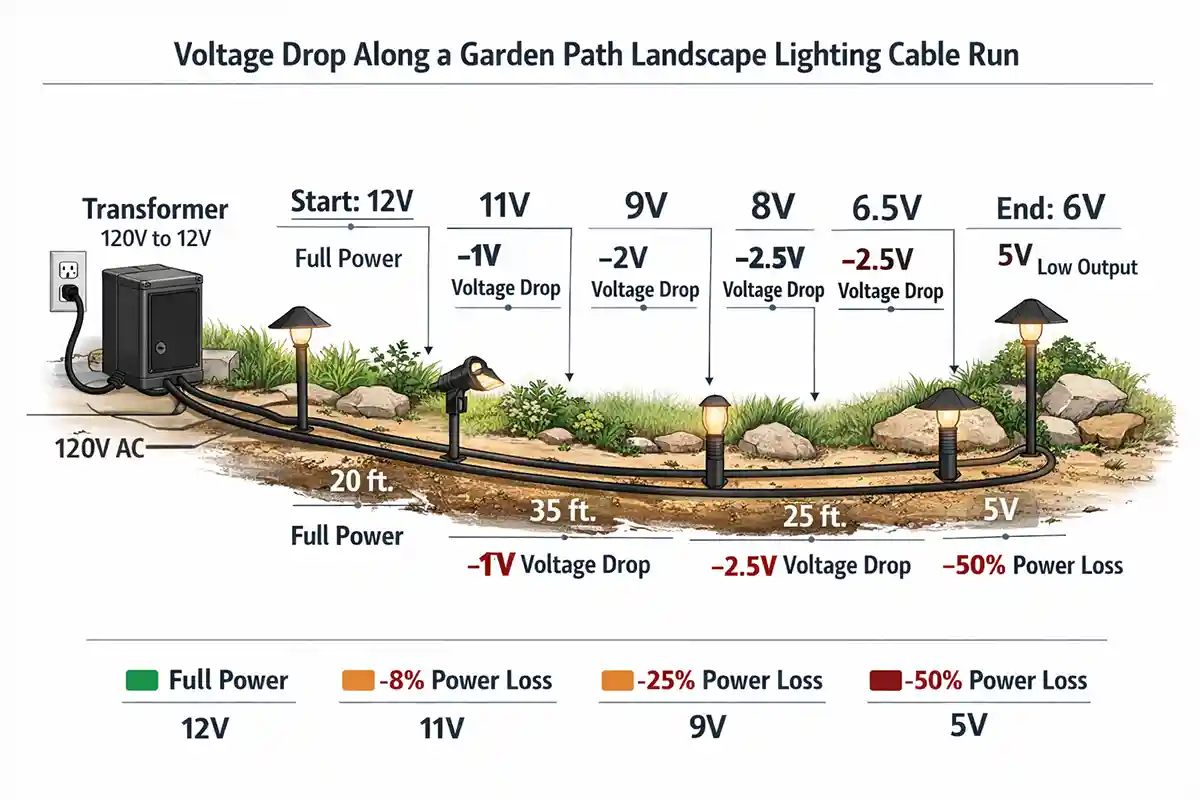
Cause #2: Voltage Drop in the Lighting Line
Outdoor lighting circuits often run long distances through landscaping, along fences, or around walkways.
As wire length increases, voltage gradually decreases.
When the lights attempt to turn on at night, the system may not receive enough power to sustain operation.
This is a classic symptom of voltage drop, which is explained in more detail in Voltage Drop in Outdoor Lighting Systems.
Voltage drop is particularly common in:
-
Large suburban properties
-
Long pathway lighting runs
-
Low-voltage landscape lighting systems
In dry desert environments like Arizona, underground cables may also degrade from temperature extremes, worsening the problem over time.
Cause #3: Moisture Triggering Electrical Shutdown
Outdoor fixtures constantly face environmental exposure.
Rain, irrigation systems, and humidity can allow water to enter:
-
Fixture housings
-
Cable entry points
-
Junction boxes
-
Underground connectors
Once moisture reaches electrical contacts, the circuit can short or trigger a protective shutdown.
This issue is especially common in regions with frequent rainfall or high humidity. Homes in the Southeast and Midwest often experience this problem during long wet seasons.
Moisture-related failures are discussed in depth in Moisture Damage in Outdoor Lighting Explained.
A telltale sign is lights working during dry weather but failing after sunset or rain.
Cause #4: Corrosion in Outdoor Electrical Connections
Over time, oxidation can build up on outdoor electrical contacts.
This corrosion increases resistance in the circuit. During daylight hours the system might appear stable, but once the lights activate at night, the extra load causes the circuit to collapse.
Corrosion typically develops in:
-
Wire nut connections
-
Fixture terminals
-
Transformer terminals
-
Underground splice points
If you notice green, white, or powdery residue on wiring, corrosion is likely present.
The long-term effects of this issue are explained in Corrosion in Outdoor Light Connections.
In northern states with freezing winters, repeated freeze-thaw cycles accelerate this damage.
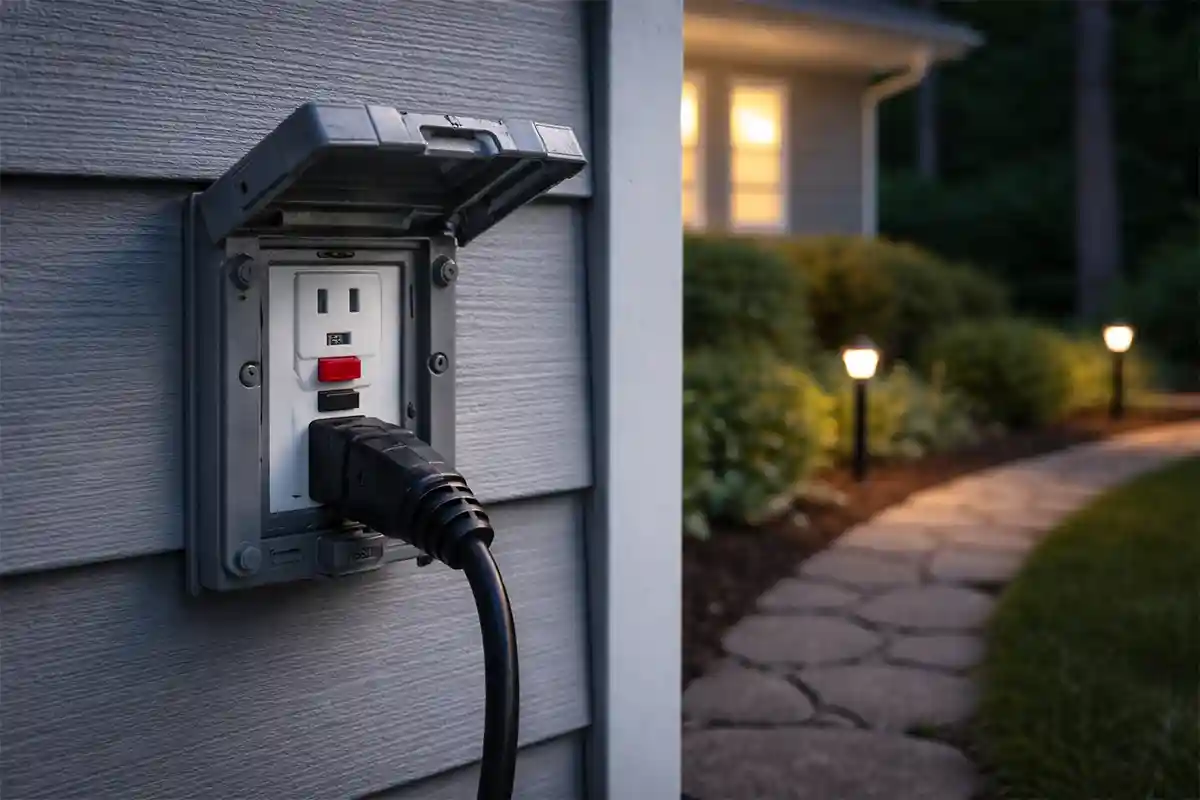
Cause #5: GFCI Outlets Tripping at Night
Many outdoor lighting systems are connected to a GFCI (Ground Fault Circuit Interrupter) outlet.
These outlets shut off power when they detect electrical leakage.
When lights activate at night, any small wiring fault can trigger the GFCI to trip.
Common triggers include:
-
Moisture inside fixtures
-
Damaged cable insulation
-
Faulty transformers
-
Ground leakage from corroded wiring
If the system shuts down completely, checking the nearest GFCI outlet is essential. Situations like this are frequently linked to problems covered in Outdoor Lights Tripping GFCI Outlets.
How to Fix Outdoor Lights That Shut Off After Dark
Follow this troubleshooting sequence.
Step 1: Test the Photocell
Cover the sensor or temporarily disconnect it.
If lights remain on afterward, replace the photocell.
Step 2: Inspect Fixtures for Water
Remove the fixture cover and check for:
-
condensation
-
pooled water
-
rust or corrosion
Dry the fixture and seal entry points if necessary.
Step 3: Check Wiring Connections
Inspect:
-
wire nuts
-
cable splices
-
transformer connections
Loose wiring can behave normally until the circuit is under load.
Symptoms like dimming or unstable brightness may also appear, similar to issues described in Flickering Outdoor Lights: Common Causes.
Step 4: Check the GFCI Outlet
Press the reset button on nearby outdoor outlets.
If it trips repeatedly, a ground fault is present.
Step 5: Measure Voltage at the Transformer
Using a multimeter, verify output voltage.
If voltage drops significantly when lights turn on, wiring resistance or overload may be the problem.
Environmental Factors That Make This Problem Worse
Certain climates accelerate outdoor lighting failures.
| Environment | Effect on Lighting | Likelihood |
|---|---|---|
| Florida humidity | Moisture intrusion and corrosion | High |
| Midwest rainfall | Water infiltration into fixtures | High |
| Arizona heat | Cable insulation degradation | Medium |
| Northern winters | Freeze-thaw wire damage | Medium |
| Coastal regions | Salt air corrosion | Medium |
Environmental exposure explains why outdoor lighting systems often deteriorate faster than indoor electrical systems.
Preventing the Problem in the Future
A few preventative steps dramatically increase outdoor lighting reliability.
-
Use weatherproof connectors
-
Seal cable entry points with silicone or rubber grommets
-
Install higher-quality photocells
-
Inspect fixtures annually
-
Replace aging wiring before corrosion spreads
Outdoor electrical systems benefit from periodic inspection, especially after heavy storms or seasonal weather changes.
Questions Homeowners Often Ask
Why do my outdoor lights only stay on for a few seconds?
This usually indicates a faulty photocell sensor or a circuit that cannot maintain voltage when the lights activate.
Can a bad transformer cause lights to shut off at night?
Yes. If the transformer is overloaded or failing, voltage may collapse when multiple fixtures turn on simultaneously.
Why do the lights work during testing but fail automatically?
Manual testing often bypasses the photocell or uses partial load. The real issue appears only when the full system activates.
Does rain make outdoor lighting problems worse?
Absolutely. Water infiltration can create temporary short circuits or trigger GFCI protection devices.
The U.S. Department of Energy highlights moisture protection as a critical factor in outdoor electrical reliability:
https://www.energy.gov
Key Takeaway
When outdoor lights work during the day but shut off after dark, the problem usually appears only when the system reaches full electrical load. Photocell sensors, moisture intrusion, voltage drop, and corroded connections are the most common causes.
By checking these areas systematically, most homeowners can diagnose the issue quickly and restore reliable nighttime lighting.