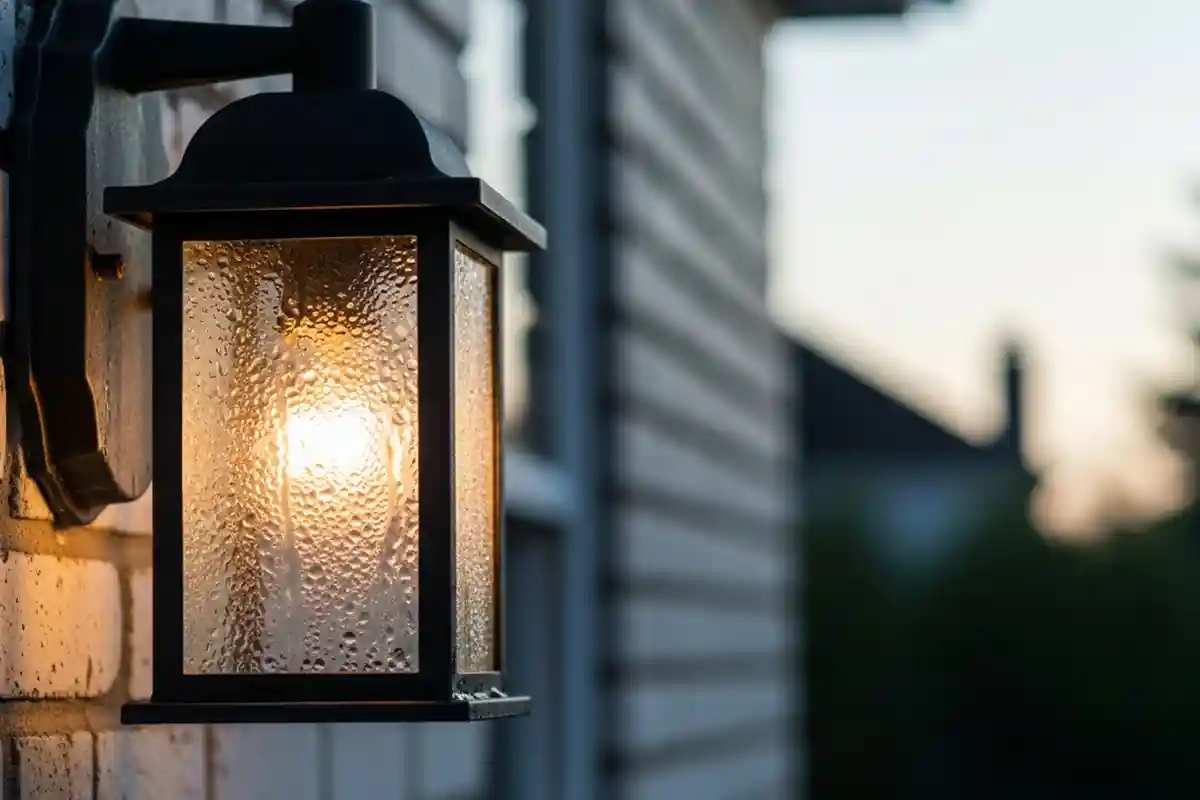
You step outside early in the morning and your outdoor light looks cloudy from the inside. Tiny droplets cling to the glass, and it feels like something must be wrong. In many US homes, this moment creates immediate concern about leaks.
Most of the time, that foggy look is simple condensation. The bulb warms the air inside the fixture while it is on, and when the night cools down, that warm air loses its ability to hold moisture. Just like a bathroom mirror after a hot shower, the water settles on the cooler surface.
Sometimes it disappears quickly once the light runs again. Other times, especially during spring and fall temperature swings, it shows up more often. The difference between normal condensation and a developing problem usually reveals itself through patterns, not one single event.
The Physics Behind Condensation in Enclosed Fixtures
On a warm evening, your porch light may run for hours. Inside the fixture, the air heats up along with the bulb. When the light switches off and outdoor temperatures drop overnight, the internal air cools fast.
Cool air holds less moisture than warm air. As the temperature drops, the extra moisture turns into tiny droplets on the inner surface of the glass or housing. That is the fog you see when you step outside in the morning.
Most outdoor fixtures are not fully airtight. They allow limited airflow to prevent heat buildup and pressure stress. That normal air exchange means humid air can move in and out, especially in states with high humidity.
This is why condensation often appears after clear, calm nights rather than heavy rain. The moisture is coming from the air itself, not from water pouring into the fixture.
Why Sealed Does Not Mean Waterproof
You might assume that a “sealed” outdoor light keeps everything out. In practice, sealed means protected against direct rain, not isolated from humidity. Small gaps around lenses and mounting plates allow the fixture to breathe.
Gaskets and compression seals reduce water intrusion from above. They do not stop microscopic vapor movement. That slow movement of humid air becomes noticeable when temperatures shift quickly.
Trouble begins when moisture stops drying between cycles. Repeated dampness can slowly affect screws, sockets, and internal connectors. Long-term corrosion patterns in exterior connections are examined in detail in this related discussion.
The key difference is temporary fog versus moisture that lingers and starts interacting with metal parts. That shift usually happens gradually rather than overnight.
When Condensation Is Normal and Temporary
You turn the light on after noticing fog, and within an hour the glass clears. That pattern is common and usually harmless. The warmth from the bulb gently evaporates the internal moisture.
With older incandescent bulbs, this happened quickly because they ran hot. Many US homes now use LED bulbs, which generate much less heat. As a result, the same condensation may remain visible longer, even though nothing is failing.
In humid regions like the Southeast or along the Gulf Coast, this cycle can repeat often during seasonal transitions. If you do not see standing water at the bottom and the fog clears consistently, it typically falls within normal behavior.
A single night of fog after a sharp temperature drop rarely signals a structural issue. Patterns over time matter more than one isolated event.
Warning Signs That Point to a Moisture Problem
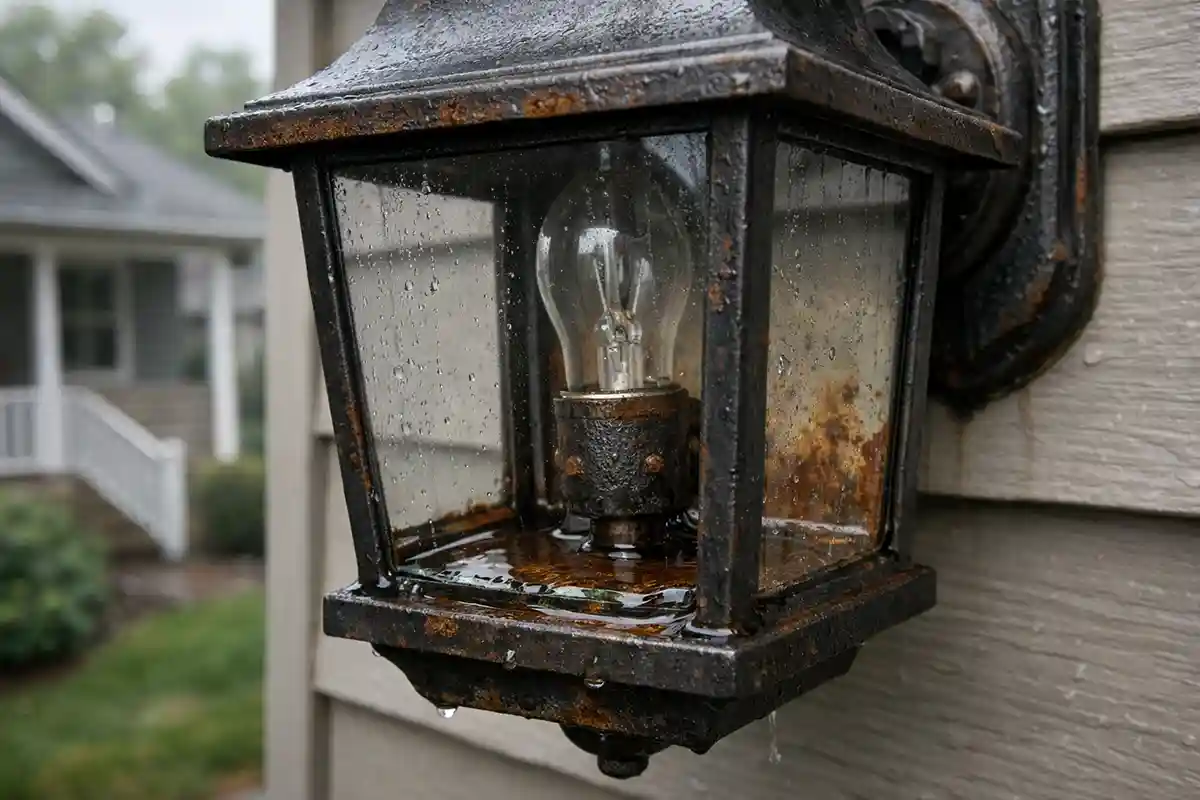
Now picture opening the fixture and seeing actual water sitting at the bottom. That is different from light fogging. Pooled water suggests moisture is entering faster than it can evaporate.
Cracks in the glass, aging gaskets, or gaps where the fixture meets the siding can allow rainwater in. At that point, the issue shifts from natural condensation to intrusion. The volume of water is simply too high for normal drying cycles.
You may also notice flickering, delayed startup, or breaker trips during wet weather. These everyday performance changes often appear before heavy rust becomes obvious. When condensation begins affecting function, it is no longer just cosmetic.
Condensation in Outdoor Light Fixtures: Normal vs. Problem
| Situation | What You See | Is It Normal? | What It Means | What To Do |
|---|---|---|---|---|
| Light fogging in the morning | Thin mist on the inside of glass | ✅ Yes | Normal temperature change caused moisture buildup | No action needed — should clear during the day |
| Condensation after heavy humidity | Light moisture droplets | ✅ Usually | Outdoor air entering fixture and cooling | Monitor — improve airflow if persistent |
| Water droplets that disappear when light is on | Temporary internal moisture | ✅ Yes | Heat from bulb evaporates condensation | Normal behavior |
| Small moisture with LED bulb | Light fog that lasts longer | ✅ Yes | LED produces less heat, slower evaporation | Not harmful unless water pools |
| Visible water pooling at bottom | Standing water inside fixture | ❌ No | Possible seal failure or water intrusion | Inspect gaskets and seals |
| Rust, corrosion, flickering | Electrical performance issues | ❌ No | Long-term moisture damage | Replace seals or fixture |
| Water dripping out | Active leak | ❌ No | Rainwater entering fixture | Immediate inspection required |
Environmental Factors That Increase Internal Moisture
Walk around your home and compare fixture locations. A light under a deep covered porch in a dry Western state behaves differently than one exposed to wind-driven rain in the Midwest. Exposure direction changes everything.
Sprinkler systems are another common contributor. If irrigation spray regularly hits the fixture, the surrounding air stays damp longer into the night. That repeated humidity spike increases condensation frequency.
Wall materials also influence cooling speed. Brick and stone hold daytime heat longer than vinyl siding. When surfaces cool rapidly after sunset, internal air reaches its dew point faster, leading to visible moisture inside the housing.
Paying attention to these real-world details makes it easier to tell whether you are seeing normal outdoor light condensation or the early signs of a deeper moisture issue.
How Fixture Design Influences Condensation Behavior
You may have two outdoor lights installed at the same time, yet only one regularly looks foggy inside. That difference often comes down to how each fixture is built. Small construction details quietly shape how air and moisture move.
Some fixtures include tiny vent channels near the top of the housing. Others rely on subtle gaps around the backplate to balance pressure. When evening temperatures drop, humid air shifts through these openings and can settle inside.
The overall shape matters too. A fully enclosed lantern tends to trap warm air longer after the bulb turns off. Once that trapped air cools, condensation may appear evenly across the lens rather than in isolated spots.
Material thickness also changes the pattern. Heavy cast aluminum cools more slowly than thin stamped steel. Faster cooling increases the chance that internal air reaches the dew point, especially during sharp seasonal swings.
Bulb Type and Heat Output Shift the Pattern
You replace an old incandescent bulb with an LED and suddenly notice more lingering fog. That change is common in many US homes and often surprises people. The explanation usually comes down to heat output.
Incandescent bulbs produced steady internal warmth. That warmth helped evaporate light condensation quickly once the fixture turned on. LEDs generate far less heat, so evaporation happens more slowly.
Because of this, moisture may remain visible longer even though the fixture itself has not deteriorated. Integrated LED fixtures can also create uneven warmth inside the housing, which sometimes causes condensation to collect in corners instead of spreading evenly.
Why Does Condensation Keep Coming Back Even After It Clears?
You wake up, see fog inside the glass, and by afternoon it is gone. The next morning, it is back again. That repetition can feel like something is failing, even when no rain has fallen.
Is it normal for condensation to return during temperature swings?
Yes, especially in spring and fall when daytime warmth meets cool nights.
Can high humidity alone trigger daily fogging?
It can, particularly in coastal or Southern states where overnight air stays damp.
Does wind exposure change how often one fixture fogs compared to another?
Often yes, because moving air carries more moisture toward certain walls.
Could landscaping or tight porch corners trap humid air around the fixture?
Yes, limited airflow allows moisture to linger longer near the housing.
Is recurring condensation always a sign of internal damage?
Not necessarily, but moisture that never fully dries can gradually influence performance.
Watching how quickly moisture clears provides more insight than focusing on how often it appears. Patterns reveal whether the issue is atmospheric or structural.
Airflow and Venting Play a Quiet but Critical Role
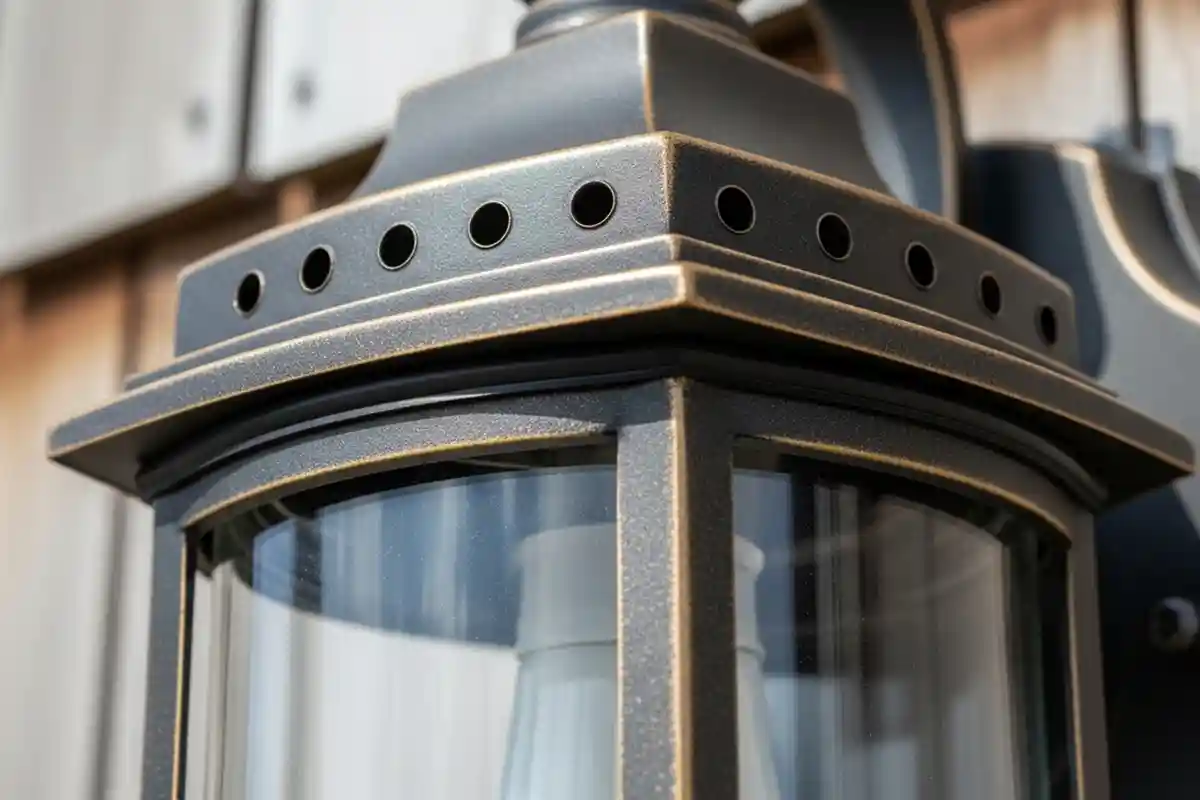
Most homeowners rarely notice the tiny vent openings built into their outdoor lights. These small details allow air pressure to equalize as temperatures change. Without them, seals could strain and crack over time.
As warm air expands and cool air contracts, venting prevents structural stress. At the same time, it allows humid air to move in and out of the housing. In consistently humid climates, that exchange makes condensation more frequent.
Higher-end fixtures sometimes include breathable membranes that allow vapor to pass while resisting liquid water. When debris clogs those vents, moisture patterns can change noticeably, even though the fixture appears intact.
Persistent internal moisture does more than fog glass. A broader breakdown of how moisture progresses from light exposure to structural lighting damage is explored in detail here.
Mounting Conditions and Surrounding Surfaces Affect Moisture
Think about how your fixture sits against the wall. A light mounted on brick in a dry Western climate cools differently than one attached to vinyl siding in a humid Southern state. Surface temperature directly influences condensation timing.
If the junction box behind the fixture is not tightly sealed, humid air from inside the wall cavity can migrate into the housing. That internal moisture source behaves differently from outdoor humidity and may linger longer.
Even slight tilt can matter. When a fixture is not level, condensation can collect toward one edge instead of spreading evenly. Over time, repeated pooling in the same area increases the chance of localized corrosion.
Placement, airflow, wall material, and exposure direction all shape what you see on the glass. Paying attention to these everyday details makes it easier to understand why condensation behaves differently from one home to another.
When Condensation Starts Affecting Electrical Reliability
You flip the switch and the porch light hesitates before turning on. On another humid evening, it flickers briefly and then steadies. These small changes are often the first hints that moisture is affecting more than just the glass.
Repeated condensation cycles leave behind thin moisture films on internal metal parts. Over time, that dampness encourages oxidation around socket threads and connection points. Even slight corrosion increases electrical resistance, which can subtly change how the fixture performs.
In coastal US regions, salt in the air speeds this process up. Salt increases conductivity, so when moisture is present, corrosion progresses faster. What once looked like harmless fog can gradually shift into a reliability concern.
The transition is usually gradual. Instead of a sudden failure, you notice small behavioral differences that become more consistent over months.
Environmental and Placement Changes That Reduce Recurrence
A fixture sitting directly in the path of sprinkler spray often behaves differently from one just a few feet away. When irrigation mist regularly hits the housing, the surrounding air remains damp longer into the evening. That extra humidity increases the frequency of condensation cycles.
Landscaping can also shape moisture patterns. Dense shrubs pressed close to the wall reduce airflow and slow drying time. When the surrounding area opens up, internal moisture often clears more predictably.
Wall orientation matters as well. A north-facing fixture that rarely receives direct sun may stay cooler and retain moisture longer than one warmed by afternoon light. These subtle placement differences explain why one light struggles while another remains stable.
Even a small tilt in the mounting angle changes where condensation gathers. If moisture consistently pools in one corner, localized wear increases over time.
Hardware Adjustments That Address the Root Cause
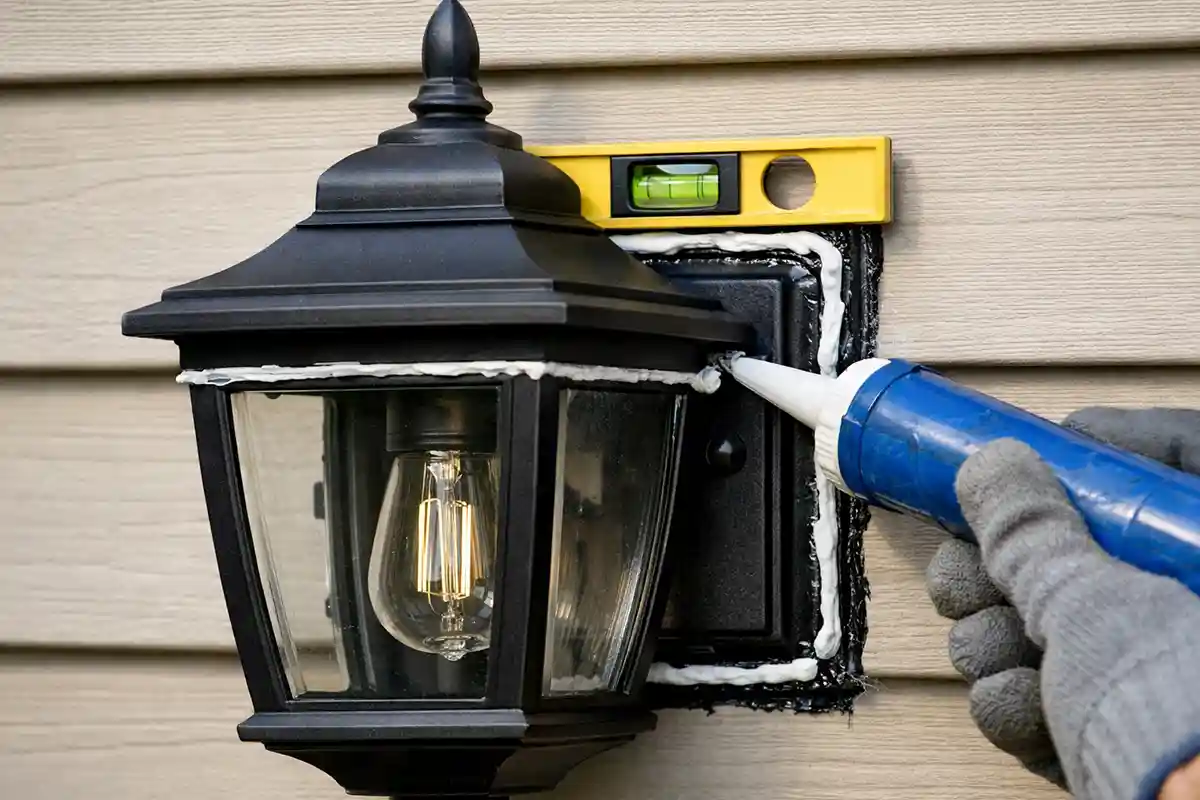
Over time, rubber gaskets compress and harden. When they lose flexibility, they no longer limit water entry as effectively. Replacing worn seals can restore the fixture’s intended balance between airflow and protection.
Modern exterior lights sometimes include breathable vent membranes. These allow vapor to escape while reducing liquid water intrusion. In humid climates, that design reduces how often condensation becomes visible.
If corrosion has already progressed into socket threads or connectors, replacing affected components may be more realistic than minor adjustments. Once oxidation moves beyond surface staining, long-term durability rarely returns to its original level.
For homeowners trying to distinguish between simple fogging and deeper water entry, In some cases, what appears to be condensation may actually be minor water entry from structural gaps, which is discussed in this detailed breakdown.
Recognizing the Turning Point
There is often a moment when the pattern changes. The fog that once cleared by midday now lingers for days. A faint rust mark appears near a screw head after repeated humid nights.
You may notice that only one fixture behaves unpredictably while others remain consistent. That contrast highlights how exposure direction, airflow, and material aging influence long-term wear.
• The glass clears slower than it used to, even during dry stretches.
• One porch light flickers during humid evenings while others do not.
• The inside surface feels slightly damp even when it looks clear.
• Rust spots develop near mounting screws after seasonal shifts.
• The wind-facing fixture shows more wear than the sheltered one.
These observations usually signal that condensation has moved beyond simple atmosphere-driven fogging. From here, attention naturally shifts toward durability, exposure conditions, and how the fixture will handle the coming seasons rather than just the next cool night.
For broader electrical safety guidance related to moisture exposure, consult the National Electrical Code (NEC) published by the National Fire Protection Association (NFPA).