Outdoor lights that turn on normally but shut off a few minutes later usually point to instability somewhere in the lighting system rather than a completely failed fixture. In most residential setups, the issue is caused by transformer overload, voltage drop along long cable runs, moisture intrusion, or loose electrical connections that temporarily break contact.
Landscape lighting systems often appear to work fine when power first flows through the circuit. After a few minutes, however, heat buildup, resistance, or protective devices such as GFCI outlets may interrupt the electrical path. When this happens, the lights can shut off suddenly even though the system initially seemed normal.
The fastest way to troubleshoot the problem is to inspect the transformer load, check wiring connectors, and look for moisture inside fixtures or underground cable connections. Systems installed in humid regions like Florida or coastal California often struggle with corrosion and condensation, while properties in northern states sometimes experience insulation cracking after freezing winters.
Once the root cause is identified, most outdoor lighting shutdown issues can be resolved with simple adjustments to wiring, transformer capacity, or fixture sealing.
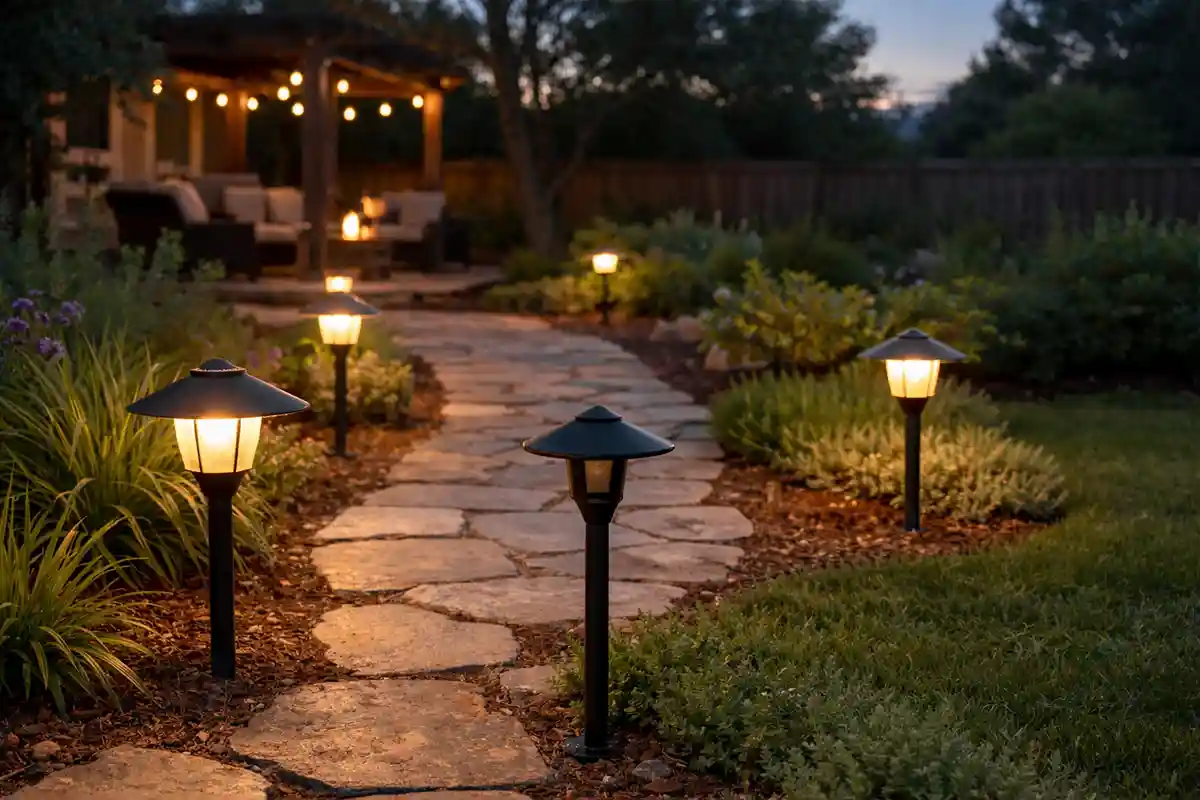
Quick Diagnostic Checklist
Before diving into deeper troubleshooting, check for these common symptoms.
✔ Lights work normally when first switched on
✔ Fixtures shut off after 2–10 minutes of operation
✔ Some lights remain on while others turn off
✔ Lights reset temporarily when power is cycled
✔ Failures occur more often during rain or humidity
✔ Distant lights turn off before closer ones
These patterns often reveal where the problem is located within the system.
When your porch light, patio light, or security light fails, this article on outdoor light troubleshooting can help narrow down the problem.
Common Shutdown Patterns and What They Usually Mean
Outdoor lighting problems often follow recognizable patterns. Observing how the lights behave can quickly narrow down the cause.
| Symptom Pattern | Likely Cause | What to Check | Difficulty |
|---|---|---|---|
| Lights shut off after 3–5 minutes | Transformer overheating | Reduce load or improve ventilation | Medium |
| Only distant lights fail | Voltage drop | Cable length and wire gauge | Medium |
| Lights shut off during rain | Moisture intrusion | Fixture seals and cable connections | Medium |
| Entire system turns off suddenly | GFCI trip | Power outlet and grounding | Easy |
| Lights flicker before shutting off | Loose wiring | Splice connectors or junction boxes | Easy |
Understanding these patterns helps avoid unnecessary component replacements.
How Outdoor Lighting Systems Deliver Power
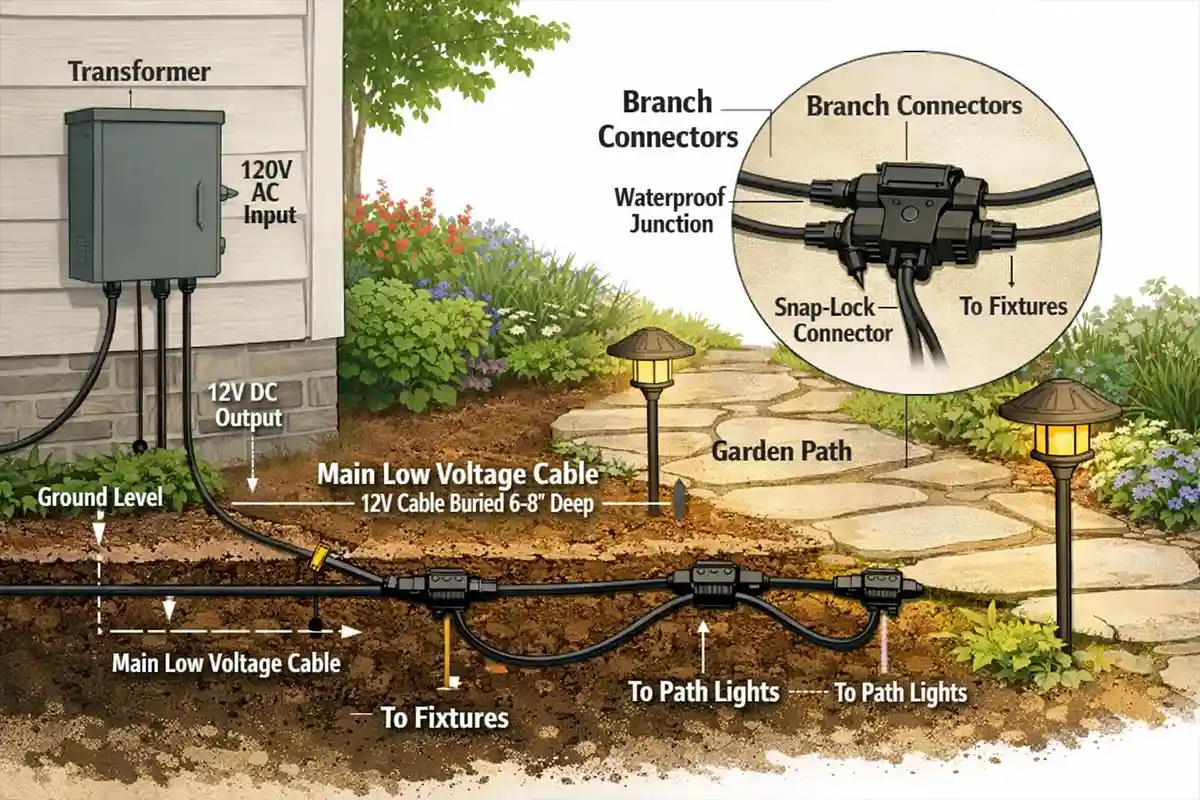
To understand why lights shut off after a few minutes, it helps to know how most residential landscape lighting systems are arranged.
A typical setup includes:
-
Transformer converting household 120V electricity to 12V or 24V low voltage
-
Main underground cable distributing power across the yard
-
Branch connectors attaching individual fixtures
-
Light fixtures containing bulbs or LED modules
Electricity flows from the transformer through the main cable and into each fixture. If resistance increases anywhere along this path—because of heat, corrosion, moisture, or loose wiring—the system may lose voltage or trigger a safety shutdown.
Problems often appear only after the system has been running for a few minutes because electrical components warm slightly under load.
The Most Common Reasons Outdoor Lights Shut Off After a Few Minutes
Several electrical and environmental factors can cause lighting systems to stop working shortly after they start.
Transformer Overload or Thermal Protection
Landscape lighting transformers include internal thermal protection. When the load exceeds the rated capacity, the transformer may shut down automatically once its internal temperature rises.
This often happens when:
-
Too many fixtures are connected
-
High-wattage bulbs are installed
-
The transformer is enclosed without airflow
If your lights shut off after a short time and later turn back on after cooling, transformer overload is a strong possibility.
Voltage Drop Across Long Cable Runs
Large yards or long pathway lighting installations often experience voltage loss as electricity travels through the cable.
Over time, resistance reduces the voltage reaching fixtures farther from the transformer. As current flows and resistance increases, distant lights may suddenly shut off.
This electrical behavior is explained in more detail in Voltage Drop in Outdoor Lighting Systems, where longer cable runs gradually reduce the available power for fixtures.
Properties with extensive landscaping—especially larger suburban lots—are more likely to encounter this issue.
Loose Wiring or Failing Connectors
Outdoor wiring connectors can loosen over time due to soil movement, temperature changes, or improper installation.
As electrical current warms the wire slightly, a weak connection may separate and interrupt the circuit. When that happens, lights that initially worked may suddenly turn off.
This type of fault is commonly associated with loose outdoor wiring connections that gradually lose contact as the system runs.
Loose splice connectors are one of the most frequent causes of intermittent lighting failures.
Moisture Intrusion Inside Fixtures
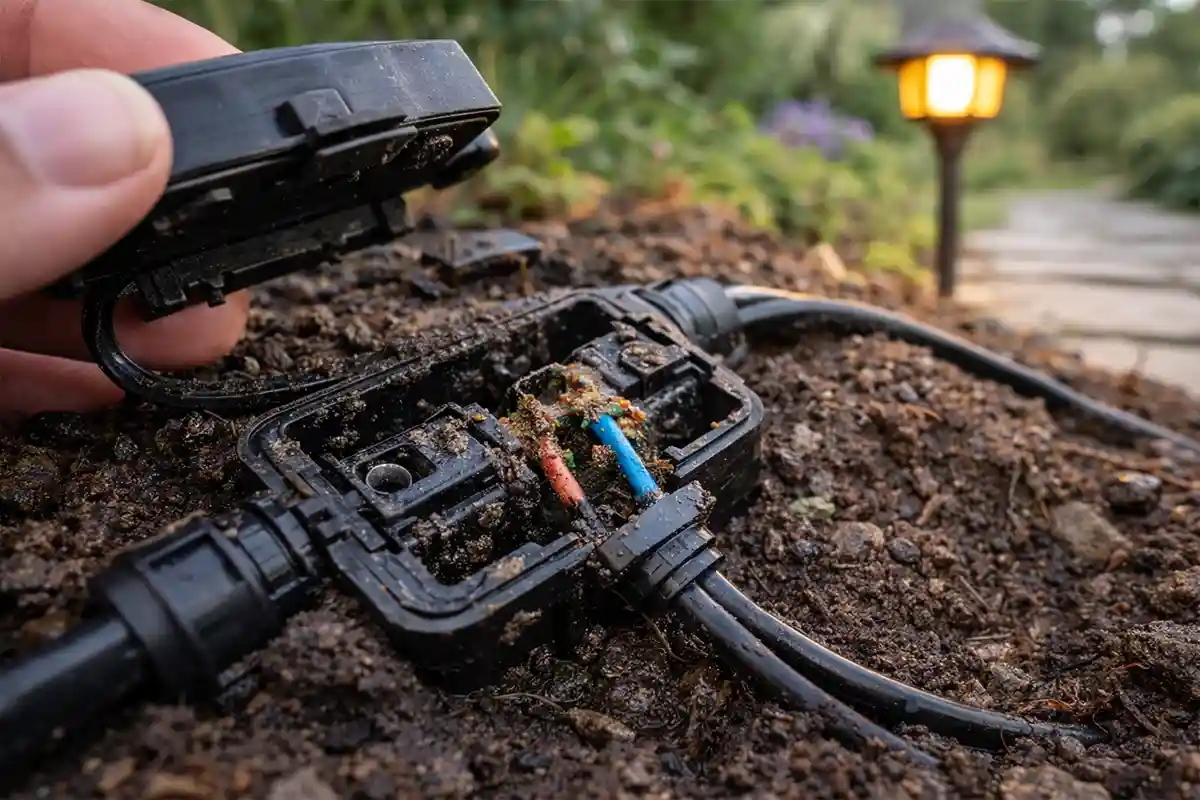
Outdoor fixtures constantly face exposure to rain, irrigation systems, and humidity. If water enters the fixture housing or wiring connectors, it can create intermittent electrical resistance.
The result may be lights that operate briefly before shutting off.
Electrical systems affected by moisture damage in outdoor lighting often behave unpredictably, especially during humid weather.
Homes in the Southeast and Midwest experience this problem more frequently because of high seasonal humidity and rainfall.
GFCI Outlet Interruptions
Many outdoor lighting systems connect to GFCI outlets for electrical safety. These outlets shut off power if they detect a small current imbalance that could indicate a ground fault.
When this happens, the entire system may lose power suddenly.
This protective response is similar to what occurs when outdoor lights trip GFCI outlets due to moisture, damaged wiring, or insulation failure.
Resetting the outlet can restore power temporarily, but the underlying issue should still be investigated.
Environmental Conditions That Often Trigger the Problem
Outdoor lighting systems operate in changing weather conditions throughout the year, and certain climates increase the likelihood of intermittent shutdowns.
Humid Coastal Areas
Salt air and moisture exposure accelerate corrosion inside connectors and fixtures. Coastal regions of California and Florida often experience faster deterioration of electrical contacts.
Freezing Winter Regions
In northern states, repeated freezing and thawing cycles can crack insulation on underground cables. Moisture then enters the wiring and increases electrical resistance.
Hot Desert Climates
In dry regions such as Arizona or Nevada, extreme heat can degrade wire insulation over time, leading to hidden electrical faults that only appear when the system warms under load.
Environmental stress often turns small electrical weaknesses into noticeable lighting failures.
Step-by-Step Troubleshooting Guide
If your outdoor lights turn off after a few minutes, follow these steps in order.
-
Check transformer capacity
Compare the total wattage of all fixtures with the transformer rating. -
Inspect wiring connectors
Look for loose, corroded, or damaged splices along the cable line. -
Examine fixtures for moisture
Open fixtures and inspect seals, gaskets, and cable entry points. -
Reset and test the GFCI outlet
Confirm the outlet is not repeatedly tripping. -
Measure voltage along the cable
A voltage meter can reveal whether power drops along long cable runs.
Electrical guidelines from the U.S. Department of Energy emphasize that stable voltage and properly sealed outdoor connections are essential for reliable lighting system performance.
When the Issue Is Actually Intermittent Power
Sometimes lights that shut off after a few minutes are part of a broader intermittent electrical issue.
For example, a connector may lose contact temporarily before reconnecting once the wire cools or shifts slightly. This behavior can make the system appear unpredictable.
Lighting circuits affected by outdoor lights working intermittently often display additional symptoms such as flickering or inconsistent brightness.
A related troubleshooting guide explains how these early warning signs appear in flickering outdoor lights and their common causes.
Recognizing these patterns can help prevent larger electrical failures later.
When It’s Time to Call an Electrician
Many outdoor lighting issues can be resolved with simple inspection and maintenance. However, professional help may be necessary if:
-
GFCI outlets repeatedly trip
-
Underground wiring appears damaged
-
Voltage readings are unstable across the circuit
-
Multiple fixtures fail simultaneously
-
Electrical insulation shows signs of deterioration
A licensed electrician can perform load testing and insulation checks to ensure the system operates safely.
Frequently Asked Questions
Why do my outdoor lights work briefly and then turn off?
This usually happens when the transformer overheats, voltage drops along the cable, or a loose electrical connection interrupts the circuit once it warms up.
Can moisture really shut off outdoor lights?
Yes. Water inside fixtures or connectors can create electrical resistance or ground faults that cause lights to stop working unexpectedly.
Why do only some lights turn off?
If only distant lights fail, voltage drop is often responsible. Fixtures farther from the transformer receive less power.
Could a bad transformer cause this issue?
Yes. Transformers with internal thermal protection may shut down automatically when overloaded or overheated.
Key Takeaway
Outdoor lights that randomly shut off after a few minutes typically signal an underlying electrical instability rather than a failed bulb or fixture. Transformer overload, voltage drop, loose wiring connections, moisture intrusion, and GFCI protection are the most common causes.
Carefully observing when and how the lights shut off often reveals the root of the problem. With proper inspection of the transformer, wiring, and fixtures, most outdoor lighting systems can be restored to stable operation without major repairs.