Landscape Lighting Replacement Kits for an Unreliable, Aging System
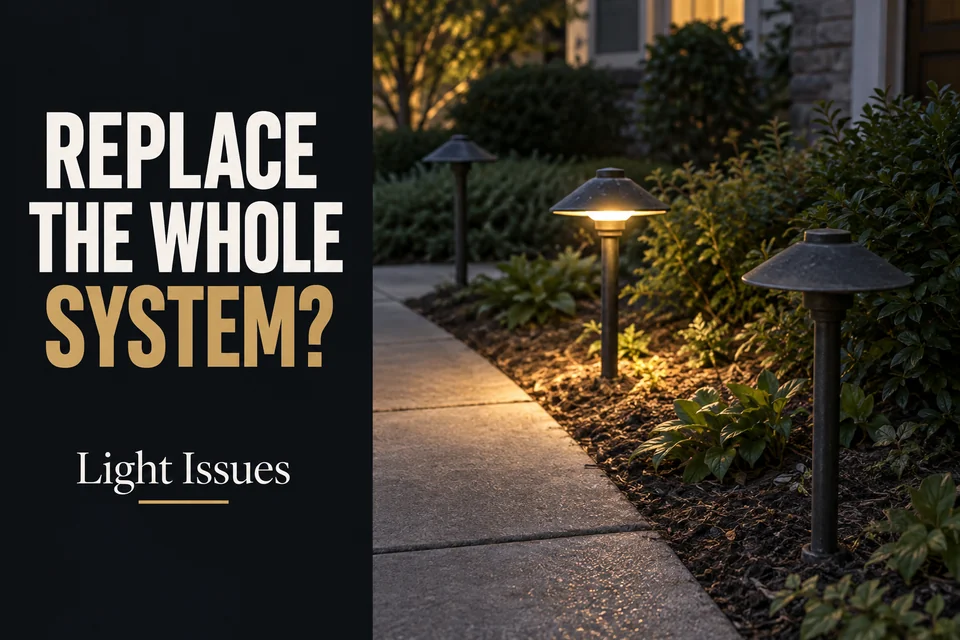
Mismatched aging landscape lights leaving dark sections along a residential front walkway.

Replacing another landscape light becomes frustrating when a different fixture fails a few weeks later. Each purchase means checking another bulb type, connection, or replacement stake—and the yard still has uneven lighting. A complete replacement kit becomes worth considering when several fixtures have separate failures and keeping them working requires repeated purchases. It gives you … Read more
Motion Sensor Head Will Not Stay in Position

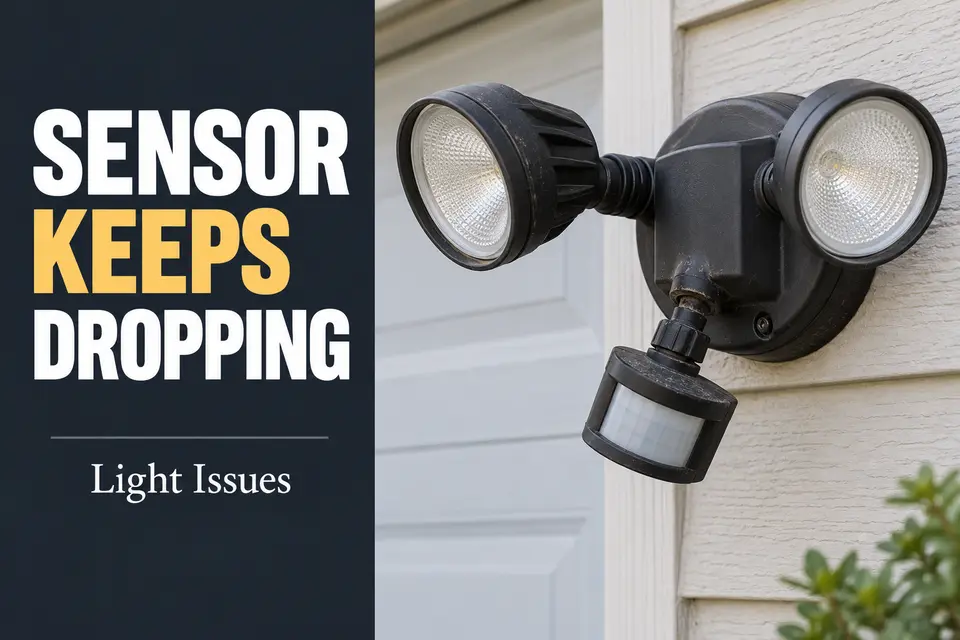
Outdoor motion-sensor head sagging downward at its adjustable aiming joint.

A motion-sensor head that can be aimed correctly but later points at the ground has a holding-force problem before it has a detection problem. If gravity, wind, or normal vibration changes the head’s physical angle, the detection zone moves with it. Sensitivity adjustments cannot stabilize a joint that no longer holds. Start by photographing the … Read more

Dual-Head Outdoor Floodlight Works on One Side Only

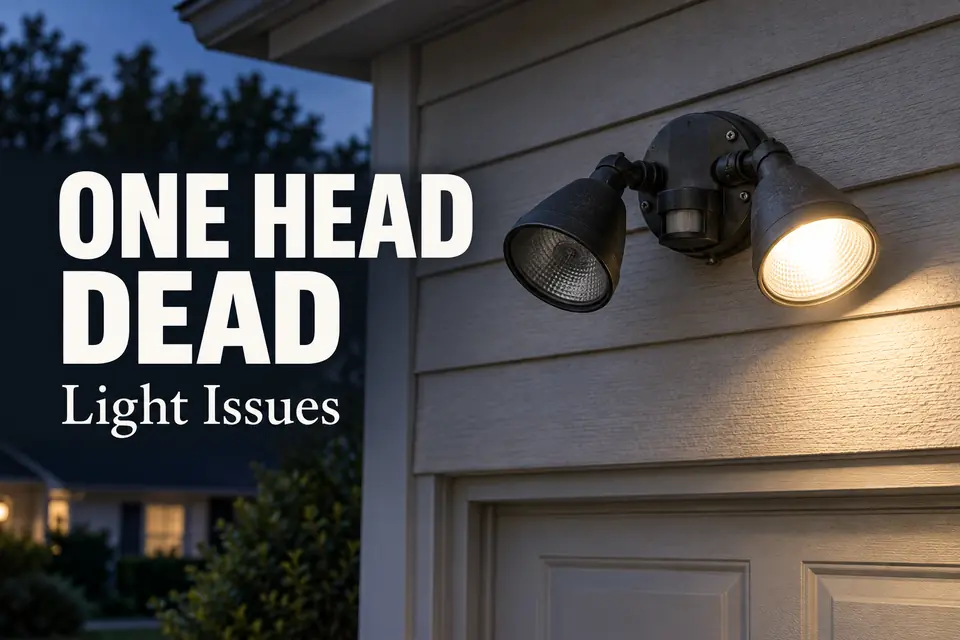
Dual-head outdoor floodlight with one illuminated head and one dead head on the same mounting base.

Treat the working head as a built-in control. It shows that the dual-head floodlight receives power and that any shared switch, photocell, or motion control can activate at least part of the unit. That makes a head-specific component—not the entire supply path—the stronger starting point for diagnosis. That does not prove the entire fixture is … Read more

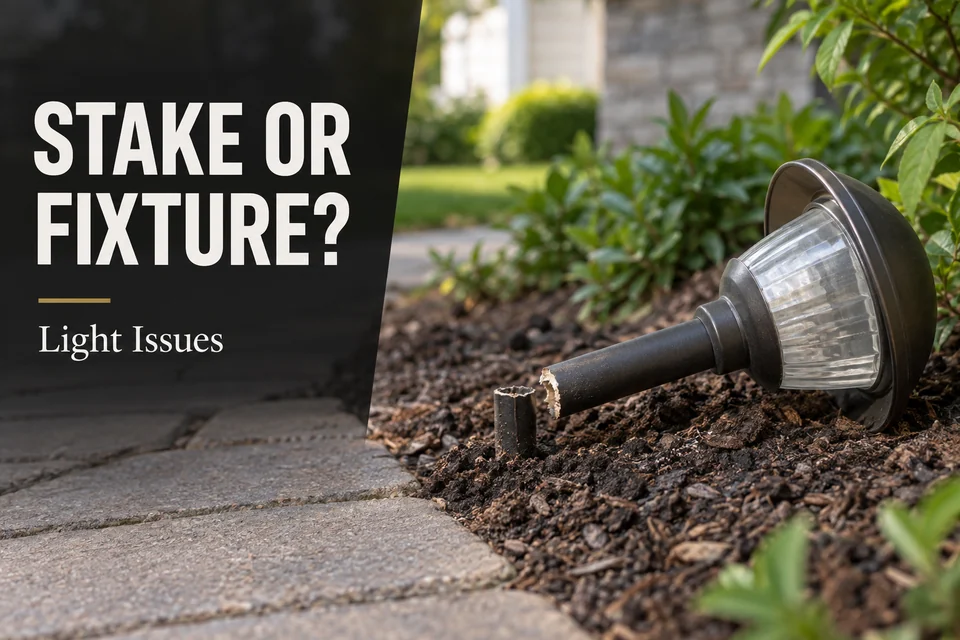
Path Light Stake Snapped at the Ground Line

Path light resting beside a stake broken at soil level along a residential walkway.

The part that remains attached to the light controls how much you need to replace. A separate broken stake can be replaced when the fixture’s mating attachment remains intact, a compatible part is available, and the fall has not damaged the wiring. A crack extending into the fixture’s mounting socket or integral stem changes that … Read more

In-Ground Light Lens Is Cracked but the Light Still Works

Cracked glass lens seated in the metal retaining ring of an in-ground light beside a residential path.

A cracked in-ground light lens is enough reason to take the fixture out of service, even when the lamp still illuminates normally. The crack determines whether to stop using it; the condition of the housing determines how much needs replacing. Isolate the lighting supply from a dry, accessible location and keep people and pets away … Read more

Outdoor Fixture Screws Are Rusted and Will Not Turn

Rusted maintenance-access screw securing an outdoor light’s metal cover frame beside intact glass.

The screwdriver fits, but the outdoor fixture screw will not turn. Before adding force, watch two things: whether the tip stays seated and whether the surrounding metal stays still. Those responses tell you more about the next move than the amount of orange rust on the head. Before handling the fixture, isolate its electrical supply … Read more

Outdoor Light Glass Cover Will Not Come Off for a Bulb Change

Outdoor wall light with an intact glass cover seated in a weathered metal retaining collar.

A stuck outdoor light cover presents two different possibilities: its retaining hardware is still engaged, or the cover is adhering after that hardware has released. Identify what holds the glass before choosing how to move it. Resistance alone cannot tell you whether it should unscrew, swing open, or lift out. Before handling it, isolate the … Read more

Outdoor Wall Light Is Pulling Away From the Siding

Outdoor wall light with its upper backplate pulling away from a mounting block on horizontal siding.

A wall light that used to sit close to its mounting surface now has a shadow behind the top edge. The caulk may be stretching, splitting, or pulling loose with it. The repair decision starts with which joint has opened: the fixture-to-block connection or the block-to-wall connection. That distinction determines where the support needs assessment … Read more

Outdoor Post Light Keeps Leaning After the Soil Settles

Outdoor post light leaning beside a walkway with depressed soil around its base.

A post light that keeps leaning after the soil settles needs its support assessed before another straightening attempt. Returning the pole to vertical only changes its position. The lasting correction depends on finding what no longer holds that position. Start by identifying what has shifted: the fixture head, the pole at its mounting point, or … Read more

Outdoor Post Light Works Only When the Pole Is Moved

Outdoor post light beside a residential walkway with slight displacement visible at its base.

When an outdoor post light works only in one pole position, the return of light is part of the fault. Movement may be temporarily restoring contact at a loose connection or damaged conductor. Leaving the pole in that position can hide the interruption while the underlying damage remains. Do not move the pole again to … Read more